The Individualism of Dona Nelson
Word count: 691
Paragraphs: 7
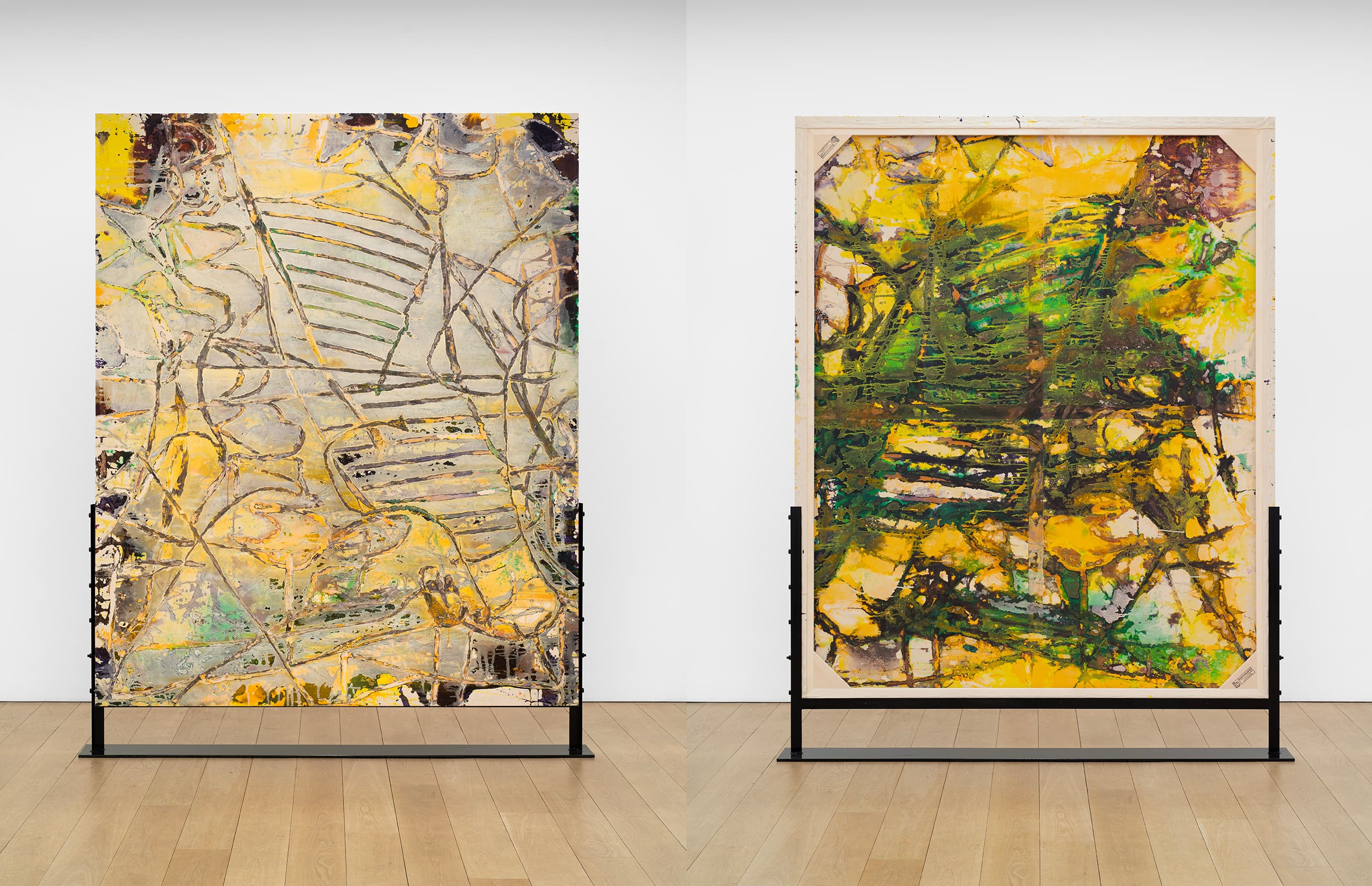
Dona Nelson, Grass, 2025. Acrylic paint on canvas, powder-coated steel, 108 × 88 inches. Courtesy the artist and CANADA.
CANADA
January 8 – February 14, 2026
New York
The title of this exhibition substitutes the artist’s own name for that of Gil Evans, the Canadian American jazz pianist, arranger, composer, and bandleader who used the title The Individualism of Gil Evans for a studio recording issued in 1964. The reference is certainly a telling one. Dona Nelson has established a recognizable style, or should I say methodology, within a genre—Abstract Expressionism—that has had many adherents. Nelson has often spoken of her responsiveness to music, particularly as an effect of sound, which she feels bodily. Jazz and experimental music, for example the work of John Cage’s teacher Henry Cowell, another favorite of Nelson’s, use chance, atonality, volume, and timbre in challenging ways. Visual correlatives of these qualities abound in Nelson’s own compositions.
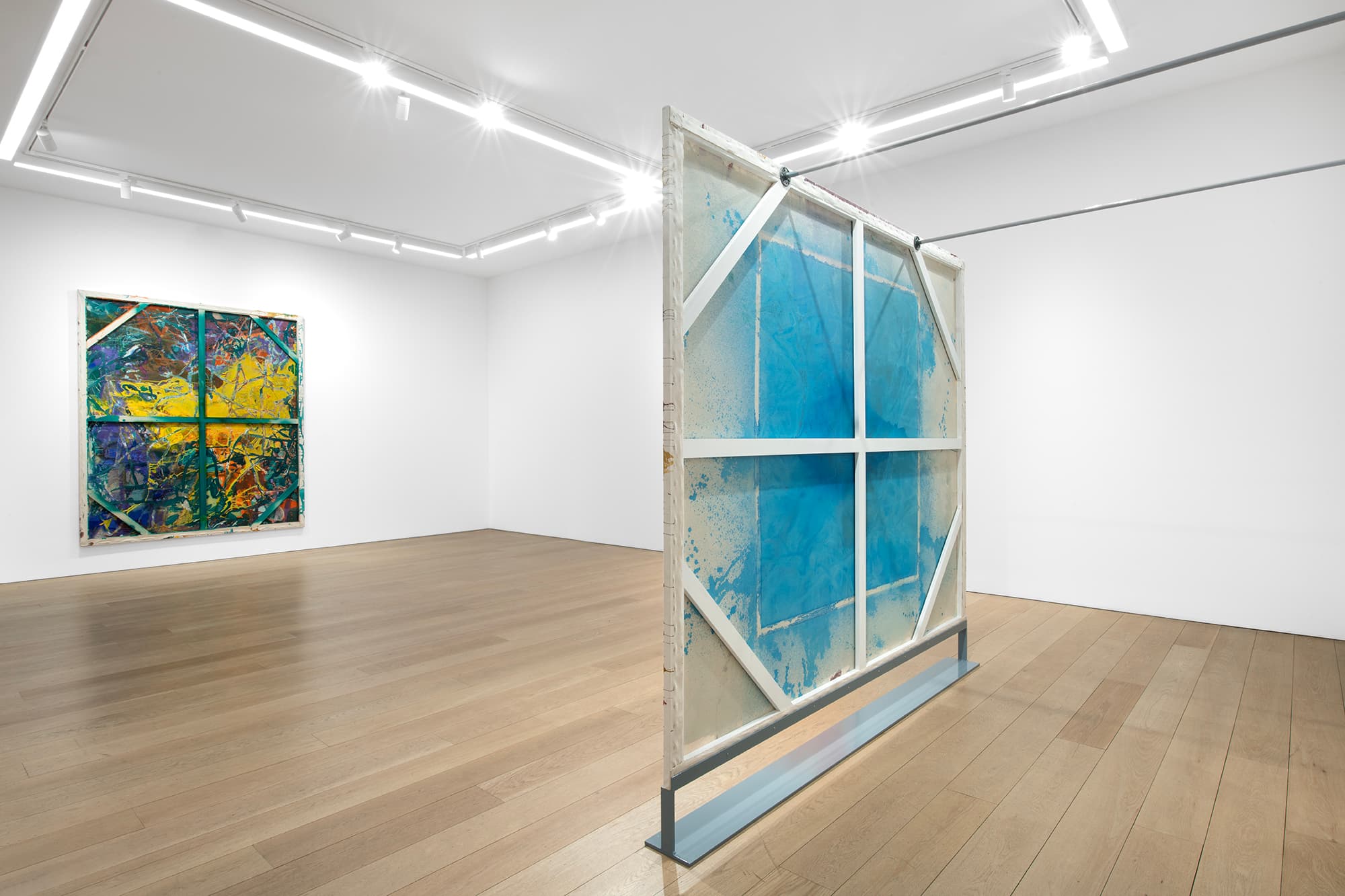
Each painting in the exhibition is distinct from the others, like songs with different melodies, or compositions reinterpreted with each performance, or particular adjacent and overlapping color sets that by chance and contingency amount to something like their own individual climate. Nelson uses both sides of the canvas and in many cases free-stands the painting in a custom floor-based holder of powder-coated steel. Paint has been variously moved through the warp and weft of the stretched canvas during the making of the paintings. A first coat of an agent that allows the pigmented acrylic medium to flow through the canvas is applied. Then, strips of cheese cloth soaked in acrylic medium are added and later removed, so as to reveal a dryer-looking channel of paint stain that functions much like drawing in color and looks something like an incision when viewed from closer up. The paint is pooled, and tilting of the canvas while it is horizontal streams and drifts the paint in different directions.
Installation view: The Individualism of Dona Nelson, CANADA, New York, 2026. Courtesy CANADA.
Working on both sides of the canvas means that Nelson works blind to an extent, the process part material automatism, part intuition. Jackson Pollock is a touchstone for Nelson, especially—though she stresses that all Pollock is good for her—the once-demeaned late paintings. Nelson describes Pollock as being lost in these works—a positive assessment. This is an important insight, as Nelson has described her primary concern as working the paint, working it through the canvas, and not worrying whether it results in a good painting. This is confidence in action, as well as experience and courage—to let go and work outside one’s own boundaries. The material world is now part of being, a participant along with the artist and not simply an observed and controlled tool or medium.
Take for example Grass (2025), at 108 by 88 inches a painting large enough to impose a sense of place, standing well away from the wall and sharing the viewer’s space in the gallery. The paint is a chromatic, tactile membrane, caught in its passage through and across the canvas material. The two sides, while obviously related, offer contrasting surfaces and compositions. The crossbars of the stretcher have been removed at some stage of the painting process and their trace is visible as a cross motif. Blacks, greens, yellows, and ochres layer and drip in a field of rich tonal color on what began as the reverse of the stretched canvas, the rectangle of wooden stretcher bars that necessarily remain at the painting’s outer edge in plain sight. On what was once the front of the painting, now just one of two equally important sides, is a less chromatically saturated but more linear, drawn composition. Front and back achieve parity, an emphasis of broader, perhaps even social, import for Nelson.

Installation view: The Individualism of Dona Nelson, CANADA, New York, 2026. Courtesy CANADA.
In 2020, the artist made a powerful statement of intent in a video for the group exhibition A Focus on Painting at Thaddaeus Ropac. “Painting as a form I think is a position of discomfort, particularly in this culture.” Painting is not a simple commodity; it is a challenge, a source of serious pleasure, yes, but also a disorientation. It is a provocation as much as an appeal to the experience of being human, as ecstatic and terrifying as that may be.
David Rhodes is a New York-based artist and writer, originally from Manchester, UK.