Lauren Rothery’s Television
Word count: 799
Paragraphs: 7
Television
Ecco, 2025
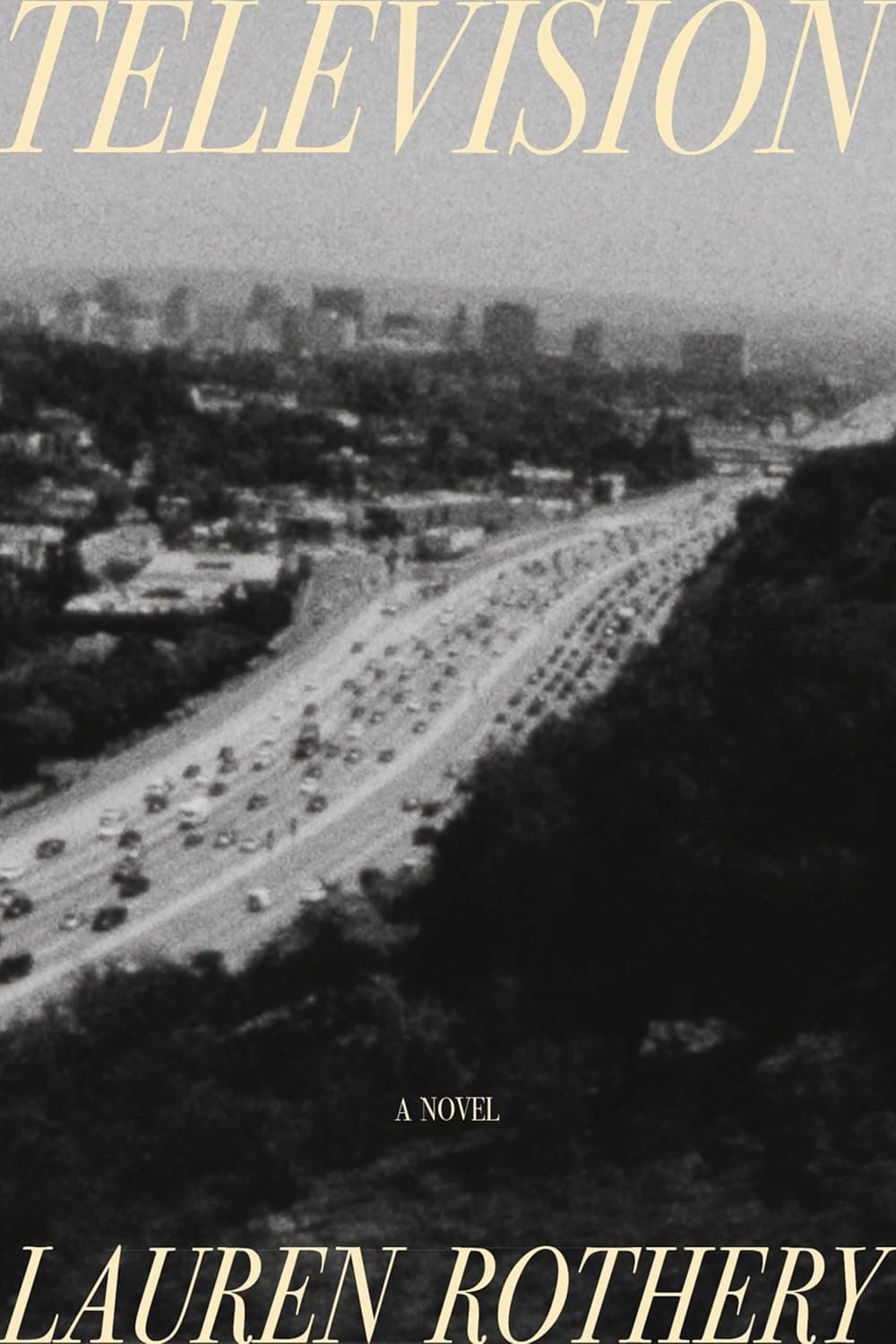
Aging and winsome movie star Verity proceeds through the world like it’s a game that he’s tiring of. To break the game or to advance to a new level, Verity announces during a muddled GQ profile that he will be lotterying off the over eighty million dollars he stands to make from his latest franchise movie. Lauren Rothery’s languid debut novel, Television, mostly alternates between fragments of the perspectives of Verity and his longtime best friend and sometimes lover, Helen. Then, the reader gets a glimpse into the mind of Phoebe, an aspiring filmmaker handling her recently deceased grandparents’ estate. Television puzzles over the luck that underpins our lives, the disheartening lack of correlation between success and happiness, and the uneasy afterlife of fame.
Aptly named, Verity values the candor of being clear about who you are and how you got to where you are without bluster—an admirable though ironic position for someone in an industry fueled by delusions of grandeur. It also cannot abdicate him from responsibility for how he chooses to behave in light of his fame: drunkenly begging to say hello to the pilot of a plane, dating startlingly younger women, making rash financial decisions. Verity informs the GQ reporter matter-of-factly that his physical appearance guaranteed his stardom while his personality only guaranteed his response to it. “If I didn’t think the way I think almost everything that has ever happened to me would still have happened to me and the only difference would be that I would say things like, ‘The Secret Is, You Can’t Be Afraid to Fail.’” What is one to do once cognizant of this reality? His awareness of his luck is refreshing and jarring; he knows there’s no sage advice to dole out to up-and-coming actors who want to be just like him, yet most up-and-comers yearn for a skeleton key that unlocks their wildest dreams.
The cornerstone of the novel is the relationship between Verity and Helen, which at its core seems unwavering and on its face seems to be made perpetually messy by Verity’s alcoholism and dating other women and Helen’s aloofness and ambivalence. An inarticulable chemistry animates their push and pull, returning to each other inevitably. As Rothery puts it, and what seems to inspire the title: “Some people you meet them and you imagine this movie together. The two of you make a kind of movie and then it’s over. Other people, what you imagine isn’t a movie, because it keeps going. It’s television… If you can’t see how romantic television is, you’re blind.” Though Verity and Helen can’t box their relationship into any single conventional form, they remain in agreement that it must go on. The story is less about ongoing conflict and more of a laying out of memories and tensions that span their two decade long connection, distorted by Verity’s rising star and each character’s detachment and refusal to lay all their cards on the table.
Phoebe, in the meantime, is preoccupied by a relatable meta-neuroticism. In a novel about actors and films, Phoebe’s is the only artistic work Television allows readers to see closely and directly, as Rothery includes snippets embryonic enough to still feature “NOTE: BIT SHIT. COME BACK TO WHEN A BETTER WRITER” mid-script. Meant to provide a foil to Helen and Verity, Phoebe’s sections feel wedged in from another book, acting as a stand-in for a younger Verity. She’s writing a screenplay in France; she’s thinking about what it should look like and feel like to be writing a screenplay in France. She drafts “crazy letter[s] of opaque intent” and never sends them, and quotes Andrei Tarkovsky and Plato and contemplates the crude steps required to guide a piece of work from conception to reality in Hollywood. Becoming a successful artist in our society demands compromises, and offers a lifestyle fundamentally inhospitable to the creation of art. Verity experienced this, Helen witnessed this, and Phoebe abstractly knows and anticipates this. Achievement comes at a price, and so too does escaping the bitter fruits of it.
The characters and the novel itself border on fatigued by self-awareness, evolving ever more concise ways to convey discontent without managing to banish it. If the point of writing is, as Phoebe suggests, “to carefully choose a place, dig a new hole there, and fill it so beautifully that a stranger passing by should think, Thank God for whoever filled that hole, it was certainly empty for a long, long time,” Rothery has gotten part of the way there in her own spin on well-documented Hollywood malaise. Television is a mordantly stylish debut, brimming with astute observations about making meaning and making art, pointedly reminding the reader that the two can be convergent but cannot be conflated.