Crafted Kinship: Inside the Creative Practices of Contemporary Black Caribbean Makers
This book leads the reader into the questions of multigenerational Caribbean artists.

Word count: 540
Paragraphs: 8
Malene Barnett
Artisan, 2024
Crafted Kinship’s title suggests that the place we now call the Caribbean is a construct. This 368-page book featuring the voices of more than sixty makers starts with an essay about the work and practice of the author. “Since my studio practice centers on Pan-Africanism by connecting the community and reimaging Black archives, I wanted to gather a group of like-minded Caribbean makers, create the book I wish I’d had in graduate school, and contribute to a historical record for future generations,” writes Barnett. After working as a textile designer for twenty years and attending Tyler School of Art at Temple University in the ceramics department, she brought folks together through the Black Artists + Designers Guild (BADG). BADG originated the connections for the interviews that ended up in the book.
In this survey, Barnett leads the reader into the questions of multigenerational Caribbean artists. Reading like a dossier, it includes several interstitial, topical essays by scholars in art history, Caribbean studies, and design, as well as Q&As from practicing artists. Prioritizing the artists’ voices in this way allows direct access that many coffee-table books like this don’t feature. This multiplicity makes this book impossible to digest in one setting—my copy, which I tried to imbue with preciousness, became a palette for everyday moments, like sprays from my mouth when eating, oil spots from greasing my scalp, and traces of fingerprints turning each page.
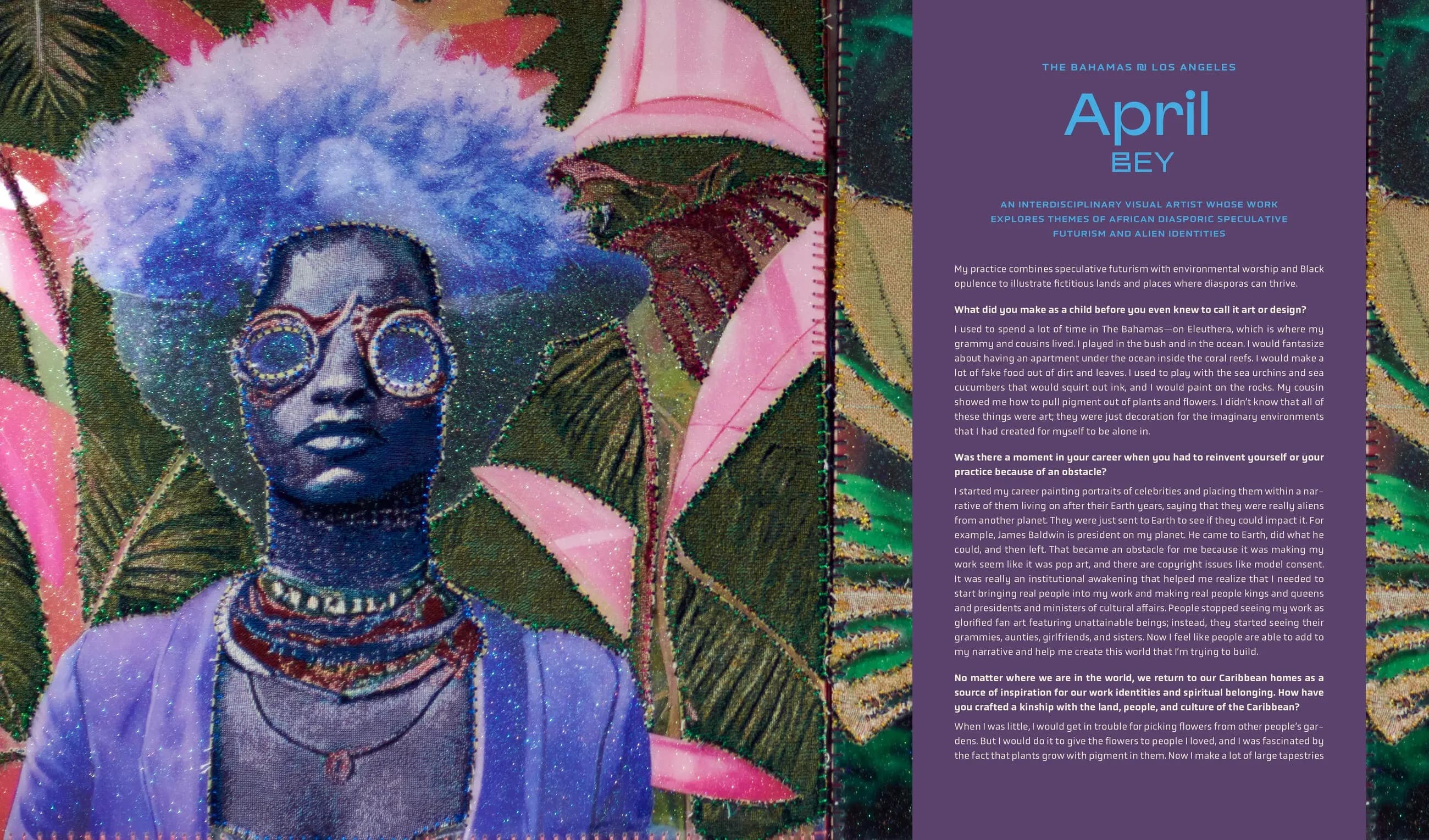
The contributions breathe life into the fictional construct of the Caribbean, despite the colonialism of the island. As visual artist Cosmo Whyte writes, “Great thinkers have wrestled with the conundrum of being both the products and benefactors of colonization and empire, while also being its illegitimate and discarded children.” Therefore, the book becomes an anthology of various visual and performance practices connected through this intangible yet palpable kinship. As April Bey says in the book, “There is no way to put us in any kind of box because we are from a made-up region, in a sense, but our kinship is 100 percent genuine. We created this Caribbean culture, whether it was forced upon us or created through ingenuity because we had to survive.”

The book suggests several themes across media and geography, such as ancestors, Black womanhood/manhood, colonial histories, and land, climate, and sustainability. There is a sense of resilience throughout the book, despite the risks of making work in the Caribbean, knowing that a hurricane could wash it away or, as photographer Deborah Jack says:
The obstacle was how difficult it was to access film back home (Sint Maarten). I could access video, but film as a material was almost impossible to find. In the 1980s, Puerto Rico was the closest place you could get film processed, if you could even get it off the island without it being x-rayed. A lot of times, reinvention is necessary because of a lack of resources.
In addressing the question “What is Caribbean art?”, the answers abound in kinship formed from lack of resources and the subsequent making do that these creatives employ, producing art that brings people together.