Tony Bui’s Three Seasons and the 23rd New York Asian Film Festival
Bui’s masterpiece shines at the film festival and highlights the importance of film preservation and access.
Word count: 1488
Paragraphs: 17
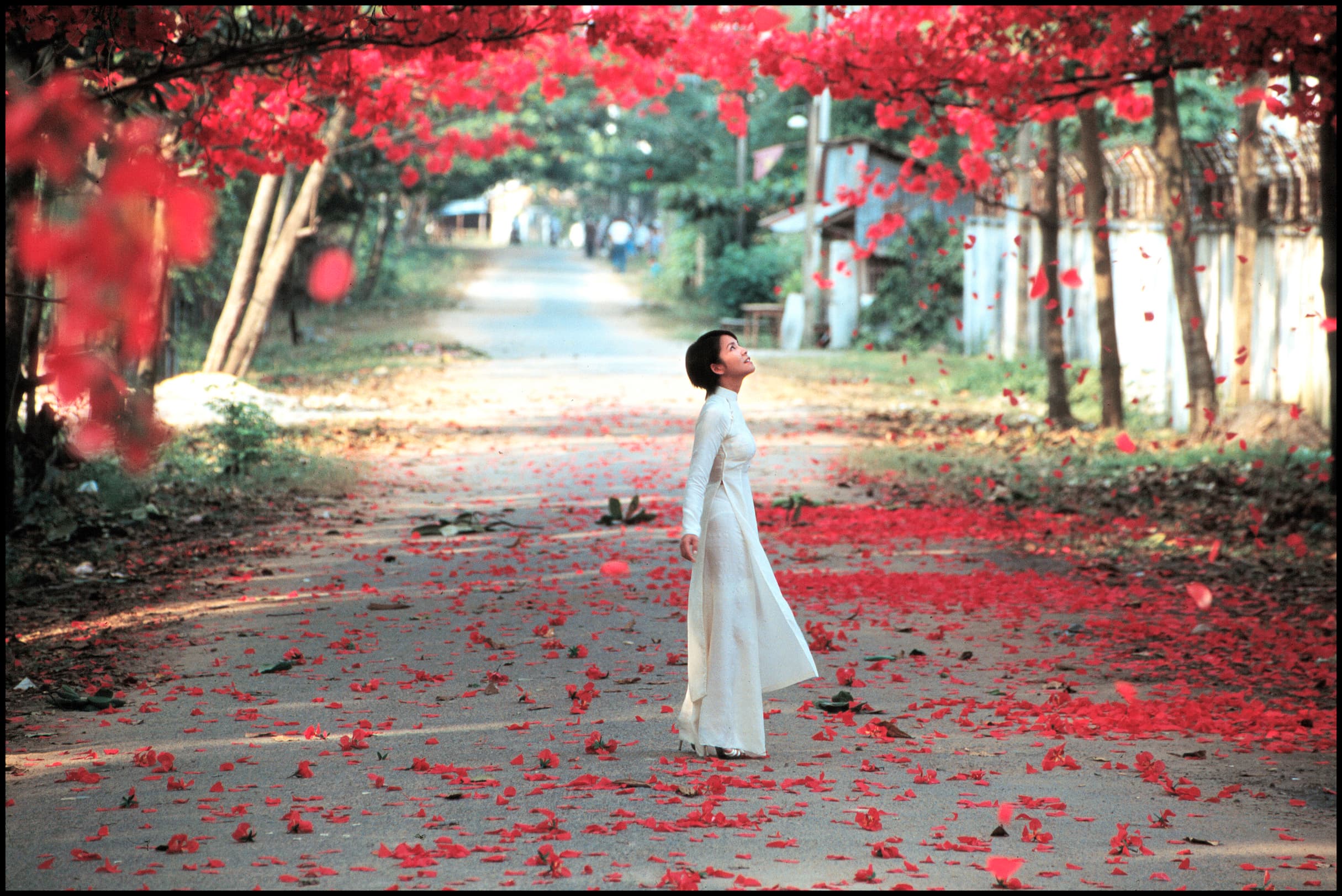
Three Seasons. Courtesy Tony Bui and Focus Features.
Written and directed by Tony Bui
Tony Bui’s Three Seasons (1999) is the type of movie I always hope I’m about to see when I go to the theater. Rarely does a film live up to this expectation. Featuring a multi-strand and multi-POV narrative, no story in Three Seasons suffers from a lack of depth or being cut short, as each of them weave together with characters having chance meetings across each of their tales. Bui imbues his characters, his setting, and his story with tenderness, sorrow, regret, humor, inspiration, dignity, anger, love—in short, he reveals his remarkable instinct for capturing the full breadth of life’s emotions to craft a heartfelt and thoughtful film.
In Three Seasons, a cyclo driver (Đơn Dương, the director’s uncle) falls in love with a beautiful and aloof sex worker (Zoe Bui) determined to climb social classes. A lotus vendor (Ngọc Hiệp) forms a powerful, artistic bond with a poet (Teacher Dao, portrayed by Manh Cuong Tran), who, as a result of his long battle with Hansen’s disease, has lost his fingers and can no longer write. The lotus-picker becomes his hands and muse, inspiring and enabling him to write again. A little boy (Nguyễn Hữu Được) sells knick-knacks from a case, wandering labyrinthine city streets. When his case is stolen while hanging out with an American GI (Harvey Keitel), so is his livelihood, but on his adventure to recover his means of survival, he reluctantly gains an endearing shadow. Keitel’s veteran seeks his estranged daughter with no knowledge of her but a photo.
Bui relishes in painterly compositions, celebrating his on-location Vietnamese settings as if the place plays a starring role alongside the actors. In a film festival Q&A, Bui explains that filming in Vietnam, in the Vietnamese language, with Vietnamese actors was critical to him as a writer and director. He captures the beautiful shots of urban life in every neighborhood—from wealthy, tourist districts to impoverished residential areas—without casting an uninquisitive rosy hue on the city or falling prey to an unjust harshness in the name of alleged realism. This attention-to-detail and the ability to really be on location leads to a sense of production value of which many other small-budget indie pictures fall shy.

Three Seasons. Courtesy Tony Bui and Focus Features.
Ingenious and inventive set design also contributes to the sense of production value. The ethereal lotus pond creates a spiritual atmosphere in which the pickers, singing, float through blossoms trimming the budding stalks. At the center of the pond stands an old temple, also contributing to the aura of religious mysticism surrounding the lotus vendor’s storyline as if to say that art is sacred. Despite the wild beauty of these scenes anchored in Vietnam’s incredible nature, neither the temple nor the lotuses existed at the location. Bui and his team fabricated the temple in a studio and moved it to the pond. The lotuses do not actually grow in the region of Vietnam where filming took place, so the team had to plant them three months in advance and then come back to film once the flowers came into bloom. The songs and poetry add to the tone and feeling of the film. Bui himself wrote much of the poetry (though his mother, who acts as his translator from Vietnamese to English, is credited with improving the poetry).
Each story is about searching or seeking. The subtle current of passion pulsing through Three Seasons is like lying close enough to someone to hear their heartbeat—it’s a soft and quiet film, but one that draws you in intimately. Bui evades easy trajectories. Even a secondary character, like Huy (Phat Trieu Hoang), the man who serves as an overseer and liaison between Teacher Dao and his flower pickers proves more interesting than a stereotypical stern master. Toward the end of the film, he recognizes the significant connection between the lotus picker and the poet and, as a result, offers to do her a favor out of respect and gratitude. Her request, whimsical and heartfelt as it may be, is brought to fruition.
The world of cinema and the heritage of human imagination nearly lost this cinematic treasure. The twenty-year-old, rarely screened print was deteriorating in quality. Bui says of the digitization process, “So much time had passed, nobody knew where [the negative of the print] was.” Thankfully, the negative was found and the film digitized.
Bui explains, “The 2024 Sundance Film Festival was the first screening of the restored, digitized version” of Three Seasons. Sundance’s selection of Three Seasons as part of a showcase celebrating its fortieth anniversary became the catalyst for digitizing the film. As a featured retrospective at the 23rd New York Asian Film Festival, where I had occasion to see it, Three Seasons had a well-deserved opportunity to enchant audiences once again, and, soon Bui assured those audiences, the film will become available for streaming.
While the film received the celebration and accolades it deserved at this summer’s festival, the story is still tinged with loss. “This was almost like this experiment that thankfully paid off, but no one wanted to do it again,” said Bui, regarding the so-called “risk” of making a film in Vietnam, in Vietnamese, with a Vietnamese cast. Although Three Seasons proved producers could earn back their investment on such a film, such storytelling was still seen as risky. Because, goodness forbid, we pick which stories get made based on the quality of the work and ability of the filmmaker alone.
Great films are lost all the time. In the early days of film history, they were often intentionally destroyed. They still are. Sometimes films tour festivals never to get distribution. Other times reels become lost or deteriorated before they can be preserved and digitized. But the aftermath of Three Seasons represents another kind of loss, the kind that happens all the time and is often the result of capitalist and/or racist attempts to negate those, like Bui, who have a non-white, non-traditional story to tell and an eye for unique story structures.
What can one do about it? Well, for one thing, attend screenings like those at New York Asian Film Festival (NYAFF), where an international cohort of filmmakers and film lovers gather to showcase their work and to preserve historic films. Here’s a snapshot of some other pictures that shared the spotlight with Three Seasons at the 23rd NYAFF.
Lien Chien-Hung’s 2023 film Salli is the anti-rom-com. For Hui-Chun (Esther Liu), it’s not about finding Mr. Right, but about feeling all right with herself. Following the love life of a Taiwanese chicken farmer torn between familial obligations and finally seizing the opportunity to get to know herself, the film cleverly confronts the horror, humiliations, and thrills of online dating.
Tsui Hark’s 1984 throwback to postwar romance, Shanghai Blues (starring Sylvia Chang, Kenny Bee, and Sally Yeh), is one of the most energetic movies I’ve ever seen, as comedic as it is swoon-worthy, replete with witty repartee and masterful gags of physical comedy, starring Sylvia Chang, Kenny Bee, and Sally Yeh.
Coming from Japan, Akihiro Toda’s 2023 film Ichiko suffers from uneven emotions that range from too reserved to melodramatic, and a male POV that proves confounding for a movie about women suffering abuse (but also about many other intense subjects that perhaps proved too myriad to appropriately explore in one film). However, its noir-ish atmosphere and thick air of suspense offer a moodiness that suggests potential and a fascinating toying with genre conventions.
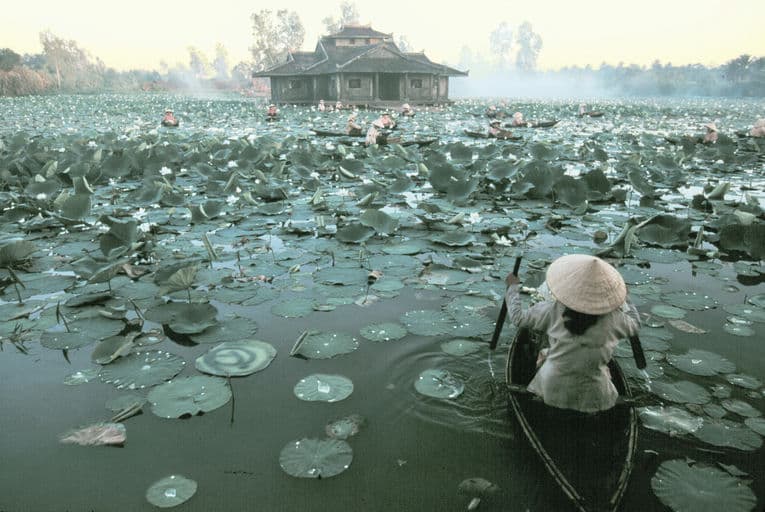
Three Seasons. Courtesy Tony Bui and Focus Features.
Wang Yichun’s 2023 The Escaping Man made its international premiere at NYAFF. The film satirizes class in China à la Parasite in Korea, but without quite the same level of bite or the same clarity of political insight—perhaps because its focus lies on the woman with the nanny, not the nanny. The film follows a nanny who orchestrates the kidnapping of her ward with the help of an ex-con (Jiang Wu) in order to get rich off the ransom money. The Escaping Man evades judging any of its characters; Wang aimed to interrogate all perspectives, and insists that the characters were all “coming from a place of love.” No one comes out of the movie looking great, but there is something to love about the core cast of misfits. This raucous, humorous movie embraces a brilliant spirit of playfulness and whimsy alongside extremely dark comedy.
During the Q&A, Wang explained that she was inspired by filmmakers like the Coen brothers for “going against the grain of the genre.” Indeed, what’s most interesting about all these disparate films spanning different decades and countries is that they challenge genre in innovative and exciting ways. These are exciting films that can’t afford to be forgotten to time or lost in the shuffle of the streaming distribution machine. The voices, perspectives, and talent need us just as much as the industry needs them.
Laura Valenza is co-film editor at the Brooklyn Rail and co-host of The Silver Nitrate Witches’ Movie Review Brew podcast. Hear her speak on film at TEDx SVA Women.