Word count: 5688
Paragraphs: 58
On View
MoMAIlluminated Hours: The Cinema of Nathaniel Dorsky and Jerome Hiler
May 9–16, 2024
New York
On View
Anthology Film ArchivesIlluminated Hours: The Cinema of Nathaniel Dorsky and Jerome Hiler
May 17–19, 2024
New York
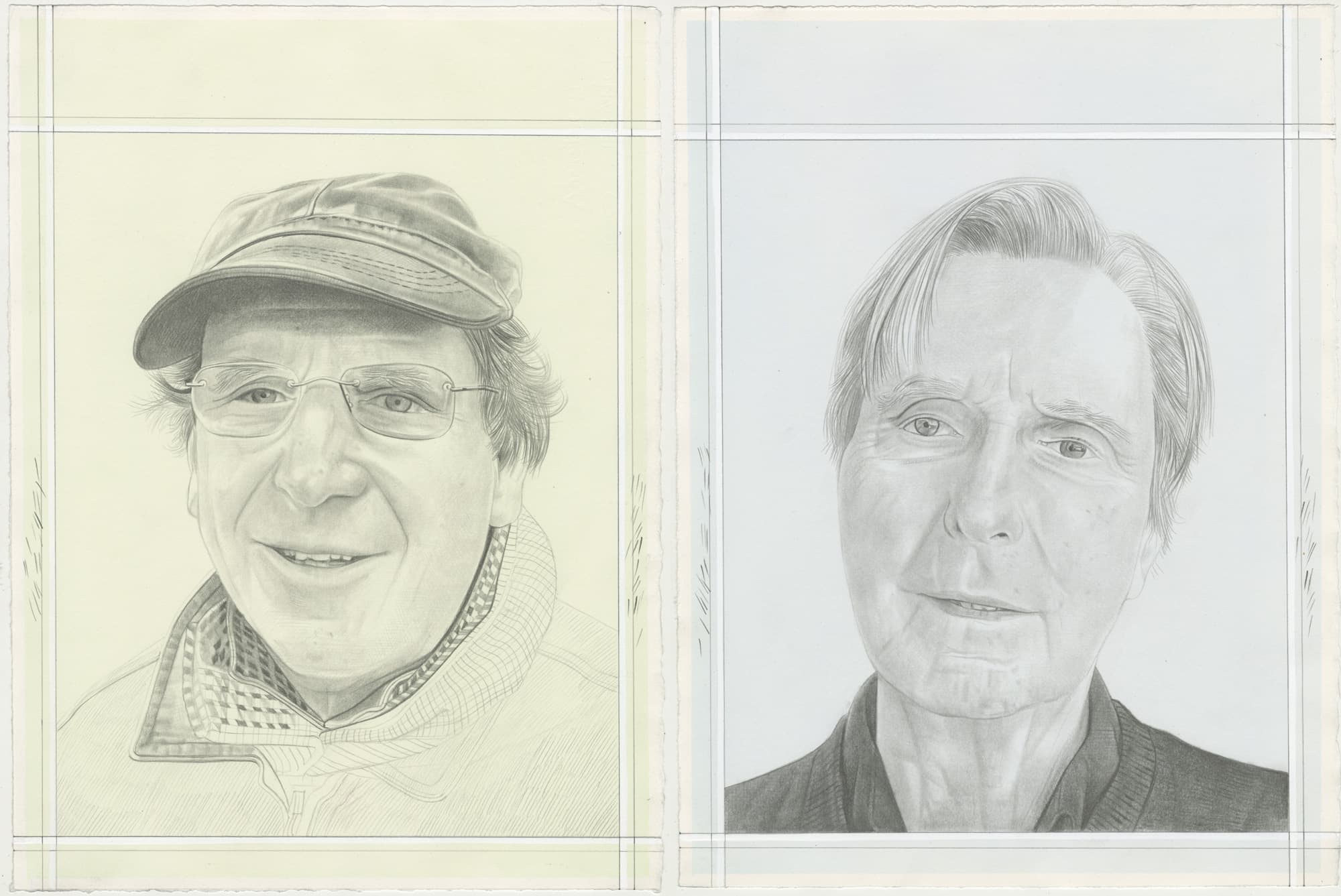
Nathaniel Dorsky and Jerome Hiler are returning to New York. Partners in life and cinema for nearly sixty years, this month, MoMA and Anthology Film Archives will present a panoply of screenings of their experimental, personal, and mostly silent films—spanning from their earliest endeavors of the 1960s when they were immersed in New York’s cross cultural artistic bloom, to more recent poetic transmissions from their perch in San Francisco. The screenings are coinciding with the release of Illuminated Hours: The Early Cinema of Nathaniel Dorsky and Jerome Hiler, a new publication of texts and images celebrating their work.
Opening night at MoMA will feature a video presentation by Hiler enticingly titled Cinema Before 1300, which will explore the mysteries of early stained glass work, acting as an introductory prism for the 16mm showings that will follow. Both in their early eighties, Dorsky and Hiler are at peak maturity as filmmakers, exhibiting immense facility with their practice as they open new doors of perception with each screening. Our conversation took place over email—with the intermittent phone call—and proved constantly revelatory as we dove through their personal histories in New York, Hollywood, and San Francisco and the wisdom gleaned along the way.
Will Epstein (Rail): Some of the films being shown in your upcoming program at MoMA derive from your time in New York and New Jersey in the sixties. I’m curious what kinship or crossover in sensibilities you felt with the experimental art and music scenes that were happening concurrently in New York? I noticed Tony Conrad contributed some music to your collaborative 1970 film Library, for instance, and I see some similarities in La Monte Young’s interest in pre-equal-temperament tuning systems and Jerome’s interest in thirteenth century stained glass.
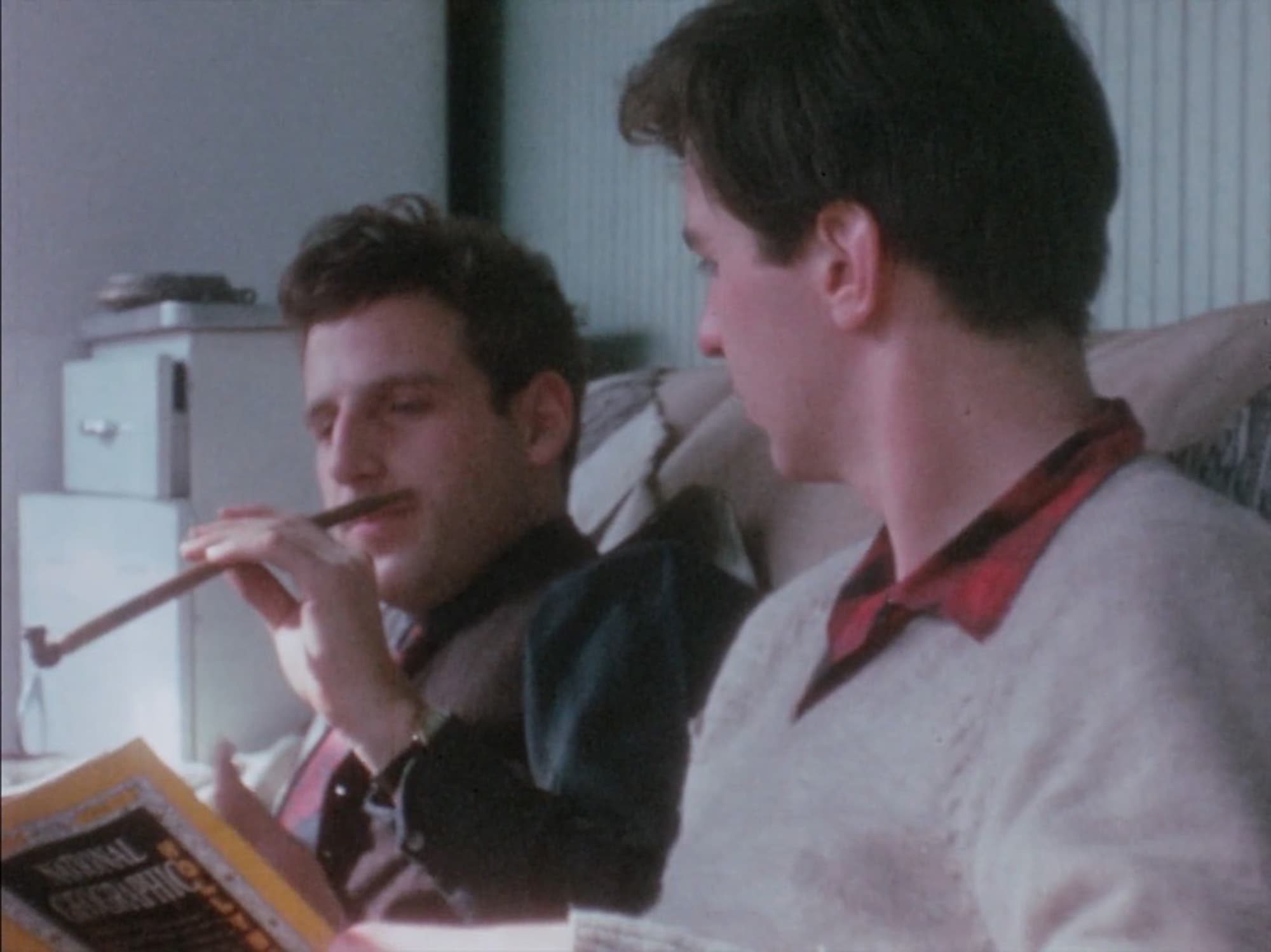
Jerome Hiler: The creative world of downtown New York artists was very fluid as far as meeting and befriending went. The more gifted the artist was, in my experience, the friendlier and more generous they were as companions. It was a world that was the very opposite of the arrogant image of the creative personality. So, if you were in the film scene, you could easily meet actors who were in the theater world or who were partners with musicians who, in turn, knew dancers who connected to the world of poets. We all seemed to be enthusiastic and interested in whatever was going on.
I probably met Beverly Grant, who did the voice over for Library, before meeting Tony Conrad, since she was in Markopoulos’s The Illiac Passion. She, eventually, married Tony, though I also met him well before the wedding—which I was supposed to “cover” as a photographer for a major magazine. Unfortunately, the event was lit by only a few candles and I became so stoned, I was of no use as a reporter. La Monte Young was there and I remember talking with him at length about Indian and Arabic music. Nathaniel and I had been to a concert of his with Marian Zazeela and (I think) Tony Conrad and Angus MacLise. There was nothing like it anywhere on the planet. After several hours of amplified drone-like vocals and instrumental calligraphy, I felt myself in a near replica of my recent LSD experience. It’s hard to convey how deeply moved I was, but I was irritated by people applauding afterward. My state of mind was overwhelmed with a feeling of reverence and a need for silence. I foolishly made a statement that silence was the best response and a retort came from Jasper Johns to the tune that I “...can take my silence home with me.” I was put in my place. But, we became close friends with Tony and Beverly and kept close even after we moved to New Jersey.
As for what drew us to La Monte’s music, Nathaniel and I were already interested in just about all musical traditions in the world as well as classical and avant-garde classical, jazz and, particularly, Renaissance music. On the first day that Nathaniel and I spent together, the subject was almost exclusively music.
Nathaniel Dorsky: Yes, we were both very taken with the new music and art scene in New York during the early sixties. On a very basic level, I came to my desire to explore what we eventually called open montage, or polyvalent montage, from reading the new poems of John Ashbery, quite stoned on hash, from Rivers and Mountains, at an extremely slow pace, word by word, so that the text opened up to pure gesture from each island of a word to the next. Meanwhile in the music world, La Monte Young was singing cowboy songs like “Bury Me Not On The Lone Prairie,” also at a pace that dismantled their original intent and opened up the melody to pure elongated tonal gestures. In fact it was in Tony Conrad’s loft that I first heard these most heartfelt fragmentations.
And then there was a 1963 film that I liked very, very much titled Chumlum by Ron Rice. It was a complex visual net of weightless superimpositions in the spirit of a Jack Smith loft-based, pleasure dome film… an all night affair that ended with a journey in dawn's early light out to Coney Island where the tragic melancholy of dawn rubbed with a raw orange color palette backgrounding the skeletal parachute jump. This added a deep pathos to the all-night tangle of sensuality we had been witnessing. But most importantly all this buoyancy of vision was floated on an extraordinary score by Angus MacLise in the Arabian mode of a Santur. I found this distant but delicate combination deeply moving. And yes, there is a connection to the Library film that Jerome and I made on commission for our local rural county library when we lived on Lake Owassa. Tony brought that world into ours.
Another much less subtle trend was the introduction of pop music, essentially rock and roll, on to cinematic art forms that were basically obliterated by the red underlining of commercialism. At that time in human society there was a clear distinction between pop music and more traditional art forms. They co-existed but never married. In fact, there was a much greater distinction between working class, middle class, and upper class people. This was most clearly manifested in dress. For instance, the first time I saw Andy (Warhol) with Gerard (Malanga) walking down the sidewalk in the Lower East Side, both in black leather jackets, it was truly shocking. The world was really different then.
Before Jerome and I ever met, we had attended by chance several avant-garde film events which we later discovered to our delight we could then talk about. One such event was the premier of Kenneth Anger’s Scorpio Rising at a small theater on 23rd street. The place was packed. I only knew of Anger’s Eaux d’Artifice and perhaps Fireworks.
At that time in the early sixties, new films were taken quite seriously and the pleasure or displeasure of the audience was loudly expressed by aggressive waves of applause or booing. Film at that time was looked to for new ways of expression. Whether European features such as the spectacular Antonioni black-and-white trilogy or small gauge films promoted by Jonas Mekas in his weekly “Movie Journal” in the Village Voice, the audience’s reactions were for real and demanding.
At the Scorpio Rising premiere I mentioned, both Jerome and myself had prepared ourselves for a stormy chorus of booing when the film ended. We had been witnessing underdressed leather bikers playing checkers ornamented with swastikas to a variety of rather sappy white rock-and-roll songs that played one after the other, while a film depicting Jesus and his disciples was ironically intercut. Well, we were both shocked as the house came down with approval. And the modern age was born.
Rail: Jerome, you also incorporated elements of performance and improvisation into the presentation of your work, much like your musician and artist peers. How did you arrive at your methodology for these showings?
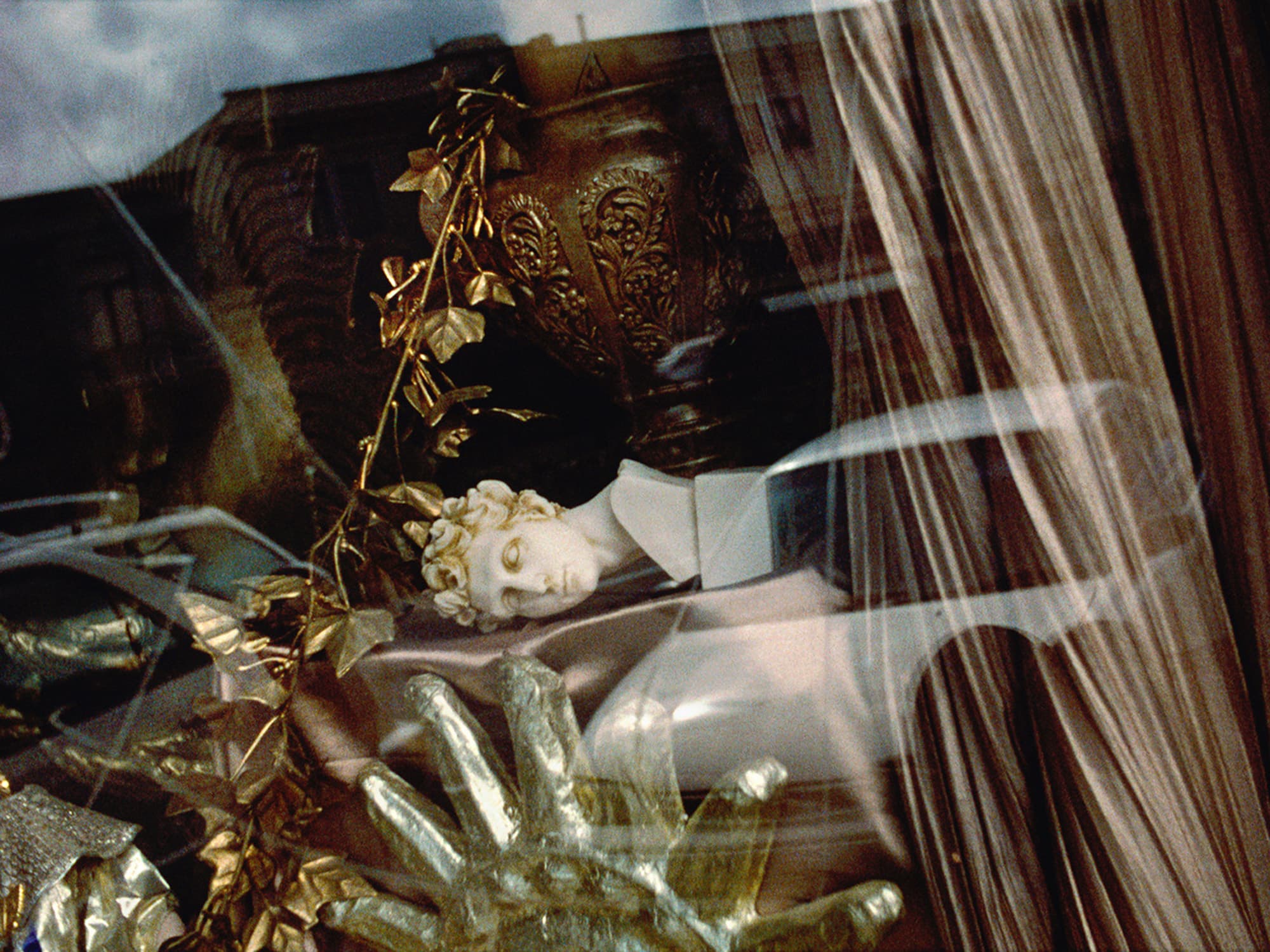
Hiler: I’m afraid my methodology for presenting my film footage was very direct and matter-of-fact. Friends gathered in my apartment at first, and later elsewhere, to see improvised screenings which sometimes used multiple projectors. These events weren’t inspired by any other artistic movements of the time. They were simply in the spirit of play. Many times they were so satisfying that the idea of finalizing things into one form, such as a finished film, seemed a death-knell to the endless possibilities we enjoyed with this very open-form viewing experience. I did have to keep moving material around. I often gathered footage to address a particular group of viewers. These late night screenings were responsible for my being evicted from my place on East Broadway and this instigated us to look and find the house on Lake Owassa in New Jersey. It seemed that one night, at around 1:15 a.m., I was showing a two-projector work and this blew the fuse. I went downstairs and woke the manager and got him to go to the basement to change the fuse. I was with him and I rather naively said: “It must have been when I turned on the second projector.” “The second projector?” he roared and said that was the final straw. He had a long list of transgressions from living downstairs from me and brought them to the landlord and I was thrown out.
Rail: In 1971, you both left this vibrant milieu and moved to San Francisco. In Illuminated Hours Nathaniel speaks about the prolonged shock of moving west to San Francisco and how the changes in flora, weather, and geography provoked a depression and lull in your work. Did you understand it as a consequence of this shift later or was it something you were aware of at the time? How do you understand that period now, do you see that fallow period as essential in some way?
Dorsky: That shock was a very frightening thing. I lost the trust of my heart and I lost my trust in the world. Every social gesture I made was calculated for survival. There was no tenderness, there was no spontaneous love.
My father had died, leaving my mom to live alone in New Jersey. I was extremely tied up with her. It was overwhelming and I naively thought that I would gain some freedom by moving to California. But, of course, my abandoning her only made things worse.
There were other factors also. I had left New York where I had established a number of connections in the New York film industry and had enough successes to feel I had a chance there. I had even won an Emmy in my early twenties and Jonas wrote about my first film, Ingreen, in the Village Voice.
And San Francisco was basically a small town. There were not that many opportunities. In New York the film business was largely a Jewish world and I felt comfortable there. I had a place. Now ALL that was gone.
But, on top of that there was something that I understood only later. My hysteria and depression were an expression of the total terror of trying to live my life as a gay person. I cannot tell you how terribly frightening that was at that time. I was in a constant state of paranoia. And to answer your question, yes I was aware that life was not going well at all.
Rail: Did anything bad ever happen that realized your paranoia?
Dorsky: No, not really. Once a crude cousin started talking to me in a lisp. But the terror came from the subtle things from friends and family. I had always just been “me” and now I was regarded as a more distant thing, a gay thing. At Christmas I was given gay novels, classy ones of course… but things like that… I had become a concept even for my family which I found terrifying, and I am sure they also found it so. I know all this seems inconsequential in this day and age, an age of a miracle of transformation, but it was a terrible, terrible thing “back then.”
One thing I had really liked about the new American cinema scene in NY was that it was a safe and welcome place for gay expression … but not because of any "pro gay" policies as such but much more because the scene was genuinely bohemian and “gay” was hardly noticed in this crazy mix of colorful personalities.
To my good fortune, I was able to work my way out and onto the surface of life again. I had begun various meditation programs and then the opportunity came to go to LA and work on a drive-in type teenage comedy. It was a very difficult time but also a thrilling time to once again be in the film industry and to participate in all that that entailed.
It was a tragic but poetic time in Hollywood. The old ways were dying. And a few young people of my generation were making their way into this very seductive web of past glory.
We even “discovered” David Hasselhoff and were proud to be the maker of his first feature, Revenge of the Cheerleaders. My, my to shoot a feature in 35mm!
Rail: Wow, I have to see that film. Did that time working in Hollywood in the seventies have any impact on how either of you see yourselves in the context of the American lineage of filmmaking? Your work in silent cinema and montage can be seen as a continuation of the Russian filmmakers of the early twentieth century but that’s clearly not the whole story. Also there’s a great photo of you both in the book with Douglas Sirk!

Hiler: The vernacular of American cinema was deep in my consciousness. My childhood at the movies and being in the first generation of television viewers steeped my imagination in a certain imagery. But it wasn’t until seeing Citizen Kane or Psycho that I thought of making films myself. Of all things, I was inspired by a shot in Psycho of Marion Crane’s rear-view mirror in her car. It was actually a process shot, though I didn’t realize it, of a frame within a frame and this technique was mirrored, unconsciously, in my two-projector nights with Nathaniel. Was it a coincidence? Probably.
Sometime in the late seventies or early eighties, Douglas Sirk was visiting the Bay Area at the Pacific Film Archive. It was Peter Scarlet who assigned Nathaniel, myself, and Warren Sonbert to “entertain” Mr. Sirk where he was staying with friends in the Sea Cliff neighborhood. It was amazing how Sirkian the house was. As we passed through the living room we saw a white spiral staircase with a large white poodle watching us from halfway up. Mr. Sirk was waiting for us in the kitchen. Very sadly, he was losing his sight and he stayed in the darkest part of the room avoiding bright light and wearing dark glasses. Even so, we spent hours in a surprisingly animated conversation. He seemed relieved that we didn’t focus on his American films and spoke, instead, about Schlußakkord, which we loved most among his films. From there we discussed his ideas as a theater director of classic German plays and, finally, we spent the most time discussing directorial approaches to handling Mozart operas. Warren took footage of our ramblings. I can honestly say that Mr. Sirk seemed happily engaged with our whole conversation. But, then, his wife appeared and said, “Please come and see. There is blood all over the roof of the car.” The Sirkian mood continued as we went outside and contemplated a trail of vivid blood drops across the canary-yellow roof of their car. It must have been a hawk with its prey flying overhead, but we felt that it was best to leave on this high note and walked the beach savoring memories of the conversation with our favorite director.
Rail: Speaking of blood-red and canary-yellow, Nathaniel, you refer to “color as the most essential visual element” (Illuminated Hours)—is it as present an inspiration and concern while shooting and editing for you both?
Dorsky: Very simply, a color cut is equivalent to a key change in music… if the progression of colors does not happen humanly and tonally, then nothing else can overcome that. No meaning can be felt or established. It is the most basic thing. It is the world of our body, it is the world of our emotional landscape. It is our heart of intelligence.
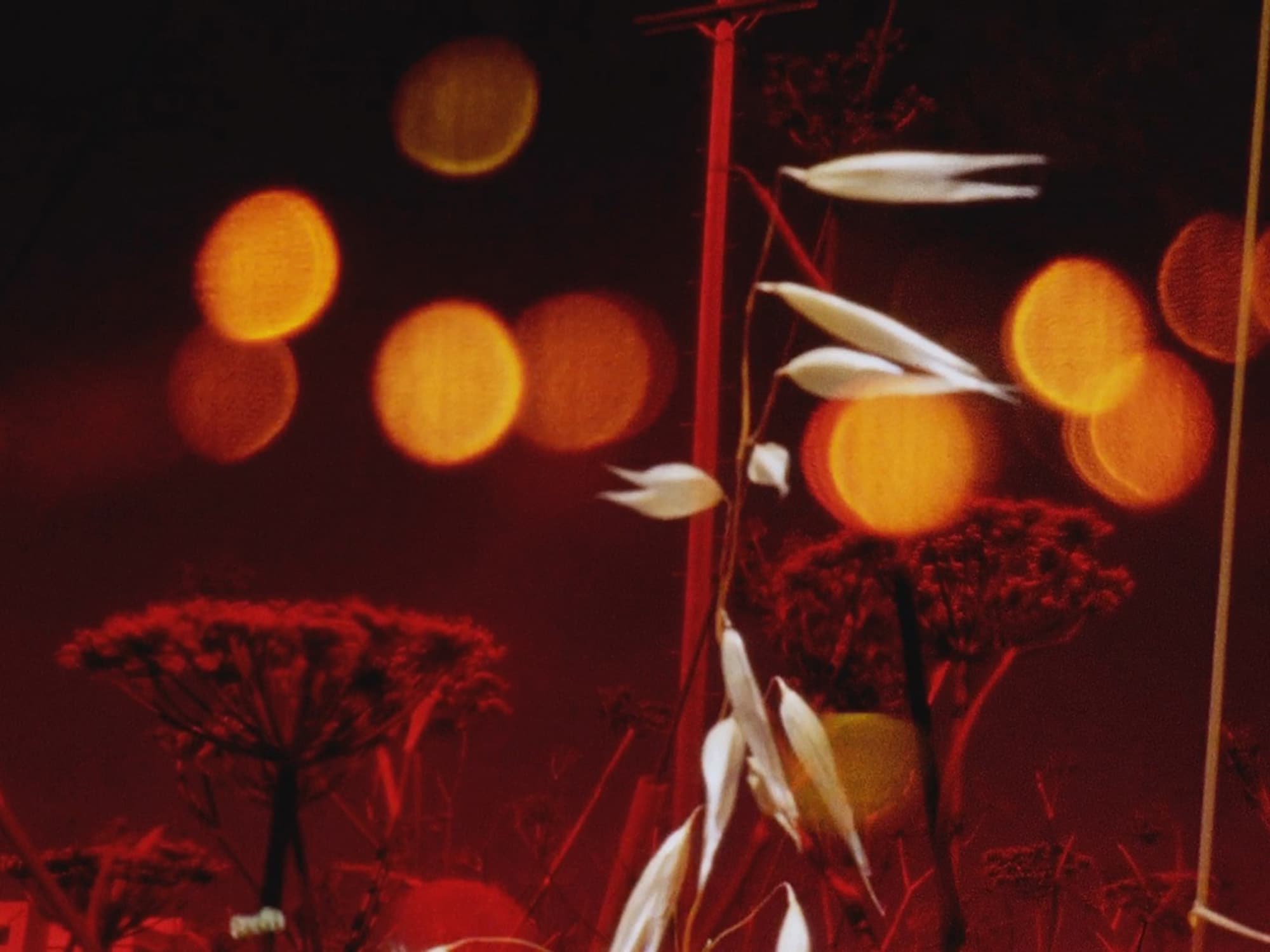
Hiler: At this late stage of my life, everything is becoming more mysterious. The more familiar, the less I seem to understand. Why color? How and why did it come about? Obviously, it is very powerful. It seduces and repels. Whole countries are crazy about their flags. The cosmos has vast incandescent displays. If I look at my early, carefree days, I can point out that I come from a painterly tradition. There I can look back on centuries of a free use of color. The medieval period had a freedom of color that was finally matched in the early twentieth century. So when I saw Stan Brakhage and his saturated red frames in Prelude: Dog Star Man, I felt the color run right through me from my eyes to all parts of my body. On the spot, I felt that this medium of personal filmmaking might really be for me. It was not subject matter or ideas that converted me, it was the blazing power of color on a wall that did it.
Rail: You’ve both mentioned Buddhism as having been integral to your life and practice. Can you speak about how you intertwine with Buddhist principles and what about them spoke to you upon first discovery? Was there anything in your early life that planted the seed?
Hiler: There is a Buddhist expression: “It’s real, but not true.” That’s the only “intertwining” I can think of. The vividness of our experiences: the sharpness of pain, the brilliance of sunlight, the heat of fear, the readiness to love—everything that partakes in life’s drama and convinces us that it’s real is also mixed with powerful habitual attitudes that make us say “I like that” or “I don’t want that” about everything that arises. That bias is completely personal and shaped by the events of a lifetime which makes our relationship with the vividness very skewed and, so, not true. So, we live in this situation and practice meditation to simply experience the mind amid the feelings of the body. There’s no controlling, just letting the mind be free to have thoughts or not. It’s so kind to yourself and, quite possibly, feelings of generalized love can arise. So, this feeling of love starts to stay with you and, more and more, you make peace with your world. But, you’re on your own. There’s no savior upstairs to make a deal with.
How did this start in my life? My first steps were fueled by pain and fear. I wasn’t seeking some wonderful spiritual goal, I was desperate to alleviate my suffering. The first steps of many spiritual seekers as well as psychotherapists and psychoanalysts are taken from a place of deep distress. Eventually, one might look back with gratitude at those terrible feelings and realize that there was no other way the lazy spirit could move forward.
Rail: Nathaniel, that makes me think of your first film, Ingreen, and the atmosphere of claustrophobia it expresses.
Dorsky: Oh I am glad you mentioned that. At that age of nineteen along with society’s condemnations, I made a film, typical of a nineteen-year-old condemning one's parents. I was not able to see them as such and I would like here to correct the record from a more developed point of view. One which also expresses their extreme generosity to me, their dedicated sense of goodness and hard work so that I might have a meaningful life. It is amazing just how unaware children are. How little they actually see.
My father, Aaron, was a tender man. His depth of humor knew no bounds. Nobility and wisdom graced his brow. The Second World War did have its way. And sadness was his comfort.
My mom was strikingly beautiful. Blonde, flirtatious, and alive with the passion of the world. My Dad grew up in the Bronx near the Botanical Gardens, my mom in New Jersey, an hour or so from Manhattan. Aaron was real smart, went to Horace Mann High and eventually was pulled out to New Jersey to live near my mother’s family.
Five days a week he drove to work at a printing company near Penn Station. It was a grueling commute, yet every Saturday he took my mom and me back into New York to spend the day at the Modern. At that time, in the late forties, the museum had a children’s matinee following a morning class for water coloring. Mostly silent films were played along with live piano. Shorts like Easy Street and The Rink flickered an ancient culture of ethnic confrontation, all bathed in a strange free-floating emulsion. I particularly remember, perhaps a Dutch film, of a family living on a canal boat. It was of a more tender nature both as subject and look. And I enjoyed the boys in their darling soup bowl haircuts. The museum published a book about this film with lovely photos and I remember wanting to have it.
But my most vivid memory of all was sitting in the front row next to the piano. I was crying uncontrollably and the pianist kept looking over at me in sympathy and concern. The movie was Chaplin’s The Kid, a film I have revisited several times to try to unlock its hold on me, but to no avail. Something perhaps about the inadequate father, Chaplin himself, or the vulnerability of Jackie Coogan.
After the film we would wander up the grand stairway to the fabled second floor galleries. That stairway is still there, hidden away like a Proustian madeleine. My seven-year-old mind questioned this mysterious collection which was often quite beyond my abilities. Now, of course I am sure something was being communicated. Mr. Wise Guy looked upon the all-black paintings with a certain cynicism. But my dad had me look more closely and I discovered the nine squares within the larger frame, varying shades of deep black. It is funny. Many years and lifetimes later when first living in San Francisco I made a film, now lost, consisting of a progression of deep tints of black leader projected on the screen.
There is really very little beyond what I have described that I can call myself. I am the aftermath of this initiation. I am my parents with all their joys and sadnesses. Somewhere deep inside the theater of my mind a smokey beam of light searches for an opening, searches for some freedom. Yearns for the clues that might unlock this matinee of mystery.
My mom and dad, who were very much Jewish people of their generation, drifted towards more contemporary ways of seeing and feeling. My dad was drawn toward Buddhist thought, or as much as it could be truly understood in late fifties America. He was bright enough to see through the false understandings and passed on to me daily little gems of sane advice. He genuinely understood the totality of the teachings, the mysterious wholeness and unknowingness of being a living being. I am to this day immeasurably grateful for the view of human sacredness that he communicated to me. I only wish that my mom and dad had access to the teachers available to my generation. But you know, with all the exquisite teachings I have heard throughout my lifetime, it is the examples my parents offered me as their wisdom that has kept me from going astray. They assured me that there was no greater wisdom than living through the aliveness of one’s own being. That no dogma was as profound as what one was.
Fortunately for me my father had discovered a wonderful teacher, a Jewish man, Bernard Phillips, who brought the varied world teachings of the wisdom traditions to light. There was a weekly class in New York held in an apartment. I attended a number of these classes while in high school and the seeds of the depth of the Buddhist world were revealed to me for this lifetime and perhaps, beyond.
As I became more immersed in filmmaking, the comprehension that light itself could become a direct way to pass on the Buddha’s teachings became more a reality. Many of the traps of questionable translation could be avoided. And cinema itself could fulfill the eyes and mind directly. Cinema itself could help people balance toward clarity.
Every Saturday evening we would say goodbye to the world of Matisse and Picasso and drive up the Hudson towards the Grand Concourse to dine with my father’s mother and her family. The Bronx atmosphere was thickly Russian, doily upon doily, and I loved the cut glass bowls of figs and walnuts, the cold red borscht with warm potatoes steaming, thick with sour cream.
Soon dreams would take over and well past my bedtime we drove toward New Jersey. Far below, the river, bejeweled with watery reflections, flowed silently. Bridges of pearl-like splendor laced the sky.
Rail: The self in your films resides in a space of mystery with the perspective seeming to float between first and third person—they’re clearly crafted by a loving hand but there’s a grace to the camera’s presence that transcends classical ideas of authorship. Was that a conscious space you were always striving towards or somewhere you landed organically over time?
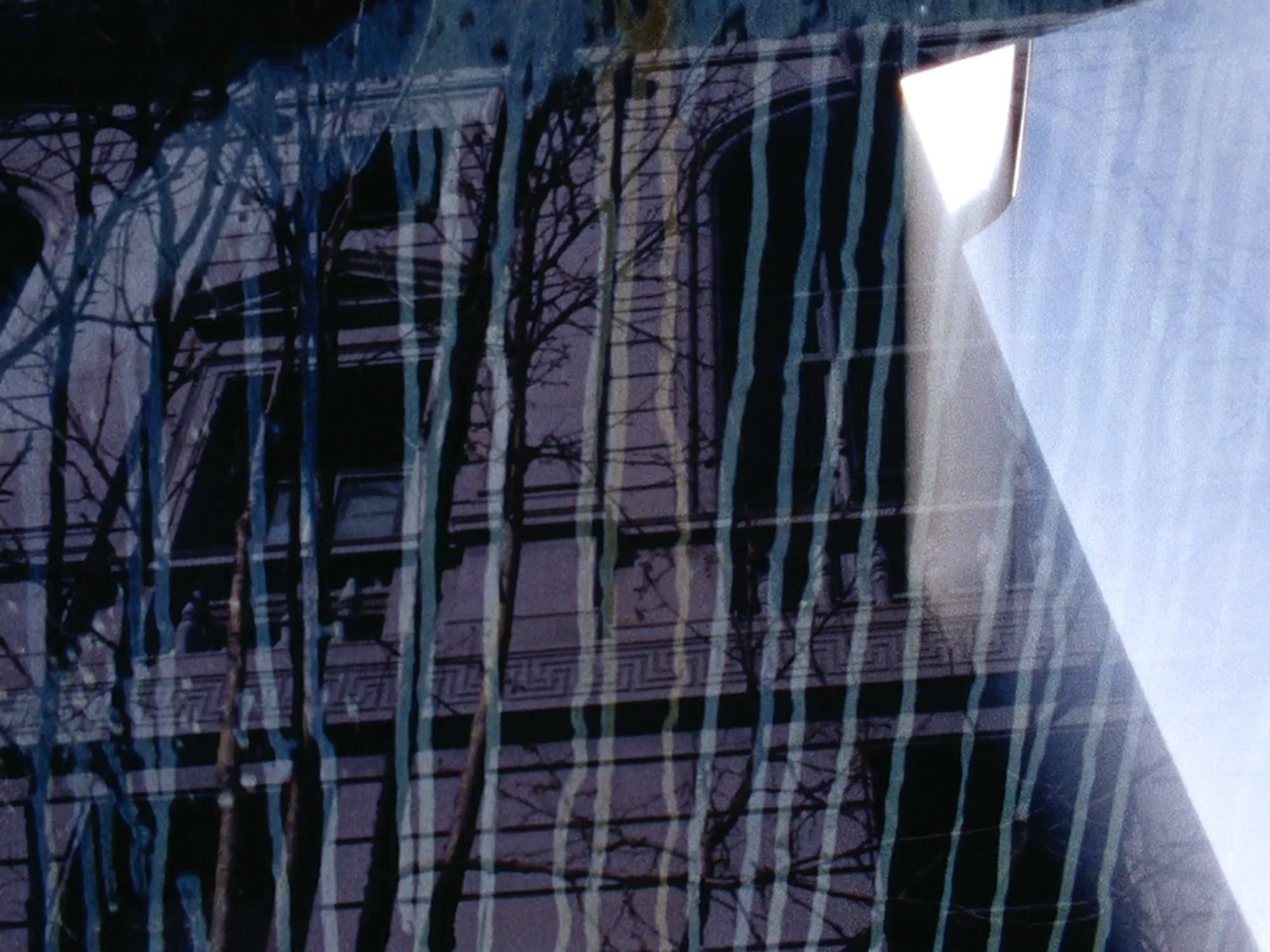
Dorsky: There was always a conscious attempt to find the balance of the maker and what was observed. How to participate in a film, therefore recognizing with some honesty that a camera was there looking at the world, and yet for that presence to be compassionate, to be selfless. The more you got out of the way, the more you could offer the audience. How to be honest and yet entertaining. Jerome and I had years of discussion about this delicate subject and I received tremendous lessons from Jerome’s actual footage observed over the years. Certainly when I see a film that is making believe no one is photographing it, I feel a dishonesty in its selflessness.
Rail: I’m glad you mentioned the idea of entertainment. When most people think of experimental film they probably don’t immediately associate that idea with the genre. When I see either of your films, however, I find them tremendously entertaining as both my mind and spirit are completely engaged and elevated. Maybe it’s just semantics but could either of you speak about how you think of this concept when composing your films?
Hiler: I don’t know if I like the word entertainment to describe the moment-to-moment feel that I want to bring to a film that I make. But, I would first like to touch upon the very big subject of how I feel about potential viewers of my work. There are so many exceptions to what I’m about to say, but there is a certain idea that truly authentic filmmakers have no concern for whoever might see their films. And there is an even more authentic group that has a dislike or disdain for the viewer and the more discomfort they dole out, the higher their reputation in the world of exhibitors. It was after a recent screening in San Francisco, as the audience gathered outside, that a woman came out and threw up in the gutter. This caused a general discussion about how we all felt after a longish video of colored dots and a loud buzzing track that, as one filmmaker said “kind of took the oxygen out of the room.” So, for myself, I do have a caring attitude for my viewers. They took the trouble to find parking spots and eat early to arrive for a screening. I also don’t consider them deficient so that I have to drive a lesson home for them. So, after a long life of showing my films privately at home (due to, among other things, ADHD), I’m delighted that there are people interested in seeing them. But, I’m not trying to entertain. I’m more interested in creating a flow of images that engage others enough that they can import them into their minds and make whatever they want with them. I definitely consider what I do as one part of a duet and I want the other part to be there. Yet, in the editing process, I am not thinking of other people. I simply trust that what I put together will be of value to others because of some commonality in our minds. And, for those who don’t have any feeling of connection with what I have done, I understand completely.
Rail: Another element that compounds a feeling of mortal transcendence in your work is the pervasive presence of plant life. What is your relationship to working with this sort of imagery?
Hiler: Plants and flowers bring up many questions. Does the mind depend on a brain? Is the mind separate? Do flowers have “minds”? They behave remarkably like us. They seduce and charm in a scheme to perpetrate their own existence. Sound familiar? Has anyone found any other reason for this life? My guess would be simply so the Cosmos could know itself. Flowers avoid unhealthy places and flourish in agreeable places. Plants can kill or cure or just make us itch. Who is to say what they “know”? Once, in my youth, I was in a greenhouse mesmerized by an orchid when a man came by and said “Wow. That thing looks like something from outer space.” “But, we are in outer space,” I said. He went away laughing rather manically. So, for me, plants and flowers exist in a place of mystery and are constant “unanswered questions” that are dwelling among us wherever we are. They’re little ambassadors of a place where contemplation is the passport and the destination is beyond reach.
Rail: In my experience, people love stories about artists finding their groove later in life after the purportedly essential ingénue period has passed. Obviously, it gives us all some hope. You both have seen the pace of your output increase over the last twenty-five years or so. Could either of you speak about making work as a mature artist as opposed to a younger one?
Hiler: There certainly isn’t a common formula for a contented and productive old age. A combination of miracles came about that made late life film work possible for me. I can look back on a life of physical work on jobs that took up my time and energy and made my film work something that survived on the periphery of my days and nights. I can also look back on a rich legacy of mistakes in filmmaking that were indispensable teachers that took the place of a formal education. Mistakes are wonderful and I recommend them to all. In whatever path you pursue, they are teachings that come from nowhere and are a tailor-made fit for you. And, if you don’t learn the lesson, they won’t abandon you, they will return again and again.
Thinking of my early years of filming helps me in the present, as well. First, we always are expressing the present moment. Nothing else will work. Yet, there is also the repetitious aspect of having worked in this medium for sixty years and the habitual aspect of seeing the world through the camera lens. When what I see in the viewfinder is too familiar, as it often is, and I say “I’ve been here too many times,” I pull back and go elsewhere. But, I often think of my earliest yearnings as a filmmaker. Just the feelings. Maybe I’ll think of Markopoulos and that will inspire me with those ever-youthful feelings and I’m able to reconnect with my original spirit. But, I have to say, I’m happier now than I ever have been in my adult life. There is always the nearness of the final curtain that could come at any moment, but, until that crash comes, I can only wish that everyone could enjoy their late years as I do now.