ExhibitionsSinging in Unison, Part 16
Josephine Halvorson and Bing Wright
Curated by Phong H. Bui and Cal McKeever
Opening reception: August 1, 3-6 p.m., featuring a cooking performance by Rirkrit Tiravanija, Tomas Vu, and co.
In Loving Memory of Brice Marden (1938-2023)
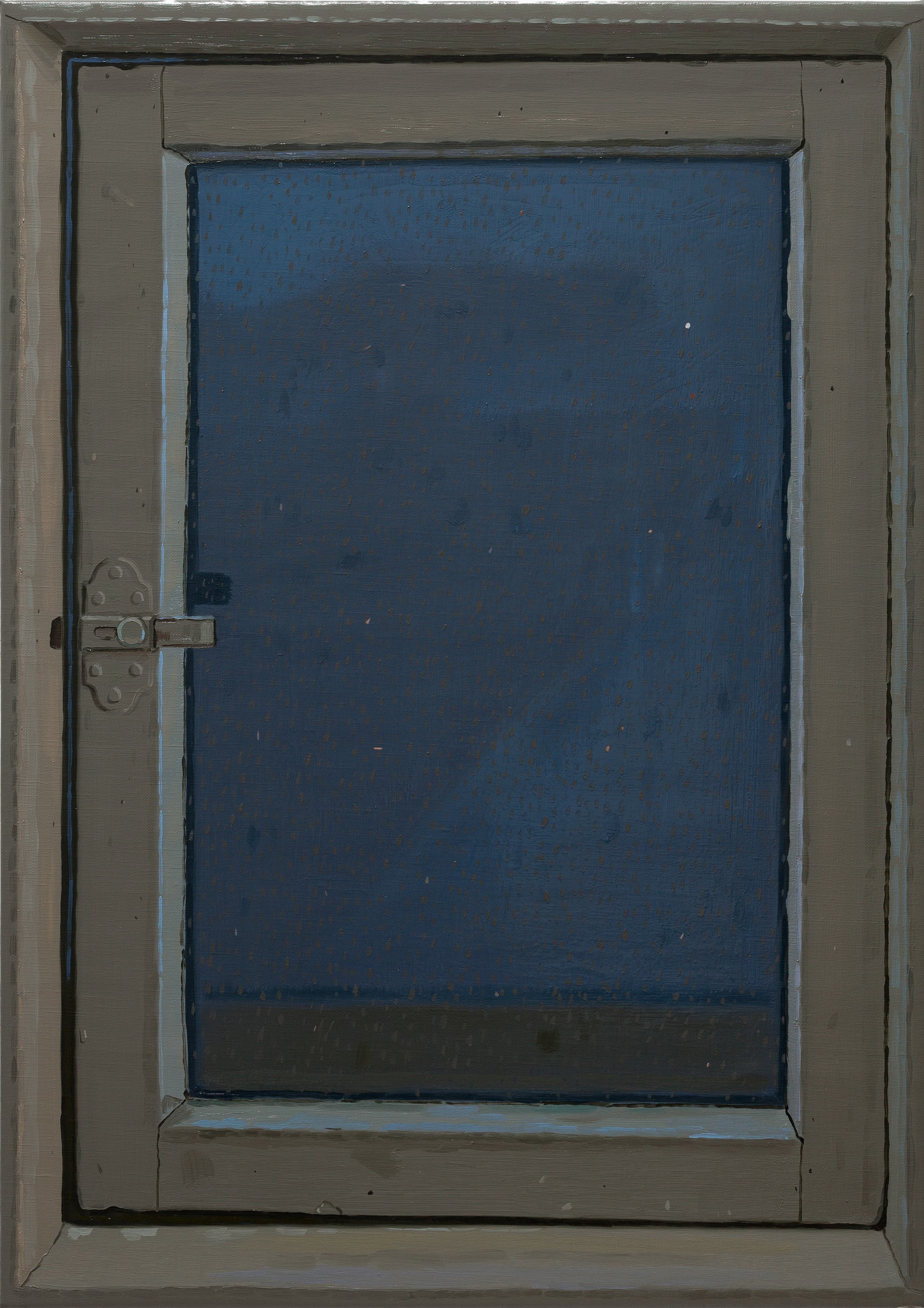
Josephine Halvorson, Night Window, February 13-14, 2015, 2015. Oil on linen, 31 x 22 inches. Courtesy the artist.
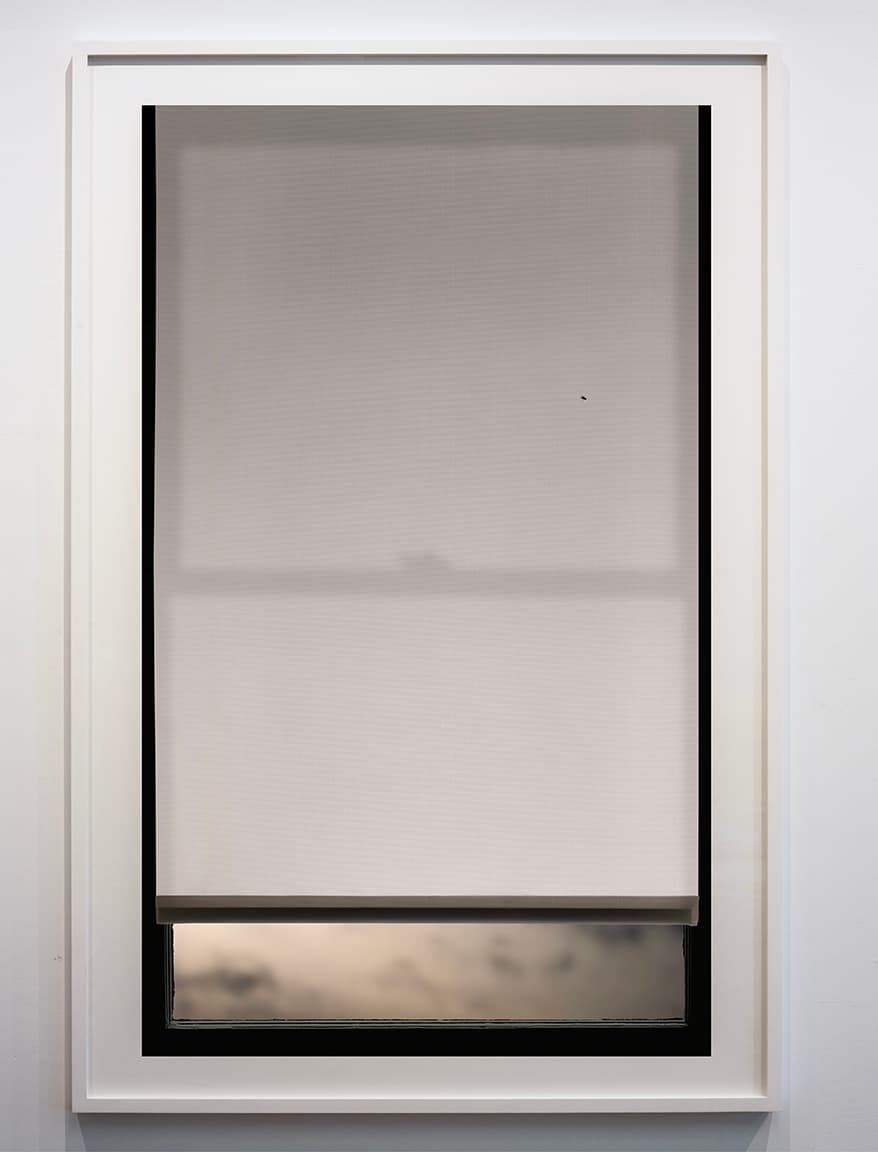
Bing Wright, Close of Day Window, 2025-26. Inkjet Print mounted on 4ply Rag Board, 73 ½ x 47 ½ inches. Courtesy the artist.
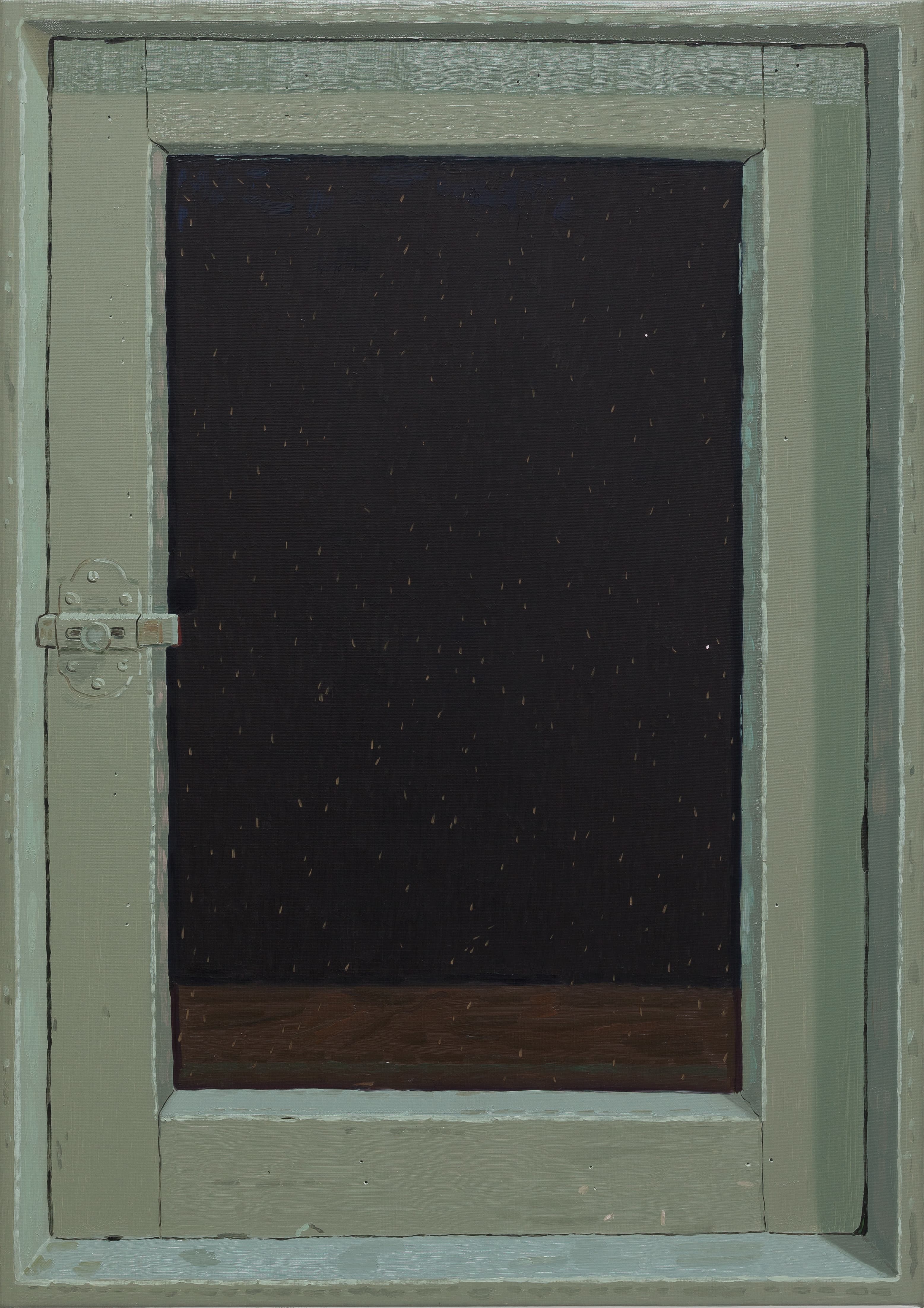
Josephine Halvorson, Night Window, July 17-18, 2015, 2015. Oil on linen, 31 x 22 inches. Courtesy the artist.
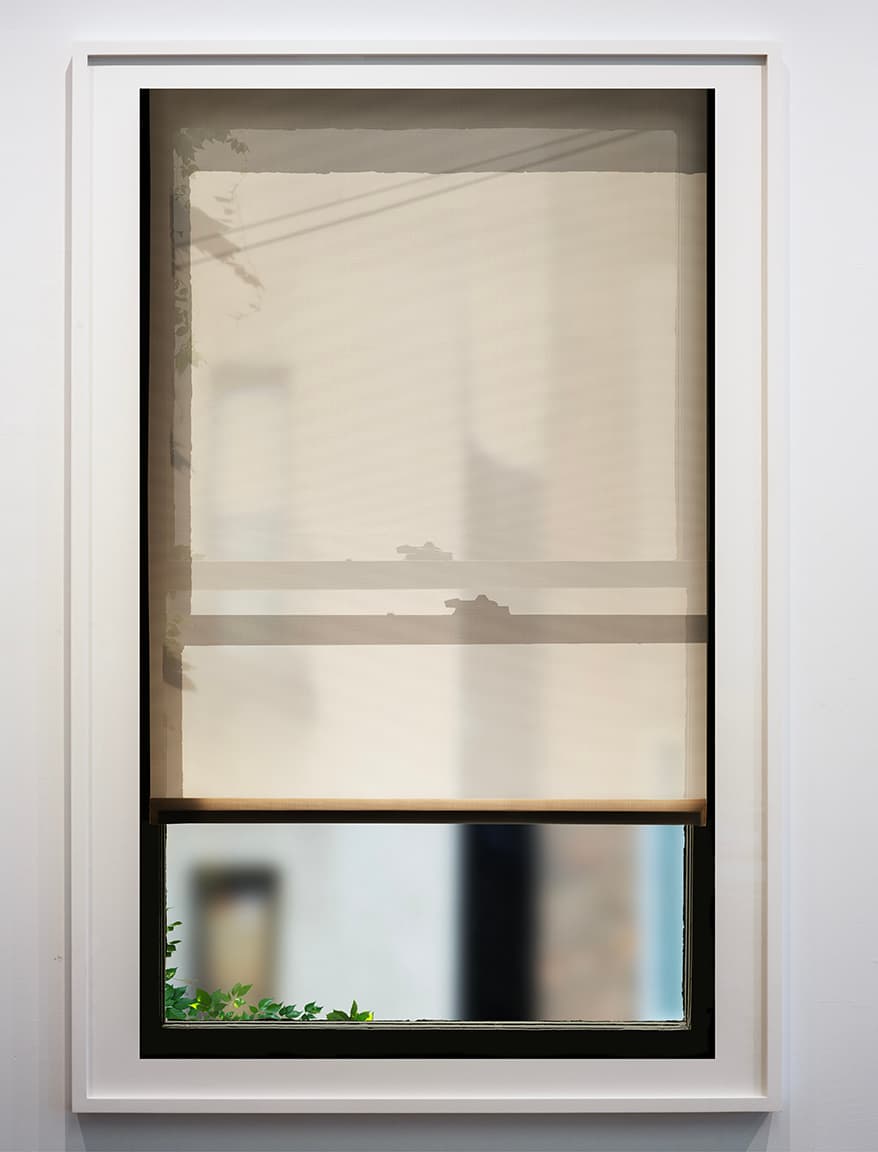
Bing Wright, Urban Summer Window, 2025-26. Inkjet Print mounted on 4ply Rag Board, 73 ½ x 47 ½ inches. Courtesy the artist.
Singing in Unison is an ongoing series of exhibitions aimed at bringing together communities across disciplines in the arts and humanities. These exhibitions range from sprawling group shows to a direct dialogue between two artists.
The Exhibition
“Looking from outside into an open window one never sees as much as when one looks through a closed window.”
–Charles Baudelaire
“An open door says, “Come in.”/ A shut door says, “Who are you?”
–Carl Sandburg
As we frequently think of windows and doors as framed structures—from which we view reality outside from the inside, or conversely the world looking in at us from the outside—our awareness is acutely heightened with the subtlety that occurs during the act of observation and the demarcation separating us, the observer, and what is being observed. Between the known and the unknown, the inner self and the outer world, the past and the future, the real and the imagined, while looking at or through windows or doors, our sense of mystery deepens. At the absence of visual affirmation, what appears from an interior perspective is a mere opposite to an exterior reception, and vice versa. These complex issues are a shared subject in the paintings by Josepine Halvorson and the photography by Bing Wrights.
While the differences between the images Halvorson makes in her paintings and the technical images in Wright’s photography are apparent, our emotional susceptibility to what significance may lie directly or indirectly below their surfaces is inevitable. For Halvorson, painting directly from a site has been a lifelong commitment. In addition to the simultaneity of her eye-hand coordination on the subject, Halvorson’s concept of what is considered seen and how it gets painted is identical in a shared physical size, which implies her sense of scale and tactility are inseparable from the picture’s inherent made image. In this 1:1 equation of scale, it evokes a form of physical confrontation in both the looking and making process, as well as providing means to explore countless hidden layers, which are nevertheless subjected to various contingencies. Halvorson’s windows were painted from her room at night, and the doors were made from the inside and outside at different times of the day; all were conceived during her one-year residency at the Villa Medici at the French Academy in Rome (2014–2015). In recognizing Halvorson’s painting from direct observation, conditioned by a strong framework of scale and repetition, we also discover how each identity of the painted subject is driven by internal differences and asymmetries rather than mere physical representation.
Similarly, in Wright’s serial exploration of windows also at a 1:1 scale, his constant search for pictorial synthesis lies in-between the seen (through the image's immediacy) and the realized (results of prolonged meditations on the image’s subtle permutations in various conditions of light, texture, and temperature). Despite countless strategies of technical manipulations and revisions, from procedural subtraction to additive process, Wright’s optimal calibration of what can be made as ideal images is a rigorous product of external observation and internal self-introspection. As these pictures have been a constant subject of the artist’s equanimous observation of seasonal changes with and through time from the window of his home in the Catskills, each image can be seen as a performative identification inseparable from confessional inflection. While they all can be seen as different poetic manifestations of reality, each is also a revery of the artist’s inner self contemplating the world.
As Halvorson’s and Wright’s masterful control of their material uses is self-evident—from paint pigments on canvas (capturing dim interiors through dark windows) to metallic silver particles on photographic paper (revealing glimpses of things by sunlight in its variants) in their respective making—the affinity they both share in each other’s work is alchemy, which primarily concerns the transformation of common subjects and materials into extraordinary substances, as with their mere physical appearances into the spirits and souls of the makers. What may appear as exterior banality can well be conceived by interior intensity, elevating subjective experience to a sense of deep solitude, whether in an urban environment or in nature.
Phong H. Bui
Visit
August 1–September 30, 2026
Opening: August 1, 3–6 p.m.
Location:
Leo Koenig Inc.
11 Delaware Avenue, Andes, NY
view map
Admission:
The exhibition is free and open to the public
Events
- Saturday, August 1, 3-6pm: Opening reception and cooking performance by Rirkirt Tiravanija, Tomas Vu, and co.
About Singing in Unison
Since May 2022, Rail Curatorial Projects has undertaken an ongoing series of group exhibitions entitled “Singing in Unison: Artists Need to Create on the Same Scale That Society Has the Capacity to Destroy” as a collective effort to mobilize the art of joining and social intimacy against self-isolation and social distancing, In these exhibitions, we perceive each artist as the player of a particular instrument, having a unique and distinct sound of their own, producing a significant contribution to the total sound of the symphony.
The series has featured works made by both trained and self-taught artists, by young artists—including children from the legendary Studio in a School—and more established ones. Additionally, there are contributions from artists working during and after incarceration, as well as those who are living with various mental health conditions. Although the culture at large has frequently aimed to assimilate us all into having a similar sound, Rail Curatorial Projects is committed to celebrating each artist’s particular vibrancy, while at the same time providing a context in which they can be in dialogue with one another.
Each version features Lauren Bon and Metabolic Studio’s neon work Artists Need to Create on the Same Scale That Society Has the Capacity to Destroy; cooking performances by Rirkrit Tiravanija, Tomas Vu, and their graduate students from Columbia University; space activations, including performances from dancers, poets, and musicians; and each has been dedicated to and included a portrait of one of our recently deceased mentors and friends. The early exhibitions in the series all included several artists, and we have now also begun to feature two artists in conversation: when presented in this more intimate context, the similarities and differences in the artists’ practices highlight alluring and compelling aspects of their thinking and art-making processes.
About the Brooklyn Rail
Founded in October 2000 and currently published 10 times annually, the Brooklyn Rail provides an independent forum for arts, culture, and politics throughout New York City and far beyond. The journal features criticism of music, dance, film, and theater; and original fiction and poetry, covers contemporary visual art in particular depth. In order to democratize our art coverage, our Critics Page functions with a rotating editorship, which such luminaries as Robert Storr, Elizabeth Baker, Barbara Rose, Irving Sandler, and Dore Ashton have helmed.
The Rail further fulfills its mission by curating art exhibitions, panel discussions, reading series and film screenings that reflect the complexity and inventiveness of the city’s artistic and cultural landscape.
To learn more, visit brooklynrail.org
Follow us on Instagram instagram.com/brooklynrail