ExhibitionsSinging in Unison, Part 13
Homage to Meyer Schapiro
Curated by Phong H. Bui
November 15, 2025–February 15, 2026
Brattleboro Museum and Art Center
10 Vernon St, Brattleboro, VT
Map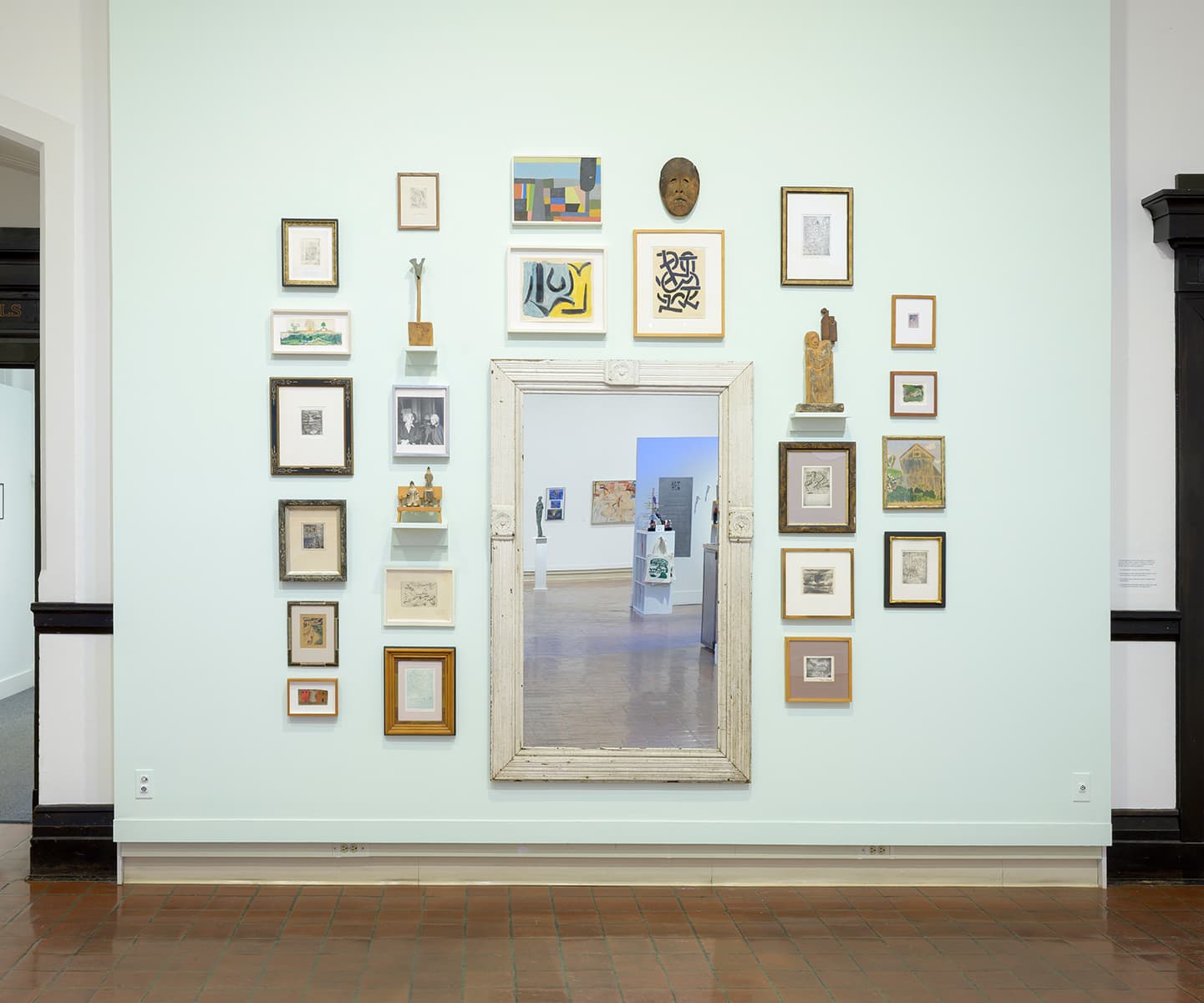
Install Photography by Stephen Petegorsky. Courtesy Brattleboro Museum & Art Center.
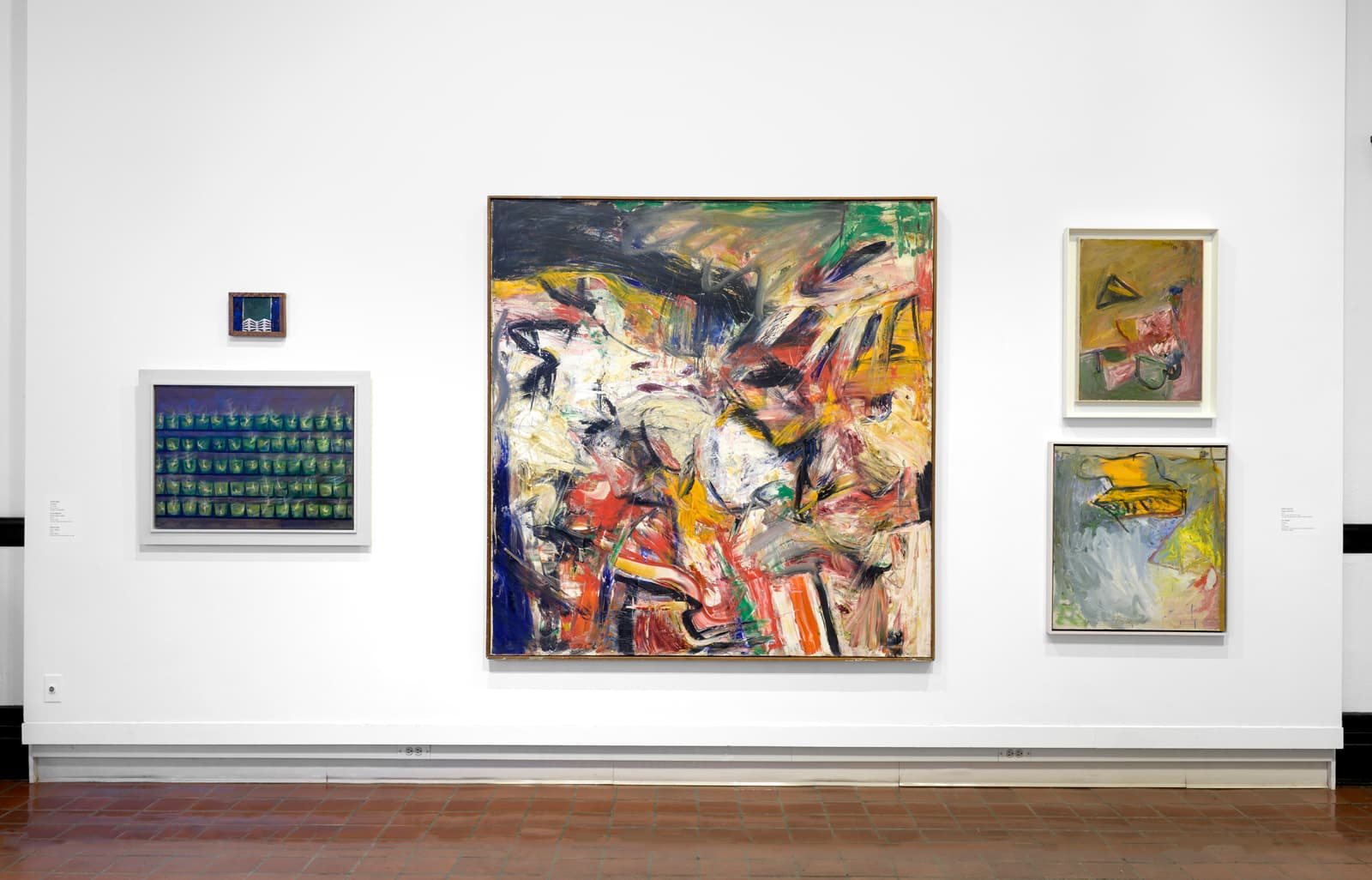
Install Photography by Stephen Petegorsky. Courtesy Brattleboro Museum & Art Center.
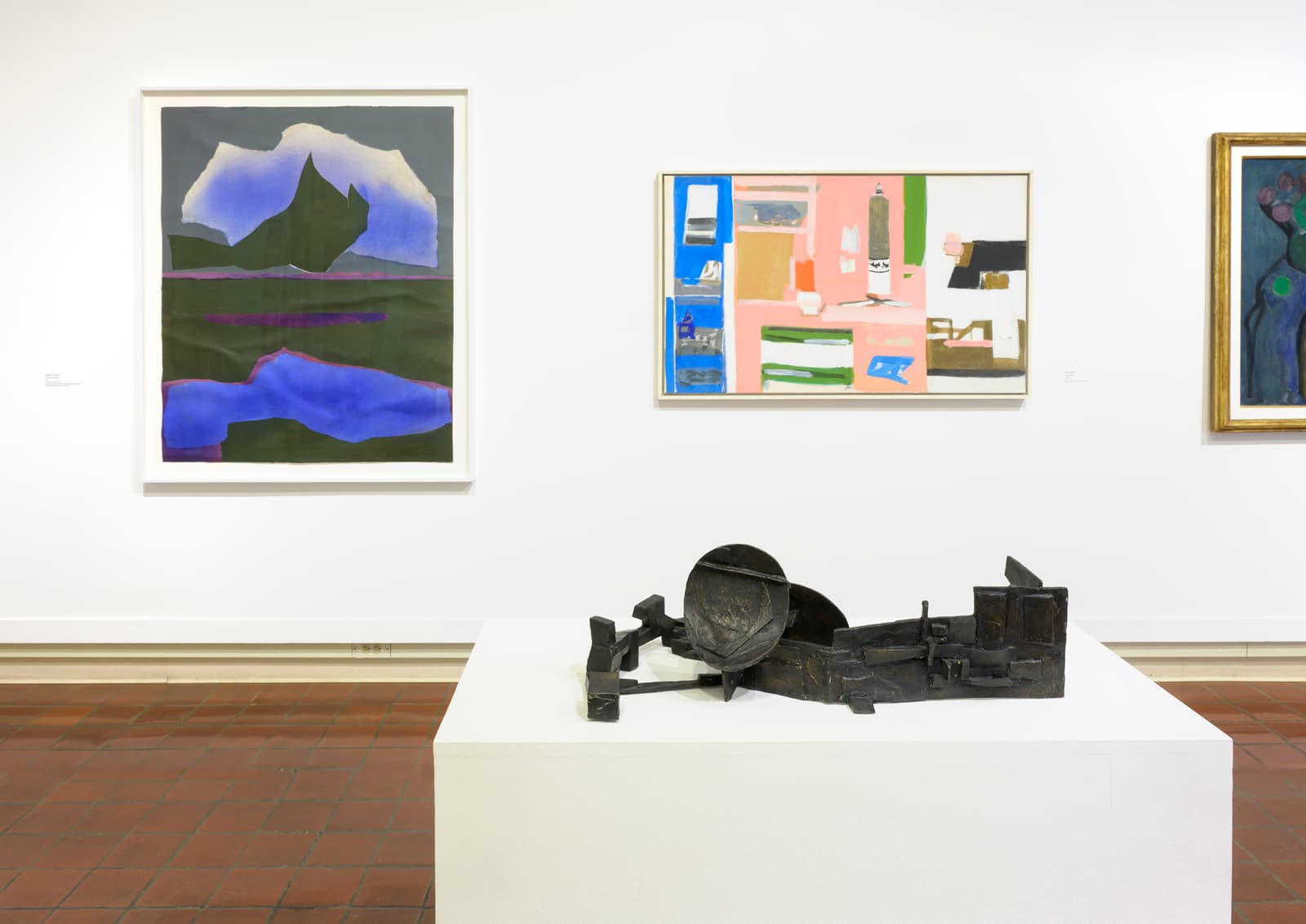
Install Photography by Stephen Petegorsky. Courtesy Brattleboro Museum & Art Center.
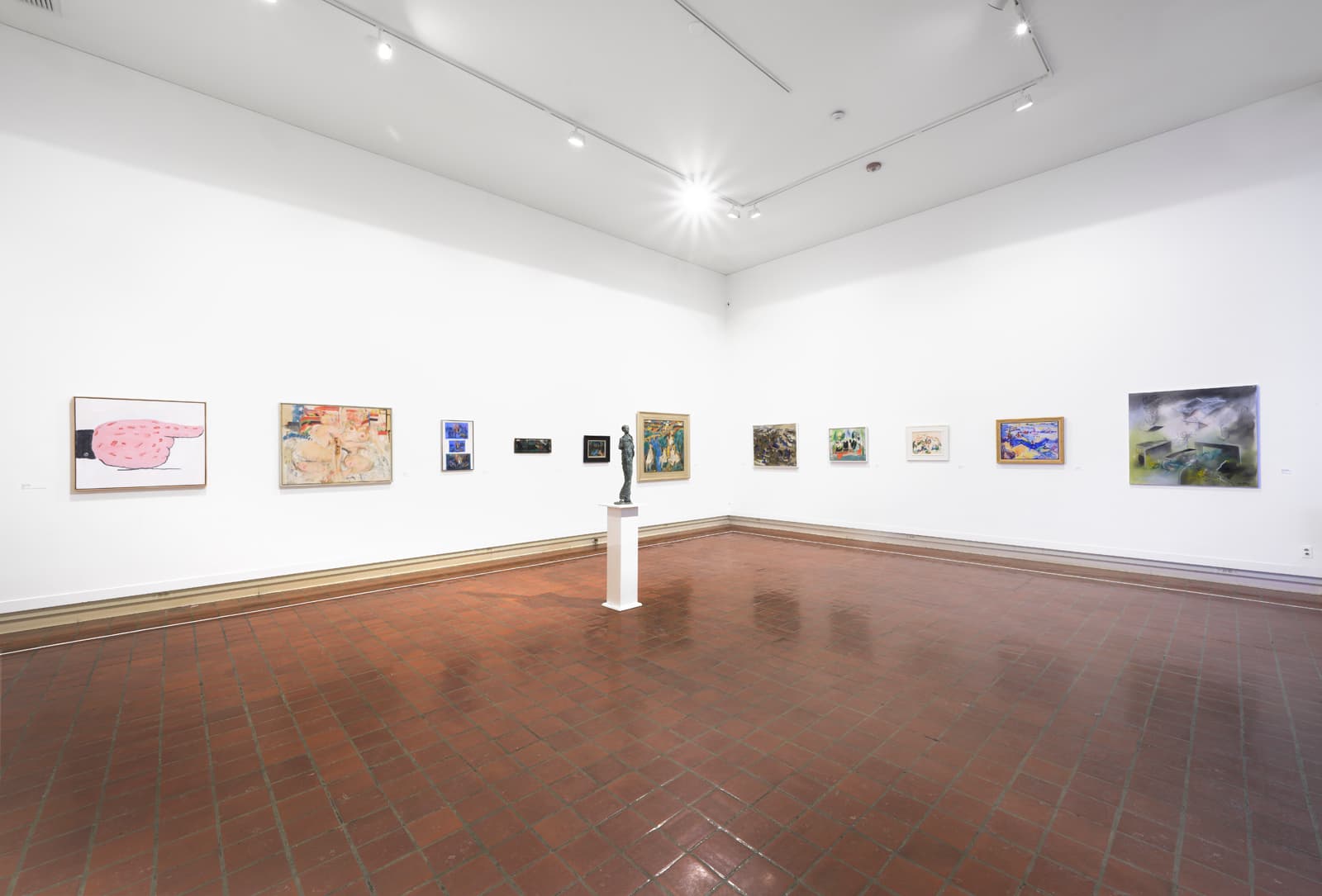
Install Photography by Stephen Petegorsky. Courtesy Brattleboro Museum & Art Center.
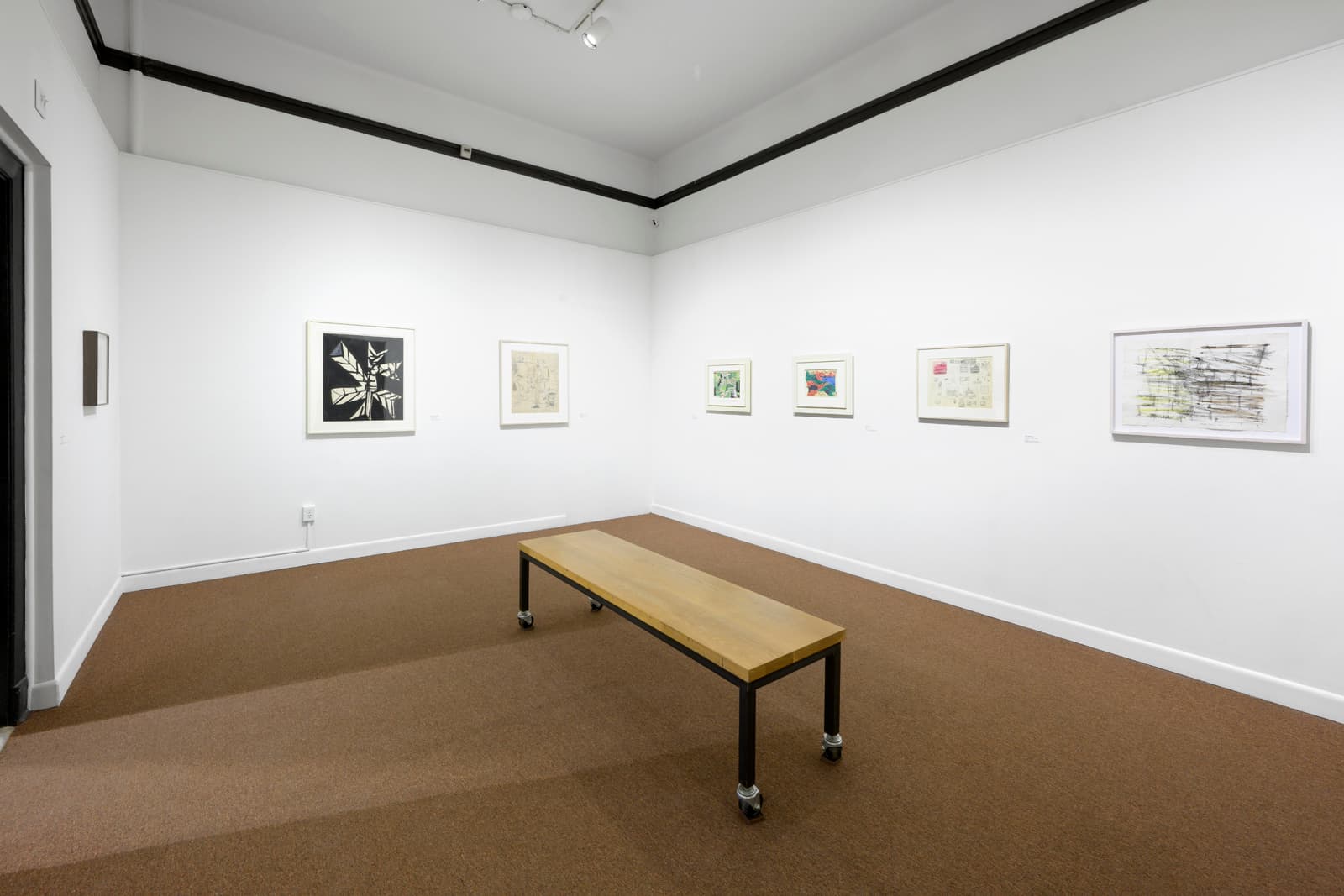
Singing in Unison is an ongoing series of exhibitions aimed at bringing together communities across disciplines in the arts and humanities. These exhibitions range from sprawling group shows to a direct dialogue between two artists.
The Exhibition
Meyer Schapiro (1904-1996) trained as a scholar of Romanesque and Early Christian art, publishing seminal articles on subjects ranging from the ancient world to twentieth-century art. His writings on iconography, theory, and the semiotics of visual art were especially influential, and his interests included film, photography, psychology, sociology and social criticism, as well as various kinds of visual art.
Schapiro’s evolution as an acute observer and defender of art history was informed by his exploration of formal analysis, Marxist interpretations, psychoanalytic critiques, and semiotics, and was integral to the collective artistic and intellectual struggles that took place during his own time. Schapiro was as comfortable in his study as he was in artists’ studios and cafés, conversing with friends and colleagues from different disciplines in the arts and humanities. His longtime friend Sir Isaiah Berlin once said, “Meyer possesses [the] lucid mind of a classic hedgehog while maintaining [the] sensuous body of a cunning fox. But any time, at will, he can swiftly turn the latter into a thinking body, and the former into a feeling mind.”
I met Meyer Schapiro and his wife Lillian in the summer of 1986. They became my close friends and mentors until his death in 1996 and hers in 2006. After our customary weekly walks—which were followed by dinners at their home in the West Village—I met their vast circle of friends and colleagues, including Saul Bellow, Isaiah Berlin, Elizabeth Hardwick, Annalee Newman, William Rubin, Barbara Rose, Allan Kaprow, Wolf Kahn, Emily Mason, Barbara White, Charles Rosen, Robert Bergman, David Shapiro, and L.S. Asekoff, among others. Most of our conversations reflected how members of this community supported each other in their shared struggle. While each individual held onto his or her desire to be a part of the dialogue of American life, they all remained at odds with conformity. They inevitably created an ideological and communal unity that could resist any political or aesthetic dogma.
In addition to being a writer, Schapiro created works of visual art, compelled by the idea, as he once wrote, that “style is, above all, a system of forms with a quality and meaningful expression through which the personality of the artist and the overall outlook of a group are visible.” This exhibition is a testament to the community that Schapiro and his colleagues forged together, which, in turn, gave birth to The Brooklyn Rail in October 2000.
Singing in Unison features a selection of works by Schapiro alongside works by artists with whom he shared relationships at various times throughout his long and productive life, including Forrest Bess, Janice Biala, Gandy Brodie, Phong H. Bui, Stuart Davis, Dorothy Dehner, Robert De Niro Sr., Herbert Ferber, Arshile Gorky, Philip Guston, Grace Hartigan, Jean Hélion, Hans Hofmann, Wolf Kahn, Alfred Leslie, Loren MacIver, Emily Mason, Roberto Matta, Mercedes Matter, Robert Motherwell, Jan Müller, Emily Nelligan, Pat Passlof, Renate Ponsold, Larry Rivers, Milton Resnick, Mark Rothko, Lucas Samaras, Dr. Lillian Milgram Schapiro, Meyer Schapiro, Ethel Schwabacher, Kurt Seligmann, Jonathan Silver, Bob Thompson, and Esteban Vicente
Visit
November 15, 2025–February 15, 2026
Opening: November 15, 5–7 p.m.
Location:
Brattleboro Museum and Art Center
10 Vernon St, Brattleboro, VT
view map
Admission:
The exhibition is free and open to the public
The Artists
Events
- Saturday, November 15th, 5-7pm: Opening reception
- Sunday, November 16th, 1pm: Walkthrough with Phong H. Bui
- Saturday, February 7th, 5:30pm: Phong H. Bui and Alexander Nagel in Conversation
About Singing in Unison
Since May 2022, Rail Curatorial Projects has undertaken an ongoing series of group exhibitions entitled “Singing in Unison: Artists Need to Create on the Same Scale That Society Has the Capacity to Destroy” as a collective effort to mobilize the art of joining and social intimacy against self-isolation and social distancing, In these exhibitions, we perceive each artist as the player of a particular instrument, having a unique and distinct sound of their own, producing a significant contribution to the total sound of the symphony.
The series has featured works made by both trained and self-taught artists, by young artists—including children from the legendary Studio in a School—and more established ones. Additionally, there are contributions from artists working during and after incarceration, as well as those who are living with various mental health conditions. Although the culture at large has frequently aimed to assimilate us all into having a similar sound, Rail Curatorial Projects is committed to celebrating each artist’s particular vibrancy, while at the same time providing a context in which they can be in dialogue with one another.
Each version featured Lauren Bon and Metabolic Studio’s neon work Artists Need to Create on the Same Scale That Society Has the Capacity to Destroy; cooking performances by Rirkrit Tiravanija, Tomas Vu, and their graduate students from Columbia University; space activations, including performances from dancers, poets, and musicians; and each has been dedicated to and included a portrait of one of our recently deceased mentors and friends. The early exhibitions in the series all included several artists, and we have now also begun to feature two artists in conversation: when presented in this more intimate context, the similarities and differences in the artists’ practices highlight alluring and compelling aspects of their thinking and art-making processes.
About the Brooklyn Rail
Founded in October 2000 and currently published 10 times annually, the Brooklyn Rail provides an independent forum for arts, culture, and politics throughout New York City and far beyond. The journal features criticism of music, dance, film, and theater; and original fiction and poetry, covers contemporary visual art in particular depth. In order to democratize our art coverage, our Critics Page functions with a rotating editorship, which such luminaries as Robert Storr, Elizabeth Baker, Barbara Rose, Irving Sandler, and Dore Ashton have helmed.
The Rail further fulfills its mission by curating art exhibitions, panel discussions, reading series and film screenings that reflect the complexity and inventiveness of the city’s artistic and cultural landscape.
To learn more, visit brooklynrail.org
Follow us on Instagram instagram.com/brooklynrail
Selected Press
Observer, by Dian Parker
Seven Days, by Alice Dodge