The Ratline, Neoliberalism, and the New Right in Chile
Part I
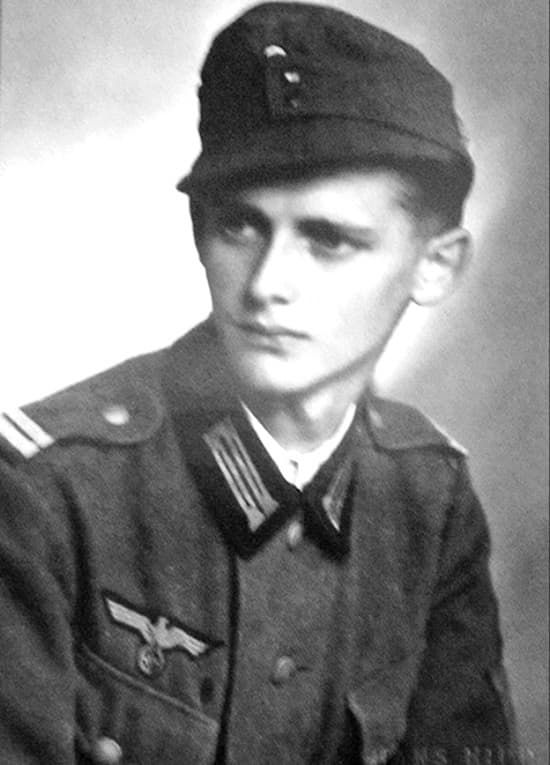
Michael Kast (German official during WWII and Chilean sausage maker), ca. 1943 (based on his rank as a Cadet Lance Corporal, he joined the army in 1942, was a lieutenant in 1944 and surrendered in 1945).
Word count: 2821
Paragraphs: 35
The December 2025 election of José Antonio Kast in Chile was largely reported as a successful climb to power of a figure who skillfully utilized the contemporary (Trumpian) authoritarian playbook, with its particular emphasis on being tough on migration and crime. Identified as a representative of the so-called New Right in Latin America (alongside, to name a few, Argentina’s Javier Milei, Brazil’s Jair Bolsonaro, and El Salvador’s Nayib Bukele) and with clear ties to the US Heritage Foundation, Kast is presented as the latest expression of a global tide of far-right politicians.
There is, however, a distinct difference between Kast and the others. Rather than an outlier who emerged from the political wilderness to fill in the electoral gap created by crisis-ridden mainstream (neo)liberalism and the perpetual failures of a parliamentary left to embody a viable alternative, Kast represents a direct continuation of Chile’s long trajectory of neoliberal authoritarianism and, crucially, a family tradition.
Just as José Antonio Kast is portrayed as following in Trump’s footsteps, a common depiction of the process of Chile’s neoliberalisation through dictatorship takes its introduction to be the consequence of an ideological transfer from the global north, with Milton Friedman and the Chicago school of economics at the forefront. Combined with evidence of direct US/CIA intervention, a narrative of external imposition is created, sidelining specific developments within Chile and the role of domestic actors. Yet, neither Kast’s trajectory and convictions nor Augusto Pinochet’s neoliberal class offensive can be adequately understood by ignoring the domestic framework.
The following attempts to situate Kast’s victory within the long trajectory of Chile’s violent neoliberalisation. It looks at how the process was intertwined with personal biographies, domestic historical developments, and specific actors who, while in dialogue with the transnational neoliberal framework before and during the Pinochet dictatorship, made original and distinct contributions to its practical implementation in ways that would be emulated by other proponents of neoliberalisation in later years.
A lot of ink has been spent on Friedman’s and Friedrich Hayek’s visits and advice to the junta, further embedding the narrative of an externally transfused set of ideas. More consistent research, however, has contextualized these events as attempts to legitimize decisions already made by attaching them to world-renowned economists with the aim of improving the international image of the regime. Rather than a dictatorship in search of an economic doctrine, the policies implemented were developed long before Friedman’s or Hayek’s involvement, primarily reflecting how a specific section of the political and business class responded to the particular decline of the Chilean conservative right and the expanding class struggles of the same period. The result was an interpretative adaptation of the fusion between Carl Schmitt’s constitutional theory and transnational neoliberalism, a combination much more relevant to understanding the remarkable persistence of the neoliberal framework long after the fall of the dictatorship than Friedman’s monetarist prescriptions.
The “Chilean project” represents the most successful operationalization of an invariant characteristic of the neoliberal framework since the 1930s, namely, the idea that a market economy requires a strong state tasked with repressing both inherent self-destructive tendencies of the market along with any social antagonism threatening capital and private property. And while the implementation of a similar framework in other countries in the years to follow demonstrates that the brutal violence of a military dictatorship is not a sine qua non precondition, it remains equally misleading to ignore the fact that its existence in Chile was an indispensable accelerant—something tacitly or openly admitted by neoliberals themselves ever since.
Like Father, Like Son(s)
Clinging to the fence like a monkey, mad Norberto laughed and said, the Second World War is returning to the Earth. All that talk about the Third World War was wrong; it’s the Second returning, returning, returning. And it has fallen to us, the people of Chile, to greet and welcome it.
—Roberto Bolaño, Distant Star
Michael Kast, José Antonio’s father, was born in Thalkirchdorf, Germany in 1924. Joining the Hitler Youth in his early years, he became a full NSDAP member at eighteen and, shortly after, joined the Wehrmacht, serving the Nazi army and its brutality in France, Russia, Crimea and, finally, Italy. Captured by Allied forces in 1945, he escaped arrest twice and made his way back to his hometown where, in 1947, a sympathetic official is said to have destroyed his Nazi records. Yet, while the denazification process had already been abandoned by a US occupation authority more concerned with the continuation of the German state in the context of the Cold War, Kast decided to leave West Germany.1 Equipped with travel documents issued by the International Committee of the Red Cross (ICRC)2, Michael Kast took advantage of of the infamous “ratlines”3 and arrived in Chile in 1950. Joined by his wife and his first three children a year later, he opened a deli and sandwich shop, then eventually a Bavarian sausage factory, Cecinas Bavaria. Successfully expanding these ventures, by the early 1960s Kast owned businesses in Talagante, Rengo, and San Francisco de Mostazal, apart from the main factory in Paine.

Michael Kast’s NSDAP (National Socialist German Workers’ Party, the Nazi Party) membership card no. 9271831 BArch R 9361 - IX KARTEI - 19440594, 1942. Source: Berlin Document Center, NSDAP Mitgliederkartei, http://www.metzingen-zwangsarbeit.de/.
When the military coup overthrew the elected government of Salvador Allende in September 1973, Michael Kast and other members of the Kast family jumped at the opportunity to demonstrate their allegiance. Driven by both personal interest and political affiliation, Kast joined forces with other businessmen of the area and provided practical assistance to the military coup and its abducting/killing machine. As later trials would reveal, not only did Michael Kast provide local police and military units with trucks and drivers for arresting and disappearing left militants and radical workers and farmers, but he made sure to add workers from his own factory to the lists handed over. Moreover, as the unlikely survivor of a mass execution, Alejandro Bustos, would testify years later, Kast’s son (Christian Kast, sixteen at the time) was present during interrogations, torture, and executions.4
The case which brought their active collaboration to public light was that of Pedro León Vargas Barrientos, a twenty-three-year old member of MIR (Movimiento de Izquierda Revolucionaria) and union organizer at one of Michael Kast’s businesses. Although Pedro had already been fired for his union activities, his name still ended up in the military’s lists. Two days after the coup, he would be violently abducted in broad daylight by a policeman and two civilian collaborators while buying bread at a bakery. Proceeding to beat him senseless before throwing him in a car, his assailants drew their weapons and fired in the air to terrorize a crowd that, screaming “asesinos,” tried to confront them.
As was common, when Vargas’s family inquired about Pedro at the police station, they were informed, despite many witnesses, that no record existed of his arrest—while he was, in fact, inside and undergoing brutal interrogation and torture. A few days later, a policeman would unwittingly confirm to his sister that Pedro was in fact at the station, but the revelation made no difference. On the same day that his presence was confirmed, he was taken away by the military, executed and his body discarded.
Though such evidence would eventually reach the Chilean courts, the perpetrators (and their civilian collaborators) would largely remain unpunished. In the case of Michael Kast, his death while the trial was still ongoing meant that no conviction would emerge, while his son Christian would be exempted for being a minor at the time.
Michael Kast’s older son, Miguel, was not in Chile during the first days of the coup. Having studied business administration at the Catholic University of Chile with Sergio de Castro and Pablo Baraona, he had secured a spot in the exchange program between the Catholic University and the University of Chicago, a collaboration inaugurated in 1956 and spearheaded by Arnold Harberger. Before becoming a Chicago Boy, however, Miguel Kast had already developed his political perspective within gremialismo, a far-right student movement.
The Emergence of Chile’s Far Right
The 1964 candidacy of Christian Democrat Eduardo Frei Montalva had gathered the wide support of the conservative, Catholic right-wing—among whom were Miguel Kast—who were primarily enticed by its anti-Marxist credentials. Running against the socialist candidate Salvador Allende, the Christian Democrat had also qualified for US financial support, but it would soon transpire that Chilean Christian Democracy stood before a historical crossroad.
Transformations within Catholicism had brought forward tendencies towards a corporatist embrace of social justice, pushing interpretations that urged members of the elite to embrace a noblesse oblige attitude towards raving inequality.5 The first official expression of such a perspective came with Frei’s proposals for agrarian reform, a decision also based on the realization that the existing phenomenal discrepancy between wealthy landowners and those who worked the land—however typical of most Latin American countries at the time—was becoming a real obstacle to economic modernization and productivity enhancement. The simultaneous pressure from below and from modernizing factions of private capital had already initiated discussions around agrarian reform during Jorge Alessandri’s previous presidency (1958–64), but it was during Frei’s rule that the conflict would generate bitter debates, leading to the inaugural steps towards the development of Chile’s far right.
While rather mild in its scope, Frei’s proposal to penalize landowners of abandoned or poorly exploited land through a minimal redistribution program that included potential nationalizations triggered an almost existential sense of doom for parts of established conservative elites. In this context, a crucial constituency (including Miguel Kast) became indignant at what they interpreted as the forced expropriation of private property, generating a split within the Chilean right-wing.
Conservative opposition to Frei found its initial expression in the Fiducia group. Publishing a journal with the same name, Fiducia was formed in 1963 by a small group of young conservatives eager to confront what they saw as a widespread “moral crisis,” urging a return to a strict interpretation of Catholic dogma and moving steadily towards the far-right. Among the most important members of Fiducia was Jaime Guzmán, a young law student at the Catholic University of Chile from a long-established conservative family with an open admiration for Francisco Franco’s dictatorship in Spain.6 Writing for Fiducia, Guzmán would pen numerous articles attacking the Frei administration for promoting “collectivization,” promoting instead a version of Catholicism grounded on an unwavering defense of private property, private initiative, and the principle of “subsidiarity”7—all of which were defined as natural rights and an ontological cornerstone of Christian civilization. Following on the steps of European neoliberals who had developed a similar critique since the 1930s, Guzmán would declare that all threats to private property are essentially “Marxist” and, therefore, totalitarian.8
In the eyes of the emerging Chilean far right, the second sin of the Frei administration was an attempt to implement a reform of the university system, a decision also influenced by social Catholicism and the perceived need to modernize economic activity and industrialization (and, therefore, the training of those meant to lead it). While part of the reform centered on inviting external funding from private foundations (particularly from the US and Germany), it also included a drive towards opening access to higher education towards lower-income people. The eventual conflict that would emerge around the Reforma Universitaria of 1967 would also have a particular locus point: the traditionally conservative and elite Catholic University.
In step with wider socio-political changes, the Catholic University of Chile had also seen a significant increase in the number of students (more than 10,000 by 1967) and successful graduates (594 by 1967, compared to 250 in the late 1950s). While it retained its elite composition (more than 70 percent of Catholic University of Chile students came from the upper classes), it was the influence of social Catholicism present in some Christian Democratic students that exacerbated the intra-elite conflict.
In control of the student federation (FEUC) at Catholic University of Chile, Christian Democratic students promoted reforms to accommodate what they saw as their obligation to engage in social programs to support the marginalized, to increase student participation in decision-making, and to initiate a (modernizing) dialogue between Catholic faith and science. In the summer of 1967, their conflict with the university authorities reached an impasse, leading to a strike and occupation of university premises.
Equally irreconcilable was their program with the perspective developed by the emerging far right which, under the leadership of Guzmán and after the Fiducia engagement, had formed the gremialismo9 movement. Set up against the transformations taking place within Christian Democracy, the gremialistas preached commitment to values such as “respect, education and chivalry,” conservative abstractions meant to obscure the concrete demand to restore student obedience to established hierarchies.
Most interestingly, however, the gremialistas advanced a comprehensive worldview which laid the foundations for a far right (and far-reaching) intervention into the Chilean socio-political landscape. Typical of fascist mythmaking, the gremialistas presented themselves as strictly concerned with demarcating the academic environment from “political” conflict,10 with their Declaration of Principles presenting their project as “alien to any ideological and political conceptions.” As with contemporary pretenses of “depoliticization,” however, the actual content of the gremialistas’s framework was profoundly political, immersed in a nationalist perspective, committed to defending established hierarchies and identifying specific political actors as its enemies. There is no universe where the violent defense of the status quo (let us not forget that the gremialistas attacks on Christian Democrats were driven precisely by the accusation that they did not adequately defend that status quo) can be proclaimed as “depoliticized,” for the reason that there is nothing “natural” about this order. None of that prevented the gremialistas, however, from proclaiming their purported apolitical positions as “universal and permanent.”11 As a final note, a further significance of the gremialismo movement goes beyond their adoption of a highly confrontational attitude towards existing conservative powers, like the Christian Democrats. In contrast to other fascist movements of the period, Guzmán’s gremialismo placed “youth” at the forefront of the struggle, further exacerbating the split with the traditional conservative right-wing along age lines.12
For all the above reasons and having befriended Guzmán at Católica, Miguel Kast was immediately drawn to the gremialistas, eventually becoming secretary general of the FEUC. Taking advantage of a split within the pro-reform student body,13 Kast and the gremialistas would further develop their fascist/corporatist perspective, consistently insisting on its apolitical perspective. Winning every FEUC election since 1968, the Catholic University of Chile would become (and remain) one of the main centers of conservative power, acquiring a central role in the right-wing opposition to the Allende regime. Miguel Kast, however, would not be present during this whole development. Less than a year after the election of Salvador Allende, he would receive a Ford Foundation scholarship to continue his studies at the University of Chicago,14 and it was there that the military coup found him, thereby preventing him from joining his other family members in their direct participation in kidnappings and other forms of violence.
Return of the (Not So) Prodigal Son
Miguel Kast had just completed his studies when he accepted a job in Mexico City, but the military coup changed his plans and he immediately returned to Chile to help the dictatorial regime alongside his other colleagues who had studied at the University of Chicago. Yet, even though he would not land in an official position until later, he had already participated from Chicago in the drawing up of an economic program meant to guide a post-Allende government that came to be known as El Ladrillo [The Brick].15
Completed in 1973, El Ladrillo was divided into two main parts, the first one being a (neoliberal) diagnosis of the problems of the Chilean economy, the second a series of (neoliberal) proposals for overcoming them, all inspired by the teachings of the University of Chicago. According to reports, it was distributed to military personnel a day after the coup by Roberto Kelly, a former Navy officer and crucial liaison between the junta and the Chicago Boys.16
Nonetheless, the ability of the Chicago Boys to access policy making and implement their neoliberal recipes did not begin immediately after the installation of the dictatorship.17 Not only was the military regime initially preoccupied with hunting down and eliminating its opponents, but the military traditionally had a corporatist and protectionist economic outlook, favoring state ownership of strategic resources and direct intervention in economic activity (to maintain specific privileges).
After 1975, and due to the concerted efforts of Kelly and Guzmán, El Ladrillo would constitute a reference point for the implementation of the economic policies of the Chicago Boys, having painted the broad strokes of Chile’s privatisation onslaught (including the privatization of education, health care, and the pension system), a process of decentralization which left the state in charge of encasing and regulating (rather than controlling) market mechanisms and the drastic curtailment of public expenditure.18 As the next part of this article will show, Miguel Kast would play an indispensable role in the whole neoliberalisation process in both ministerial positions and as the president of Chile’s central bank until his death in 1983.
Read Part II in the May 2026 issue.
- When Michael Kast’s Nazi past became public in recent years, José Antonio published an open letter in The Clinic proclaiming his father to have been an “exemplary man.” His main line of defense was that his father had merely done what most Germans had at the time, seemingly oblivious to the fact that this was exactly what he was being accused of.
- Research has shown that the International Committee of the Red Cross (ICRC), and especially its offices in Rome, issued hundreds of documents to fleeing Nazis and fascists. Famously, both Adolf Eichmann and Josef Mengele travelled with ICRC documents. See Uki Goñi’s The Real Odessa: How Perón Brought the Nazi War Criminals to Argentina.
- Two main routes existed to help Nazis and other fascists escape Europe: Franco’s Spain and Italy. In the case of Italy, particular assistance was provided by members of the Catholic Church and the ICRC. From the side of Latin America, evidence has revealed that Juan Perón was personally involved in setting up these ratlines. Speculation that Perón aimed to bring in specialised personnel and scientists in order to help Argentina’s economic and technological modernization is contradicted by the fact that with very few exceptions, the overwhelming majority of the Nazis who ended up in Argentina had no special skills or scientific credentials—apart from being war criminals and misanthropic monsters. As Tomás Eloy Martínez notes, with the exception of Kurt Tank, a Luftwaffe aerodynamics experts:
no other Nazi scientists … entered Argentina. On the other hand, the list of notorious criminals is impressive: Adolf Eichmann, Edward Roschmann—known as “the butcher of Riga,” Jan Durcansky, the former SS officer accused of killing 50,000 Czech resistance fighters, and, within the realm of conjecture, Martin Bormann, head of the Chancellery of the Nazi Party, and Heinrich Müller, the Gestapo chief.
In May 2025, declassified files in Argentina indicated that more than $200 million in gold had been transferred by Nazis to Argentina, finding their way in Eva Perón’s personal coffers. - In his above-mentioned letter to The Clinic, José Antonio Kast also referred to the case of Pedro Vargas, claiming that Pedro’s father, Bernabé, and his brother, Jorge, continued to work at Cecinas Bavaria even after the disappearance of Pedro. “Can anyone believe that any of them would have continued working with my father if they had had even the slightest suspicion that my father was involved in [their deaths]?” Unfortunately for José Antonio, Pedro’s sister exposed this as a complete fabrication, informing those interested that both her father and brother had been fired by Michael Kast immediately after Pedro’s abduction.
- This “theological” debate was the consequence of the postwar re-appraisal of the 1931 papal encyclical Quadragesimo Anno. Published as the official Catholic response to the Great Depression, the encyclical called for a more corporatist state and generous redistributive measures and social transfers. Opposition to this expression of “social Catholicism” became a distinct characteristic of the German neoliberals in the 1930s who advanced arguments in many ways identical to those that would be repeated in Chile in the 1960s.
- In a letter to his mother from 1965, Guzmán would write:
I am staunchly pro-Franco because I have seen that the Generalissimo is the saviour of Spain, because I have realised what a distinguished personality he is, how happy people are with him, how well he works and the economic progress that is evident. And let it be known that in Spain today there is absolute freedom, understood and oriented towards the common good and not towards satisfying the absurd principle of the French Revolution, which tends towards licentiousness. ‘There is no freedom except within an order,’ Franco has said.
Cited in Renato Cristi, 2011: 16. - A principle dear to German neoliberal Wilhelm Röpke and which, as we shall see in part II, would prove central to Guzmán’s approach during the dictatorship.
- While totalitarianism has become a widely used and content-empty concept, it is worth remembering that it was developed by liberal thinkers who wanted to conceptualize a “centrist” opposition to the so-called “two extremes” of fascism and communism. It is crucial to note, however, that what united these two “extremes” in the liberal paradigm was not state repression—liberals have historically had no qualms defending such methods when used to protect private property, nor did they refrain from supporting fascists as a bulwark against communism. Rather, “totalitarianism” was conceptualized as a general umbrella describing an enhanced role for the state in direct economic activity. This very particular and ideologically driven use of the concept appears however to have lured many within its orbit, most tragically perhaps Hannah Arendt.
- Literally translated, a gremio is a guild or a trade union.
- As Verónica Valdivia Ortiz de Zárate’s excellent book Nacionales y Gremialistas: El “parto” de la nueva derecha política chilena, 1964-1973 (2008: 159) notes, the gremialistas’ pretense of promoting a clear demarcation between academic life and wider political issues was contradicted by the fact that their interventions were appeals to public opinion and a clear politicization of the issue.
- As Cristi shows, Guzmán would use the perspective developed by the gremialistas during the Reforma Universitaria conflict as the blueprint for his Teoria de la Universidad book, published in 1969. In it, one can already discern central conceptualizations (beyond academic life) that would determine Guzmán’s approach and role during the dictatorship.
- According to Muñoz Tamayo’s “De renovador generacional a adulto restaurador. José Antonio Kast y la derecha radical chilena” (2024: 299), the youth-oriented movement of Guzmán’s gremialistas which popularised the slogan “Chile es bandera y juventud” (“Chile is flag and youth”) even claimed, in 1975, to have established a “lolocracia” (a government of young people). The glorification of youth would remain central in Guzmán’s 1983 UDI party and would even play a crucial discursive role in José Antonio Kast’s bid for leadership in the UDI and his eventual decision to leave the party in 2016 and form his own Republican party with which he would win the 2025 elections.
- According to de Zárate (2008), the split was between “those who wanted to radicalize the process and those who wanted to keep it within the confines of the university,” echoing similar conflicts that would occur during Allende’s rule.
- Friedman would later claim never to have met Miguel Kast in Chicago, even though Kast had taken both of his price theory courses and had achieved the best grades in class. In his unpublished notes from his visit in 1975, however, Friedman wrote that he was particularly impressed by Miguel Kast: “Miguel Kast, who studied at the University of Chicago, is a very bright and able fellow, has just come back to Chile not long since, and is obviously playing a very important role in the new government.” (Sebastian Edwards, 2023: 99)
- According to Edwards, Miguel Kast had contributed on El Ladrillo’s chapter on pension reform—a policy which would become a cornerstone of Pinochet’s neoliberalisation process that continues to plague Chilean society. (See Edwards 2023, n. 9, p. 310).
- Roberto Kelly was also an executive at the Edwards Group, a conglomerate which published El Mercurio, a newspaper funded by the CIA even before Allende’s inauguration in 1970 and a relentless propaganda machine against Allende’s government. Having prepared the ideological ground, El Mercurio became a remarkably despicable mouthpiece of the dictatorship. Among its key preoccupations was the relentless publishing of (entirely fabricated) reports on how “communists” had been organizing a violent revolution (the so-called Plan Z) that forced the military to do the coup, while also reveling in the ridicule and disgusting slander of the dictatorships’ victims. The most indicative example was the publication of a cartoon making fun of Lumi Videla, a twenty-six-year-old militant of the MIR whose savagely tortured dead body was thrown into the Italian embassy. El Mercurio is still a leading paper in Chile, but it has never apologized for its role.
- The coup of 1973 was planned by General Gustavo Leigh and Admiral Jorge Toribio Merino. According to Heraldo Munoz (2008: 24), Pinochet, who had been appointed head of the Armed Forces by Allende a few months before, was completely clueless about the planned coup. Two days before, on September 9, 1973, he was asked by Leigh and Merino to commit his troops to the coup and sign a letter confirming it. Initially pretending that he could not find his pen and personal seal, Pinochet eventually agreed to sign but nonetheless took his family to a military camp next to the border of Argentina one day before the coup, so as to be able to escape if the coup was unsuccessful. After the success of the coup, however, he more than embraced his role and started to gradually neutralize or sideline the actual masterminds of the coup. Leigh, a representative of the nationalist/protectionist economic perspective of the military, was eventually dismissed in 1978. Cesar Mendoza, a low-grade officer of the Police Corps at the time of the coup, was already considered widely irrelevant (apparently his nickname was Mendocita) and was finally dismissed in 1985. Only Merino remained until the end but simply he transformed himself into a brutal but loyal follower of Pinochet. According to Edwards (2023: 111–12), the promotion of the Chicago Boys in 1975 was also reflective of Pinochet’s consolidation of power over rival military officials (especially General Leigh), with a key debate concerning the issue of whether strategic resources under the control of the Chilean state should in fact be privatized.
- Edwards has claimed that El Ladrillo was not as radical as the policies eventually implemented, going as far as describing it as “a collection of Social Democratic policies” (Edwards, 2023: 80). His rationale is that El Ladrillo had a focus on the eradication of extreme poverty, the promise of full employment, price stability (sic) and political decentralization. It also framed its plan “within a democratic political regime.” Leaving aside the fact that The Brick was written before the dictatorship and could therefore not have included an endorsement of military rule, Edwards’s argumentation seems oblivious of the fact that these abstract targets were by no means incompatible with the neoliberalisation process. In particular, the quest to eradicate extreme poverty (a key area of interest of Miguel Kast) happily co-existed with the (neoliberal) unequivocal rejection of combatting inequality, a social phenomenon regarded as entirely natural, a desirable consequence of the market economy and a motor of “growth.” Former minister of finance and economics Rolf Lüders exemplified this approach in the 2015 documentary Chicago Boys when he stated: “I really don’t care about inequality … the problem with income distribution is that it’s an envy problem … Do you understand me?” Lastly, when El Ladrillo was republished in 1992 by the neoliberal Centro de Estudios Públicos, the subtitle given was: basis of the political economy of the Chilean military government. Making sure no misunderstandings remained, Sergio de Castro finished his prologue to the publication with these words:
The fruits reaped by the country from the libertarian ideals championed by “El Ladrillo” are, to a great extent, the work of the military regime. In particular, of the former President of the Republic, Mr. Augusto Pinochet, and the members of the Honorable Governing Junta. We were their collaborators.
Pavlos Roufos is an economic historian living in Berlin. His book A Happy Future is a Thing of the Past: The Greek Crisis and Other Disasters was published by Reaktion in the Field Notes series in 2018.