Critics PageDecember/January 2025–26
Upheaval by Resignation: Subversive Gestures and Their Limits
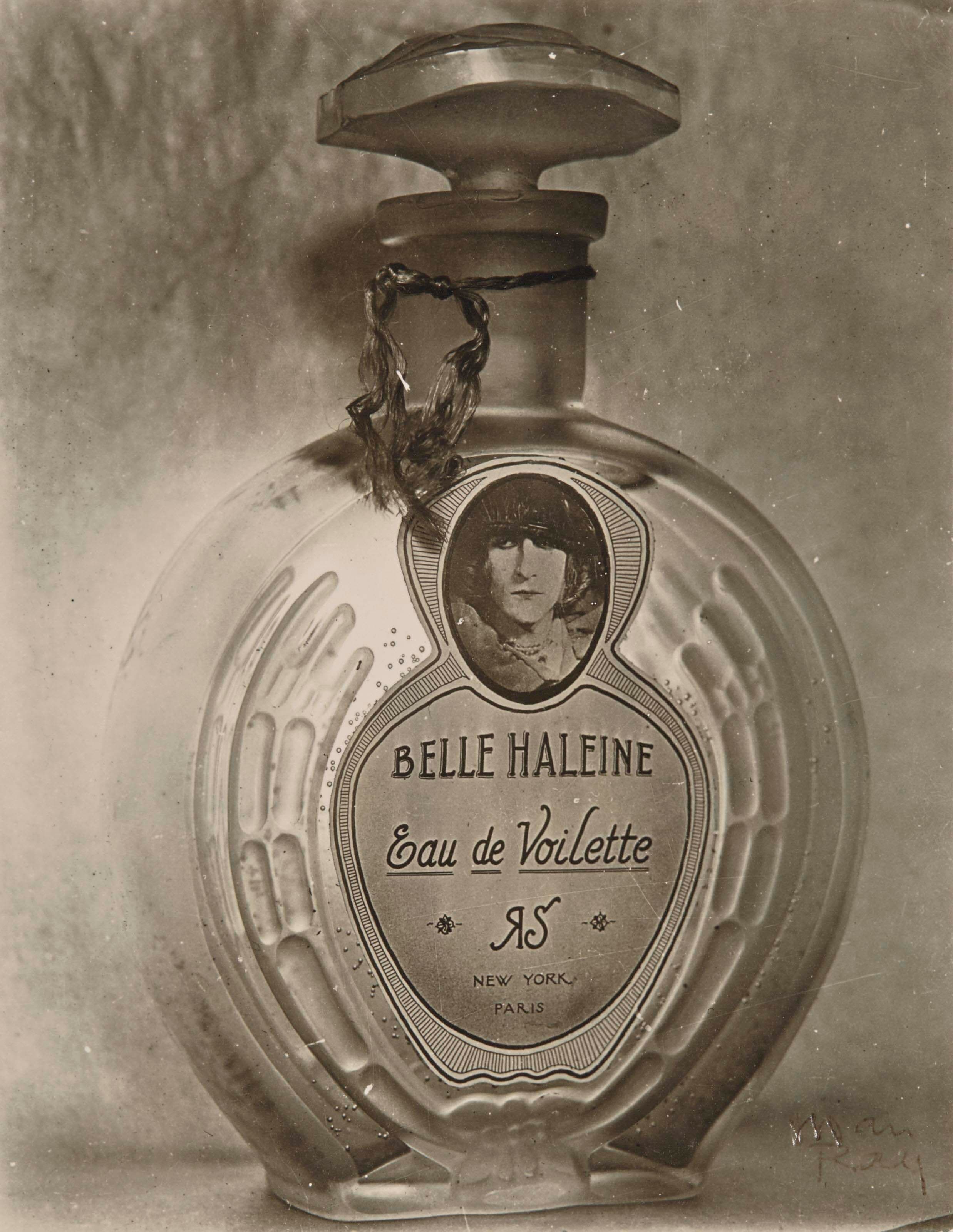
Man Ray, Belle Haleine, 1920–21. © Man Ray 2015 Trust / Artists Rights Society (ARS), NY / ADAGP, Paris 2025.
Word count: 784
Paragraphs: 10
Few terms in the lexicon of modern art have been as tirelessly invoked—or as thoroughly diluted—as subversion. One might almost expect Dior to release a fragrance called SUBVERSION, complete with a sleek advertising campaign that sells rebellion as a lifestyle. The word has become a badge, worn almost compulsively: anyone who has ever sifted through grant applications or prize dossiers will know how routinely young artists (and their galleries) describe their work as “subversive.”
Outside the art world, the meaning of subversion has long been precise and ominous. Since the 1974 United Nations debates on the legal definition of aggression, intelligence agencies and governments have understood subversion as indirect assault—an attack by stealth rather than by open confrontation. Within art, however, the term has followed a different trajectory. Around 1900, anarcho-bohemian circles—fueled by the militant political anarchism of the fin-de-siècle—began to valorize destruction as a creative and cultural force. Figures such as Jacques Vaché, Alfred Jarry, Filippo Tommaso Marinetti, and Hugo Ball inscribed this ethos into the DNA of the avant-garde. Dada and Surrealism amplified it, while Georges Bataille, Antonin Artaud, and Jacques Lacan gave it theoretical depth: the conviction that acts of negation, undoing, and provocation could themselves become generative gestures of meaning.
This impulse did not vanish with the war. On the contrary, from the Situationist International to the guerrilla interventions of the 1960s and ’70s, artists and activists carried the banner of subversion into biennials, documentas, and countless institutional arenas. Yet the irony was evident: most of these provocations, however sincere, proved as harmless as they were loud. Beyond fleeting scandal—or, at times, legal reprimand—they rarely unsettled the political or social order.

Niki de Saint Phalle shooting Tir (Shooting Altar), 10th Anniversary of Nouveaux Réalistes, Milan, Italy, 1970. Photo: Harry Shunk and Janos Kender. © 2025 Niki Charitable Art Foundation / ARS, NY / ADAGP, Paris. Getty Research Institute, Los Angeles (2014.R.20). © J. Paul Getty Trust
The more astute artists, however, grasped something essential: subversion’s true power lies not in attacking institutions from without, but in turning the structures of art against themselves. Hence the canonical gestures of the twentieth century: Marcel Duchamp’s Fountain (1917), Robert Rauschenberg’s Erased de Kooning Drawing (1953), Jean Tinguely’s self-destroying Homage to New York (1960), and Piero Manzoni’s notorious Merda d’artista (1961). Each functioned less as an act of destruction than as a catalyst—forcing art to reconfigure its own systems of value, its own boundaries, and its own legitimations.
According to Niklas Luhmann’s “systems theory,” modern society is composed of autonomous subsystems—politics, law, economy, religion, science, and art—each governed by its own operational code and logic. These systems are “operationally closed” but “cognitively open”: they can perceive and observe one another, yet they cannot directly intervene in each other’s operations. Political decisions cannot determine what counts as scientific truth; economic success cannot define theological validity; artistic gestures cannot alter political reality. Each system remains self-referential, reproducing itself according to its own internal logic.1
It follows that the belief in politically “subversive” art is, at its core, a form of magical thinking. Artistic subversion can only subvert art itself. When artists wish to effect political change, they must enter the system of politics—found a movement, form a party, or engage in activism. But in doing so, they resign from the system of art.

Joseph Beuys, Ohne die Rose tun wir's nicht (We Won't Do It without the Rose), 1972. © 2025 Artists Rights Society (ARS), New York / VG Bild-Kunst, Bonn.
The most compelling example of an artist confronting, with radical seriousness, this insurmountable divide between artistic expression and political action is undoubtedly Joseph Beuys. In protest against the killing of student Benno Ohnesorg during a 1967 demonstration, Beuys—together with Bazon Brock and Johannes Stüttgen—founded the German Student Party which, however, never reached any organizational structure allowing it to operate in any way within the political system. As his thinking evolved toward the idea of transcending representative democracy and the party system it presupposed, Beuys recognized that societal transformation could not be achieved through art or a political party. This realization led him, in June 1971, to establish the Organization for Direct Democracy through Referendum.
Between 1971 and 1973, Beuys focused his energy on spreading the organization’s ideas through lectures, street actions, and public discussions in museums and galleries—from Düsseldorf and Cologne to Naples, London, and Berlin—advocating for a vision of free, democratic socialism. The culmination of this engagement was his contribution to documenta 5 in 1972: for one hundred days, Beuys occupied an office where he engaged visitors in continuous dialogue on direct democracy through referendum. This marathon of conversation was not performance in the conventional sense but an experiment in collapsing the distance between art and politics—a sustained effort to test whether the artist could, through dialogue, transgress the operational boundaries of his own system.
Beuys’s experiment remains one of the most ambitious attempts to fuse art and political life. Yet in retrospect, it also confirms Luhmann’s diagnosis: the systems remain separate. Beuys’s “office for direct democracy” was ultimately still an artwork—a subversion within art, not of art’s outside world.
- Niklas Luhmann, Art as a Social System (Stanford: Stanford University Press, 2000).
Tobia Bezzola has curated numerous exhibitions and published numerous books, catalogues, and articles on modern and contemporary art and photography. He is a visiting professor at the Accademia di Architettura / Università della Svizzera italiana, Mendrisio and Director of the Museo d’arte della Svizzera italiana, Lugano.