John Cazale’s Eternal Rediscovery
With all the hallmarks of a cinematic journey baked into his biography, it’s no wonder the film world is so enticed by this actor.
Word count: 1809
Paragraphs: 19
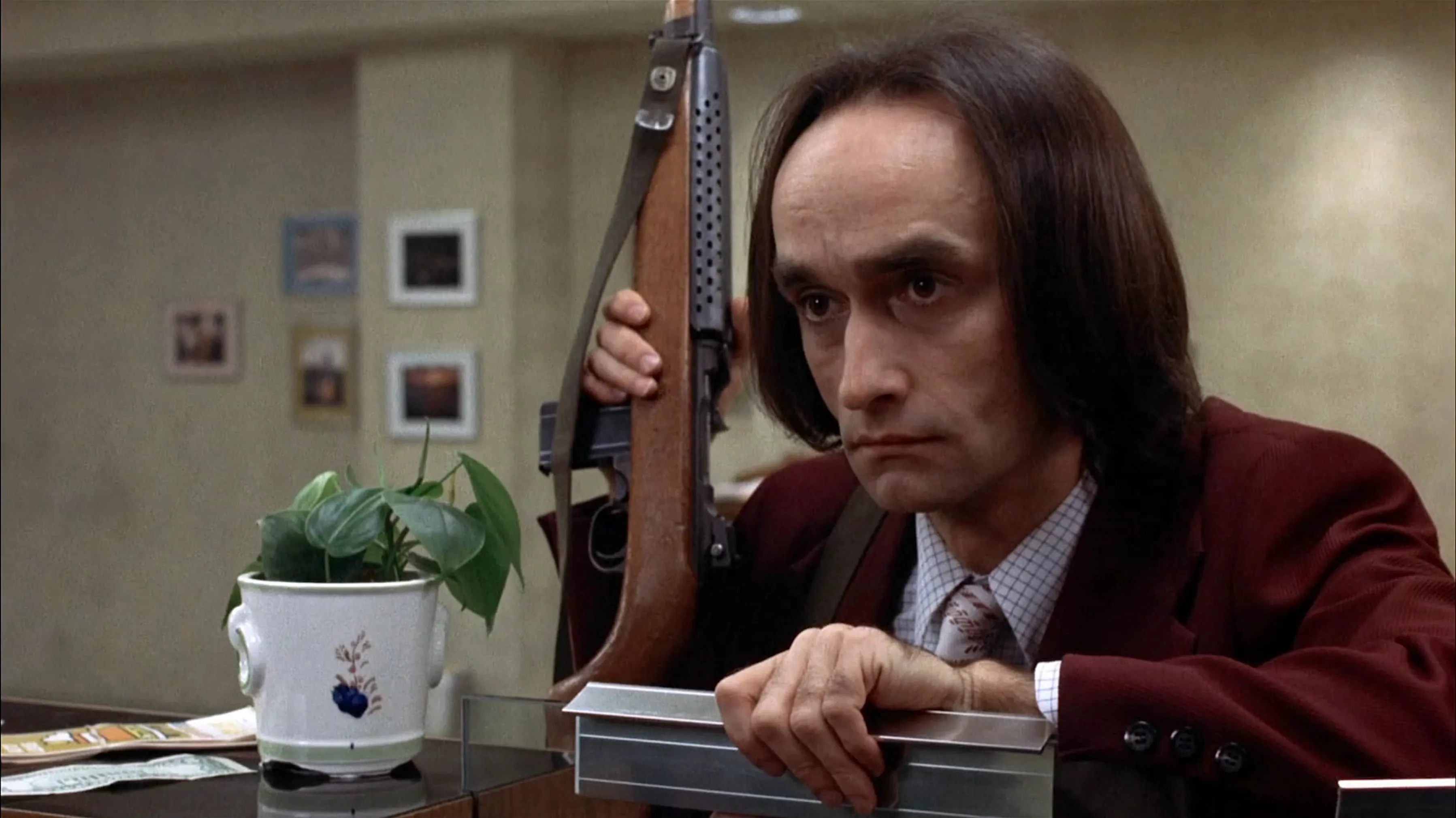
Dog Day Afternoon, dir. Sidney Lumet, 1975. Courtesy Film Forum.
Film Forum
June 13–19, 2025
New York
My dad texts me randomly one day, “Can you name the actor who performed in only five films, all of which were nominated for Best Picture?” I’m trying to be better about these sorts of things, so I shoot back right away: “Easy, John Cazale,” this tidbit of film trivia forever lodged in my brain. I’m tempted to see how much more he knows. “Did u know he dated Meryl Streep too??!!” I type out, then delete. It feels cheap to give my dad celebrity gossip from fifty years ago. Instead I ask him how he’s doing, the real reason he texted me.
John Cazale’s life often gets summed up this way: an overlooked and underappreciated character actor who stole the show in some of the most memorable films from the seventies before an early death truncated his rise to stardom. It makes for a smooth storyline, a memorable face at the center who worked hard to build a name for himself before tragedy struck. With all the hallmarks of a cinematic journey baked into his biography, no wonder the film world is so enticed by this actor.
In making sense of film history, and to a larger extent the people around us, we lean on these narratives often. Celebrity biography has always intertwined with performance; we aren’t satisfied with talent alone, we want someone with a story, someone to root for against the odds. I often find myself scrolling right to an actor’s “personal life” section on Wikipedia when I encounter someone new. But by reducing Cazale to a “today-I-learned” Reddit post, we miss out on the nuance and depth that made him such a great actor. Paradoxically, this has also given him a legacy that will live on for future generations of film fans to constantly rediscover.
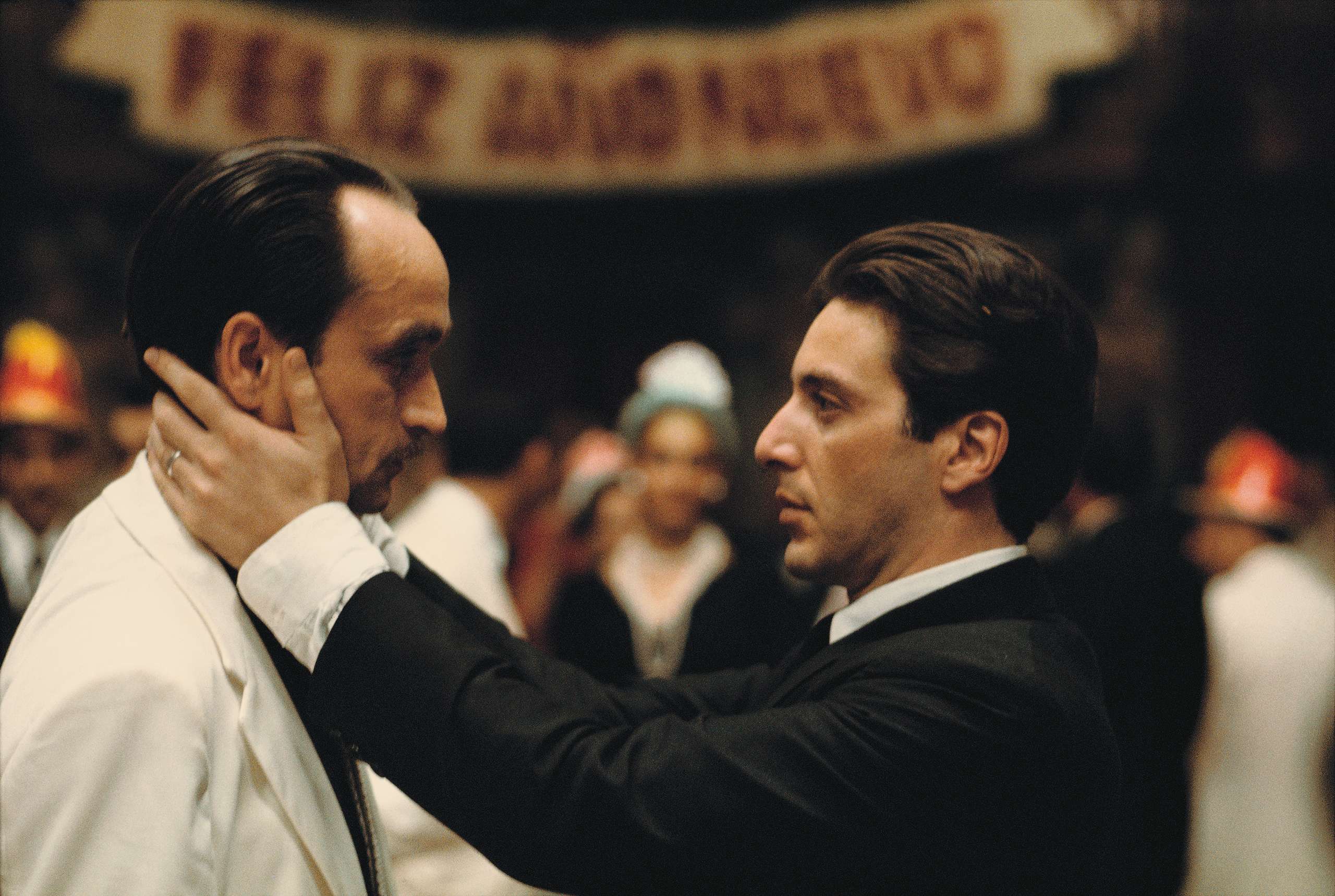
John Cazale with Al Pacino in The Godfather Part II, dir. Francis Ford Coppola, 1974. Courtesy Film Forum.
Cazale’s first on-screen role came when a casting scout recommended him to Francis Ford Coppola for his upcoming gangster epic. Coppola cast him as Fredo, the runt of the Corleone family. Liking what he saw, Coppola wrote him into his next, more personal project, The Conversation (1974), and expanded Fredo’s role in The Godfather Part II (1974). What would become Coppola’s epic seventies run would become Cazale’s too. He next appeared in Dog Day Afternoon (1975), another collaboration with Godfather co-star Al Pacino. The two had come up in the theater world together; Pacino requested director Sidney Lumet cast his old friend as his on-screen sidekick.
His star quickly rising, John Cazale’s career gets cut short here. He was diagnosed with terminal lung cancer at age forty-one, after a life of chain-smoking, and died the following year. But, always industrious despite his declining health, he completed his final role, The Deer Hunter (1978), alongside his partner of two years, Meryl Streep. Each of his five films received nominations for Best Picture—three of them winning—although Cazale himself was never nominated for an individual acting Oscar, a tragic ending for our thespian hero.
If it seems Cazale’s biography has a flair for drama, perhaps it’s because he’s been working in theaters his whole life. He started in Boston’s regional scene before moving to Manhattan in his twenties to work odd jobs and give it the big-city try. It took him thirteen years to work his way up before being cast in The Godfather. All evidence from this time suggests he was a word-of-mouth sensation, critics again and again wowed by the sensitivities that the lanky, austere actor could capture on stage.
I remember these key biographical beats from the first time someone told me about John Cazale—my sister, I think it was, telling me on the phone after I watched Dog Day Afternoon for the first time, delighted to let me in on an insider secret. This arc of his life was what I was told, his death always mentioned in the same breath as his life. When I went and saw The Godfather at Film Forum, there was a couple behind me, the man loudly explaining the on-screen action to his female companion, despite multiple shushes. It’s difficult to see John Cazale on screen without someone saying out loud, “That’s John Cazale.” He has become a phenomenon, one that provokes the passing on of an oral history (whether it's asked for or not). Those who have heard his story before can’t help but share it with others.

The Conversation, dir. Francis Ford Coppola, 1974. Courtesy Film Forum.
Even in reading other writings on the actor, this three-part, cinematically structured summary is inescapable: a quick rise, a brief moment of glory, and a tragic end. His name tops clickbait “Biggest Oscar Snubs” and “Actors Gone Too Soon” lists, rightfully so, but unfitting for someone who contained such depths. Cazale often receives the label of a character actor, those who play memorable, idiosyncratic roles but never reach full stardom. They so fully immerse themselves into their characters that audiences have a hard time recognizing them as actors unless they have seen them over and over again. With a finite filmography, Cazale is unable to brute-force his way into our memory, so his collaborators, film critics, and casual fans alike do it for him.
In one of the few pieces that does resist this overly scripted narrative, Jackson Arn praises Cazale’s relatability in an industry that so often prioritizes beauty and perfection. “Cazale excelled, instead, at playing people who are weak, weird, unprincipled, and visibly uncomfortable in their own skins,” he writes. But still, this relies on defining Cazale using comparison to others. He was a foil to Robert De Niro, comrade to Pacino, boyfriend to Streep. These parallel household names highlight Cazale’s relative obscurity, but also leave us projecting onto him. Without a known A-list persona, he can absorb the characterization that audience members have assigned to him; we create an identity for him based on what we can see, or what we assume.
His physical attributes often get mentioned here. His dark, sunken eyes and stringy hair scream sensitive loner even from a distance. The fact that Cazale was shy and guarded about his personal life also reinforces this point. Critics emphasize his subtle acting style, but he is reduced by these details, resulting in what feels like caricature: the soft and sensitive genius whom no one saw at the time. Repeated over and over, this is all anyone remembers. In an interesting twist, his collaborators that he gets compared to are the ones who actually knew him best. They are the ones who had the opportunity to spend time with the figure being the scenes, understand him as a full human, and are the first to spread the good word of John Cazale.
Without the opportunity to hear Cazale’s reflections on his career in his own words, we turn to his community for insight on the man behind the roles. One aspect that gets repeated again and again is Cazale’s dedication to the craft of acting. “It was inspiring,” Pacino said of working alongside him. “He did better and better, so you did better and better.” Cazale’s work ethic and acting chops not only pushed his co-stars to up their game, but also inspired future generations of actors too (Steve Buscemi and Philip Seymour Hoffman have both named Cazale as a major influence). Those single minds in pursuit of their craft are the ones that transcend their era. It can be difficult to sift through that in the present, but we can definitely see it when it’s behind us.
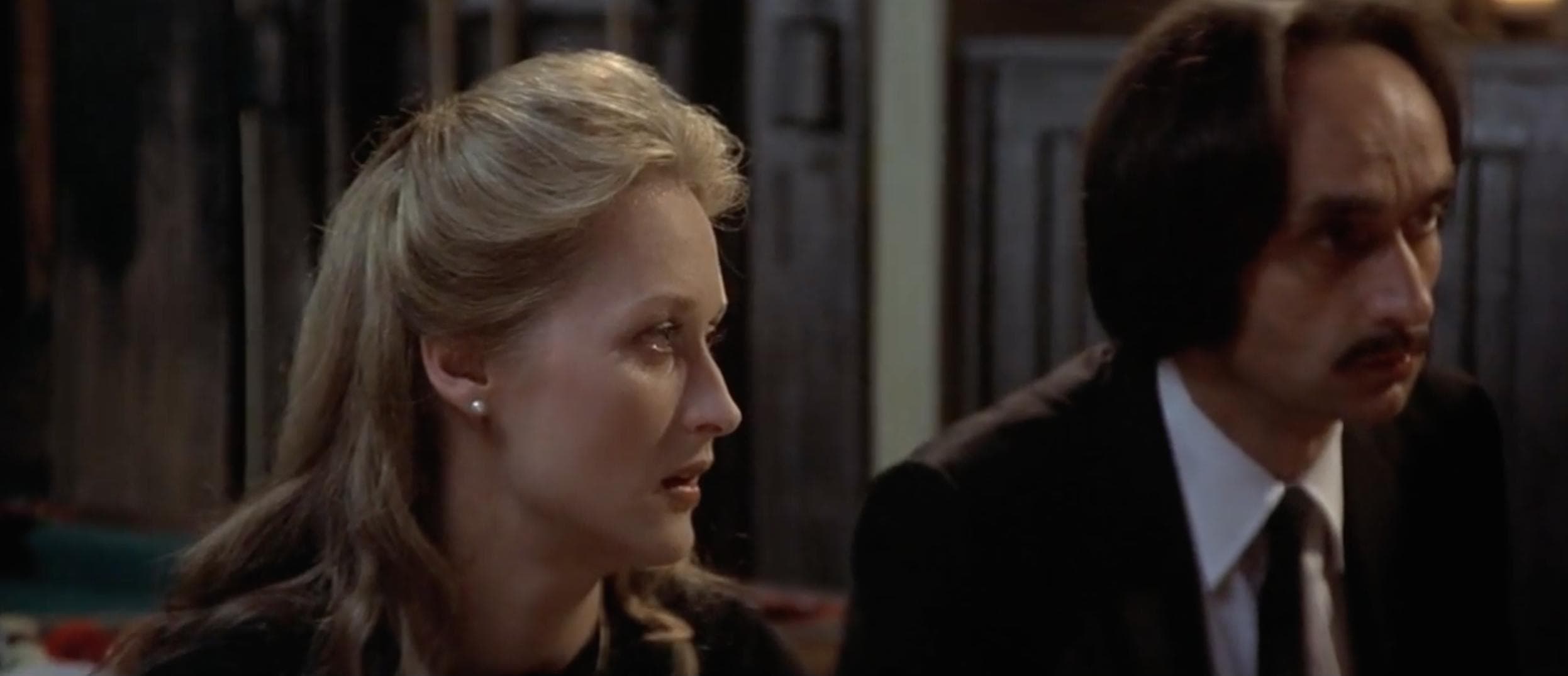
John Cazale in The Deer Hunter, dir. Michael Cimino, 1978. Courtesy Film Forum.
The central notion that Cazale is underrated runs contrary to the fact that his five film appearances were all lauded in their own right, all pristine examples of New Hollywood that hold up to modern audiences. The Godfather and The Godfather Part II are widely regarded as two of the greatest dramas ever made. The Conversation transcends the paranoia thriller genre to predict the impact constant surveillance has on the psyche. Dog Day Afternoon’s heartfelt, anti-authoritarian core has made it a fan-favorite for younger generations. And The Deer Hunter was one of the pioneers of Hollywood’s criticism of the Vietnam War.
Part of Cazale’s success could be picking good projects to work on, collaborating with other artists who were on top of their game during the New Hollywood revival. Cazale’s association with such iconic films has granted him revered status, a sainthood for film fans alongside greats like Gena Rowlands and Gene Hackman. Actors who lived their lives embracing their humanity and leaving a legacy behind them of true art.
A 2009 documentary, I Knew It Was You: Rediscovering John Cazale, gives a stunning career retrospective with interviews from Pacino, Streep, De Niro, Coppola, and others celebrating working with him and the impact he had on their own careers. It is an excellent introduction for those unfamiliar with Cazale, but can leave a seasoned fan wishing it matched up to the brilliance of Cazale’s own skills. In his films, Cazale is effortlessly alive, his long face capturing the range of human emotions. When watching the documentary, you feel the weight of his absence as Cazale is spoken about in the past tense. His life is complete. We remember him as he was, obscure and awkward, but a titan, unable to escape the underdog label even in death.
Usually unprinted, but often lying just below the surface in Cazale biographies, is the question of what could have been. What would his career have looked like if he was able to live into the twenty-first century? Would he have had a De Niro slump, his own Pacino fangirls, Streep’s mainstream success? Would he totally fade into obscurity without his memorable statistic or notable death, or star in a Hulu streamer? For better or for worse, we never will know.

I Knew It Was You, dir. Richard Shepard, 2009. Courtesy Film Forum.
The part of John Cazale’s narrative that never sits right with me is the notion that he never got the chance to do much at all, that his batting average is so spectacular solely because of his lower film count. But actually, the opposite is truer. He devoted his life to his career and worked for years on end to achieve his goals. He tirelessly pursued creative expression despite his shyness, winning over skeptics and creating a legacy for himself that has far outlived him.
John Cazale would have been ninety this summer. Thanks to the work of those around him to recognize what a generational talent we had the opportunity to witness, seasoned fans and newcomers alike have the opportunity to discover Cazale as he was, the people’s actor of the highest caliber. Film Forum presents “John Cazale: A 90th Anniversary Tribute” June 13–19, screening all five of Cazale’s film appearances, alongside free showings of I Knew It Was You.
Susanna Maize is a writer based in Brooklyn, NY.