Hannah Peterson’s The Graduates
A filmmaker tackles the urgent American question of how to portray the traumatic aftermath of a school shooting.
Word count: 1025
Paragraphs: 9

Hannah Peterson’s The Graduates. Courtesy The Future of Film is Female.
Written and directed by Hannah Peterson
A director uses the transportive power of film to come to grips with the ultimate American crisis: guns are the leading cause of death for children and teenagers, ages one to seventeen in the United States. Statistics about gun violence and school shootings are appalling, but often fail to capture the fear and trauma instilled in generations of students who regularly undergo active shooter drills in the classrooms where they are meant to prepare for their futures. The absurdity of the loss of innocent life on such a mass scale is unfathomable, and perhaps speaks to the government’s inability to enact any serious legislation to stop these shootings from continuing to happen. So the government has failed us—what to do about it? In The Graduates (2023), director Hannah Peterson sets aside the statistics and distills this tragic phenomenon into a poignant coming-of-age story about grief, love, and survivor’s guilt.
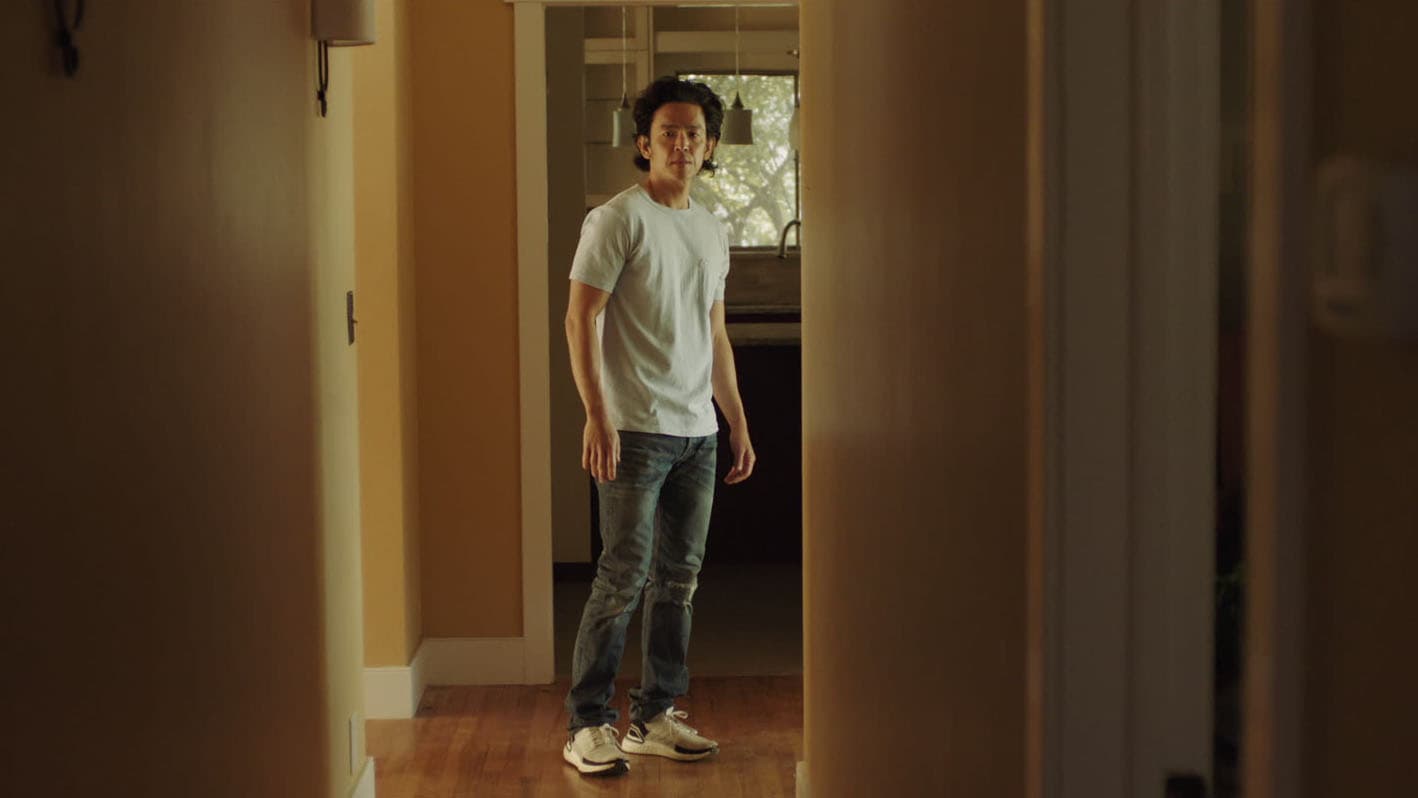
The Graduates is set at a high school in suburban Utah in 2019. Nearly a year prior, a school shooting took the lives of several students and teachers. At the center of the story is Genevieve (Mina Sundwall), in her senior year, navigating the tedium of school and college applications on top of the loss of her boyfriend, Tyler, one of the victims of the shooting. The film also follows two other principal characters—Ben (Alex Hibbert), Tyler’s best friend, and John (John Cho), his father, who also happens to be the school’s basketball coach. As for Tyler, we only glimpse him a few times, as his friends and family look back at old photos and videos. A time capsule of the late twenty-teens, The Graduates is a portrayal of modern grieving: technology is core to the experience. Smartphones present both the gift of a pocket-size, eternal memory box and an unrelenting reminder of pain that is always one tap away.
Hannah Peterson’s The Graduates. Courtesy The Future of Film is Female.
Peterson makes the smart choice to bring us into the story after the act of violence—she understands this is an act far too horrific to attempt on-screen depiction. In one of the earliest scenes in the film, among a sea of other students arriving at school, Genevieve walks through the metal detectors, drops her backpack in a gray plastic tub, and feigns an unconvincing smile off-camera, presumably in the direction of a security guard. This element of security and surveillance, now mundane to the students, is a reminder that they won’t ever return to normal. These solemn moments piece together a mosaic—the characters are fractured versions of their former selves, broken beyond repair and yet forced to engage in the everyday slog of teenage life. Although in the throes of grief, Genevieve remains quiet for the most part. She shows her pain in subtle ways—through the anxious tapping of her leg in class and through the smile she often flashes while plainly on the verge of tears.
At moments, the understatedness of the obvious tragedy makes scenes a little tedious, but the emotional pay off at the end of the 87-minute film is well worth it. Both Genevieve and Ben are riddled with survivor’s guilt in their own ways. Ben can’t get past the fact that he coincidentally missed school the day of the shooting, and Genevieve doesn’t want to create the future she deserves because it is a future that Tyler will never get. John is still coaching the basketball team that Tyler used to play for, and he has taken on the role of father figure to his whole team. When he walks through the darkened high school hallway after basketball practice, he gravitates towards a locker that we understand to be Tyler’s and brushes his fingers across it, not stopping, but doing so in a ritualistic manner. These are the tiny, everyday memorials born from tragedy.
One of the most notable accomplishments of the film is in its rare portrayal of teenagers. For a long time, but particularly in recent years, Hollywood depictions of high school students have failed to be even slightly believable (think Glee, Riverdale, Euphoria, and more). Casting directors seem to have lost the plot when it comes to what a high school student looks and acts like, and viewers are not blind. Countless stories have been written in publications from Teen Vogue to Screen Rant about the rationale behind casting older actors in teen roles, but also the damage it can do to the viewer—think of the insecure tween who compares himself to John Travolta’s Danny in Grease (1978). From an industry perspective, these casting choices are generally practical ones—older actors aren’t beholden to the same laws that limit the number of hours they can work.

Hannah Peterson’s The Graduates. Courtesy The Future of Film is Female.
Still, age-appropriate casting makes a difference when trying to tell a story so grounded in a real issue. Peterson made the choice to cast actors who were actually teenagers or not far from their teenage years, as well as first-time actors. Sundwall and Hibbert are gifted young actors, and their bonafide youth is an asset to their performances. In an interview, Peterson emphasized her choice not only to cast actors close in age to the characters, but to incorporate their experiences as members of a generation that are all only a few degrees of separation from stories of similar violence. Everyone knows someone who knows someone who has been impacted, or at the very least, received a panic-inducing notification on their phone.
In the end, this film avoids grand catharsis and closure. Senior year comes to a close, but the emotional wounds are still raw. Peterson treads lightly. She understands that no one wants to be told how to feel and no one needs gun violence to be sensationalized. Instead, she has passed the torch to the young people of today to tell the story from their perspective. In the aftermath of this shooting, they are allowed to be angry, to be jealous, to fail important tests, to have crushes, to wonder how they will pay for college. She has made space for them to do just that.
Alexandra Jhamb Burns is a freelance writer and podcast producer. Her writing appears in Vogue and Byline.