ArtJuly/August 2024In Conversation
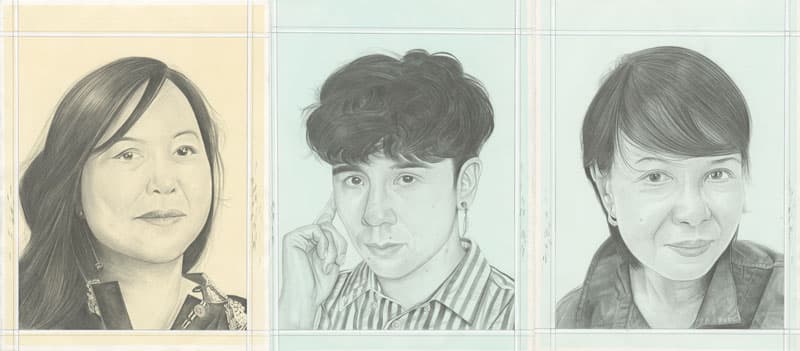
An-My Lê with Monique Truong and Ocean Vuong
Word count: 9609
Paragraphs: 69
Despite how difficult life can be without our sense of control, every once in a while each of us gets reminded who we truly are in the world. This occasional reminder or moment of self-recognition occurs when we least expect. I remember my late friend Jonas Mekas (who prefers to be called a “filmmer,” a midwife rather than the godfather of American avant-garde cinema) in the last two decades of his life had traveled extensively and had often been asked a similar question, “Where do you come from? Where do you live? And what do you do?,” which philosophically evokes Paul Gauguin’s epic picture Where Do We Come From? What Are We? Where Are We Going? (1897–1898). Mekas always provided the same answer, “I was born in Lithuania. I live in New York. And my country is culture.”
In thinking of the millions of political refugees and immigrants, who left their beloved father/mother lands for the United States and elsewhere among the free and open societies of the world, we all immediately know in the space in-between that neither belongs to their old, nor new homes. Here, I must confess, as fortunate as many of us are in regards to having discovered our lifelong passions, some particular creative outlets from which we can pour our total intellectual and emotional energies as maximally as possible, we may, however at times, come to realize these passions can be served as substitutions as personal avoidances from our deep pains and boundless sorrows. (This why we rarely and readily in our respective ambitions would generally imply our substances, our emotional lives that ought to be hidden, buried, or suppressed to somewhere else in our psyches, as we often fear our stories are less interesting or perhaps too untidied.) It is from this perspective that I find very infrequently it emerges when both form and substance can harmoniously be brought together as one coherent synthesis, which is to say I felt fortunate to have been present at this remarkable and generous gathering of our three old and new friends. The following conversation took place on the evening of Monday, January 22, 2024 at the Roy and Niuta Titus Theater 1 at The Museum of Modern Art. It includes Roxana Marcoci’s thoughtful introduction and has been slightly edited for your broader reading pleasure.
—Phong Bui
Roxana Marcoci: Good evening and warm greetings to everyone, those present in person and those joining us via Zoom. I’m Roxana Marcoci, The David Dechman Senior Curator and Acting Chief Curator of Photography at The Museum of Modern Art. And it is my pleasure to welcome you all on this special occasion, which brings in conversation Vietnamese American artist An-My Lê and Vietnamese American writers, Monique Truong and Ocean Vuong, organized in conjunction with the exhibition An-My Lê: Between Two Rivers/Giữa hai giòng sông/Entre deux rivières, an exhibition whose title in English, Vietnamese, and French conjures up a space where distinct landscapes, histories, and cultures converge.
This ninety minute conversation will explore themes of memory, autobiography, heritage, and the creative relationality between images and words. This event is the germination of a partnership between the Asian American Writers’ Workshop and The Museum of Modern Art. And it is an honor to have collaborated with Jafreen Uddin, Executive Director of the AAWW, and her team in planning this event and sharing space tonight with its members. For over thirty years, the AAWW has been dedicated to publishing and amplifying Asian American literary culture. Operating from a radically inclusive ethos, AAWW expands the definition not only of who—of who a writer is, but also of who is Asian American. Through a robust and diverse lineup of programming, AAWW serves as a vital sanctuary space for writers and readers alike. It’s one of the only national organization cultivating and curating the next generation of Asian American storytellers. AAWW works to mobilize the literary community towards a more just future. So on behalf of both our institutions, we extend heartfelt thanks to our three distinguished speakers, as well as with Adelia Gregory, Manager of Public Engagement, José Camacho, Assistant Educator, and Naomi Amenu-Fesseha, Public Programs Fellow in the Department of Learning and Engagement, and Caitlin Ryan, Assistant Curator of Photography.
It’s been a cherished gift, to me personally, to have worked with An-My Lê on her consequential survey at MoMA. And I hope you will all take the opportunity to view the exhibition one more time before it closes. Educated at Stanford and Yale University, An-My has been the recipient of the MacArthur Grant, the Louis Comfort Tiffany Foundation Award, the Guggenheim Memorial Foundation Fellowship, among numerous other honors. An artist’s artist, she is an influential thinker and educator. As a Charles Franklin Kellogg and Grace E. Ramsey Kellogg Professor in the Arts at Bard College, New York, An-My has played a crucial role in the imagination of future generations of creatives. For more than three decades, she has addressed in her own practice the complex fictions that inform how we justify, represent, and mythologize warfare and other forms of conflict. At a time when there is always more than one war being waged in the world, the significance of photographs that critically engage with the meaning of rampage and dislocation are ever more urgent, and in the context of heightened political tensions within the US, An-My’s work invites us to reflect beyond insular ideas of nation state, and national borders on the diverse temporalities of space, the layering of racial identities and histories, and the intimacies that grow paradoxically out of conflict. Her work was first presented at The Museum of Modern Art in 1997, in New Photography, an exhibition curated by our former colleague, Susan Kismaric. And it’s a great pleasure to have her here this evening. The New Photography is an iteration of the museum’s long standing series of significant development in photographic practice. And we are now inviting you to see An-My’s most comprehensive retrospective, featuring new projects that the museum is proud to have world premiered.
We are honored to have with us the novelist, essayist, children’s book author and librettist Monique Truong, whose debut novel The Book of Salt, published in 2003, is an exploration of the artistic salons of Paris in the 1930s, a time when Vietnam was part of colonial French Indochina, from the eyes of the Vietnamese cook employed by Gertrude Stein and Alice B. Toklas. The book, whose story revolves around photographs, became a national bestseller, a New York Times Notable Fiction Book and the winner of the New York Public Library Young Lions Fiction Award, and the Bard Fiction Prize, among other honors, along with Bitter in the Mouth from 2010 and The Sweetest Fruits from 2019. Monique’s novels have been translated into fourteen languages to date. Monique also co-edited the anthology Watermark: Vietnamese American Poetry and Prose, and its twenty-fifth anniversary edition in 2023. Monique is the recipient of the Guggenheim Fellowship, US-Japan Creative Artists Fellowship, American Academy of Arts and Letters Rosenthal Family Foundation Award, PEN/Robert W. Bingham Fellowship, Princeton University’s Hodder Fellowship, John Gardner Fiction Book Award and John Dos Passos Prize for Literature.
We are honored to have with us Ocean Vuong, Professor in the creative writing MFA program at New York University, the author of The New York Times bestselling poetry collection Time is a Mother from 2022, a deeply intimate poignant testament in the face of longing and loss, and the New York Times bestselling novel On Earth We’re Briefly Gorgeous from 2019, an epistolary, fearless meditation on the meaning of human connection, and the entanglements of colonial and personal histories. The recipient of the MacArthur Grant, Ocean’s contributions to literature also include the critically acclaimed poetry collection, Night Sky with Exit Wounds, a New York Times Top 10 Book of 2016, winner of the T.S. Eliot Prize, the Whiting Award, the Thom Gunn Award, and the Forward Prize for Best First Collection. His daring experimentation with language and form illuminate how the experiences we perennially live through, enjoy, endure, and question are truly inexhaustible. A Ruth Lilly fellow from the Poetry Foundation, Ocean’s honors comprise fellowships from the Lannan Foundation, the Civitella Ranieri Foundation, The Elizabeth George Foundation, The Academy of American Poets, and the Pushcart Prize. We are deeply honored that Ocean’s poem, “The Last Dinosaur,” Monique’s essay, “We Travel to See”, and An-My’s “Beyond the Rectangle: Fourteen Views.” Transoceanic, complex, and fluid stories grace the pages of our exhibition catalog that I hope you’ll all have the curiosity and opportunity to read.

An-My Lê: So we decided to introduce ourselves this way. And Monique will explain a little bit more. This is a scan of my grandmother’s passport, and it was actually delivered out of the Vietnamese Embassy in France. It’s a bit of a complicated story as to why we were all there, and why it’s my grandmother and her grandchildren in the photographs in the passport, but I am showing it because of the influence of grandparents on children of diasporas. I think we always look back at our parents to be the keepers of culture. But we should look further back at the grandparents, because it seems that there’s something even deeper and perhaps more at the root of who we are, where we come from. I also put this page of my grandmother’s passport up because I, for the longest time, said that I didn’t know what it meant to be an artist. I was trained as a biologist, I kind of discovered photography by chance. But more recently, I thought about my grandmother’s influence. She was living in Paris in this very scrappy apartment given by the Catholic Church. It was the late sixties when we arrived with my mom. And while we were in school, she would be in the apartment smoking, listening on the cassette tape to Trịnh Công Sơn and experimenting—cooking. There was only one very fancy Chinese restaurant at the time in Paris, and then some other scrappy place that was more like a grocery store. So my grandmother was experimenting; she was trying to make street food, the kind of food that we don’t really cook at home in Vietnam. Of course, the ingredients were missing. And she was very resourceful in terms of making things up and substituting. I was the sous-chef, so I was constantly running up and down the five flights of stairs, buying different groceries, begging for Chinese parsley, which was cilantro, which no one ever had. And I would be tasting, chopping, tasting. And I think that what I learned from her was that, even when she failed, which was often, she would pick it up the next day and continue. Of course, there was no such thing as authentic because she didn’t have the right ingredients. But she managed to do something that tasted right. Or that perhaps just felt comforting enough. I think that all of her trials and tribulations kind of made me understand what it means to be an artist. That you don’t really know where you’re going. And it’s all trial and error. But when you get there, you just know it.

Monique Truong: Okay, so this is me. This photo was taken in Saigon in 1971—January 27, 1971, which was the first day of Tết, in the Year of the Pig. I’m two years old, and I’m here with my grandfather. His name was Phạm Văn Tươi, and he was a writer. He wrote under his own name, and he also wrote under the pen name Tú Xe, and he was also a translator, a bookstore owner, a book publisher. The lore within my family is that I inherited my love of writing and words from him. And, you know, his achievements are talked about with great pride, especially by my mother. And I have been thinking recently that for her to have been able—and still be able—to say his name in connection with mine was really a way for her to alleviate a lot of the fear and a lot of the anxiety that she felt for me ever since I left the law to become a writer. So, you know, this familial thread that I have with this man of letter—this Vietnamese man of letter, this tradition—is here in the US, of course, only that—familial, private, right? So, his name was never a part of my official biography. He’s never mentioned in introductions at events and gatherings like this. And I think in recent years, I’ve really started to feel that absence more and more. I feel this need to remember and acknowledge him. So tonight, we’re going to change that. We’re going to take this opportunity to introduce myself to you as Monique Truong, cháu gái của nhà văn, the granddaughter of the writer Phạm Văn Tươi. Thank you.

Ocean Vuong: Thank you so much for both of your comments on the photos. This photo was taken perhaps around 1993 in the tenement building, in Hartford, Connecticut, where I grew up. The Salvation Army sponsored us and we were all in a one bedroom apartment here. And, of course, I look at this photo and think of Roland Barthes’s punctum and studium. What I love about Barthes’s concept is that for him the most perennial haunting punctum is what’s not in the photo—but time, what the photo elicits. My mother took this snapshot, and when I look at it, I don’t see myself—of course it’s a photo of myself, but I see instead myself aspiring towards my mother. And something that I love in photography, but also perhaps specifically portrait photography, in the work of An-My, and Dawoud Bey, William Gedney, is that the photographer has the magical power of eliciting a kind of gaze from the subject. And that is the photographer’s authorial presence. I look at this photo and see what my mother made of my face. That kind of bewildering joy of a boy who has no reckoning yet with his sexuality, but of course, riding this pink bike. My mother bought the pink bike because it was the cheapest one. What does that say about—[Laughs.] You know, it says a lot about America. [Laughter] But it was also my favorite because you know, she chose it. And so for me, this is a quick moment that has everything I love about memory, history, and photography in that the affect of the subject is transformed by the person behind the camera. And that is where the mechanics, the mechanism of capturing almost becomes second hand. It’s really about human beings trying to see the world in a different way. And I think this is most evident, at least for me, in this photo.
Truong: So, thank you An-My and Ocean. I love, love, love this act of self-introduction and the sharing of personal photos. I can’t really remember now how we collectively decided to do this, but I know it’s an unusual gesture. For me, I thought of it as a good balance against all of the beautiful but very long list of accolades, and fellowships and awards, which are hard-earned. But I think that I was hoping to get us closer to the bone of who we are with these photos, these personal family photos or, in your case An-My, a document of your grandmother. So do you recall what appealed to you about this gesture that we just did together?
Lê: I think it’s that notion of putting yourself forward. The three of us do work that could be called autobiographical somehow. So this was a great segue to talk about what it means to put yourself in your work. [Laughter]
Vuong: Well, what I love about that, choosing a document, An-My—particularly that document—was that it seems that the whole schema was trying to portray that neither the photo, nor the description of the face, was enough. On one hand, we had a description of things like chins and noses, and on the other hand we have the photo itself. So there’s a kind of skepticism around both forms, writing and photography, where there’s already a sense that they would not be accurate enough. You know, particularly in photography—
Lê: Photography, and truth.
Vuong: Yeah. Yeah. So it’s the perfect way to introduce this. Yeah, and it’s this kind of dichotomy. This kind of twin parallel between which one is more true. It’s actually writing that survived via stone tablets, you know, Gilgamesh, The Iliad—our species moves through the record via this patrilineal testament, and then similarly with photography, which came much later. But I just thought it was perfect that whoever organized the documentation already realized that neither form would be enough evidence by itself to permit bodies to pass through borders and timelines.
Lê: It’s also an odd thing, because it’s the grandmother and her grandchildren, it’s a very unusual situation. And perhaps it suggests something about a discordance and times of conflict.
Truong: Right, what constitutes family? Right?
Lê: Yeah. Yeah.
Truong: Alternative forms.
Lê: Alternative forms.
Truong: Yeah, absolutely. So just a quick bit of housekeeping just so that you know the structure of what’s happening up here. We’re going to have a conversation, but I have the great privilege of asking the first and the last questions. So I will begin. You mentioned, An-My, that this kind of use or inclusion of the family photos, family documents, would be a good segue into a discussion of our work, and I think the first thing that occurs to me really is that you’re known as a landscape photographer, but of course your work includes a multitude of faces, bodies. And yet, rarely your own. And the one photo that you’ve referenced—that is in the MoMA exhibition—that you consider your “self-portrait” is actually not of you. Right? And, Ocean, your work is exquisitely crafted, and is often talked about as being autobiographical. Right? While my work, my three novels are rarely spoken about in those terms. And sometimes they’re considered not even Vietnamese American. So I thought we could begin there; this idea of our decision to include or exclude ourselves from the frame, as it were, and whether it is something that was organic to your creative process, or were you from the beginning pushing against something? An-My?

Lê: When I came out of graduate school, postmodern photography was at its height, and the use of performance, text and image, appropriation, critique of the medium, critique of culture—those were the processes used by the photographers that were at the center of things at the time. I think many were women doing self-portraits, people like Cindy Sherman, Adrian Piper, Carrie Mae Weems. That really did not have a pull for me. I’m kind of a self-professed, straight photographer, I’m interested in photographing in the real world. So the notion of the self-portrait or talking about myself was probably the last thing on my mind. But at the same time, I think, being a landscape photographer, using the large format, you kind of perform. You’re right there, everyone’s looking at you, you can’t really hide and run away, so you are front and center. But then it’s easy to just shrug it off, because it’s for the purpose of the photograph. And so I think my MO was always to look for something that maybe stands in for myself or things that I feel. And so that’s what the portrait is, it’s about a kind of resilience. It’s about the vulnerability of children in war, but a resilience too. See the contrast between her delicate features and the heavy pith helmet that she’s wearing and wearing well, and how she’s working in the land. So that’s my preferred way of photographing. But then when I had to work with these Vietnam War reenactors, and suddenly, who I was, my Vietnamese-ness, was front and center. And it played into their notion of what realism is. Suddenly, it seemed that I had to participate and put myself forward. And I learned from it because I think it made me understand more about casting, acting, performing. It made me enter into different roles that I wouldn’t normally have. I’m glad that I did that. But that was probably the only time that I’ve really used self-portraits or used my autobiographical background in such a forward way. I prefer to use my experience to guide the way I look at the world more than anything else.
Vuong: I love that you said street photographer. It’s so incredible that you mentioned that you see it—you say you saw yourself as a street photographer?
Lê: Straight photographer.
Vuong: Oh.
Lê: Straight, straight, meaning, it’s less, it’s not setup photography, you know, you don’t go into a studio, when you build something.
Vuong: Right, right.
Lê: Even though you know, with a view camera, you kind of have to ask people to hold still and—
Vuong: Right, right.
Lê: You have to direct them a little bit.
Vuong: Documentary—Okay, beautiful. For a moment, I thought…well, I’d love to see you on Madison Avenue with a view camera. [Laughter]
Lê: I’ve done that. I’ve done that. People have done that.

Vuong: I kind of love my mishearing actually. Because I think what we see with street photography is this kind of idea of—of the impromptu, a kind of chance, close encounter, off the cuff, shooting from the hip. But then if you expand that idea to what you’re doing, I also wonder how do we—can we, redefine whimsy and serendipity? Like even though your photos take time to build and frame, I can see that kind of relationship, particularly when you photograph Vietnamese women, particularly the girls, you can see there’s a kind of … it’s almost like you found them, right? And that’s one thing I really love about your photographs. They feel completely, artistically deliberate, but they also feel found, like we discovered these subjects as you’re framing them. And I think what is really fascinating with your decision to use the view camera, which has this long history from the 19th century from the Civil War and Mathew Brady manipulating the bodies to dramatize and present a very public facing position with the photograph. But you take the same sort of mechanics, and you take photos of processes, praxis, you turn the process into the project, and I’m also really excited about seeing the strip mining, all these processes of mechanical liminality, the reenactments. It reminds me also that there’s so much opulence in reenactments—the gear, the time it takes, the ability to travel and set up and devote to this—that those who get to recreate mythologies of history still have the privilege to perform. Performance as a kind of privilege. And then, of course, seeing the industrial capital at work. I was just really, really stunned by that. And I’m curious of, I’m sorry, I’m diving right in here, because I’m so excited. But I’m curious of how you think about process, particularly when using the view camera? And have you used other formats? Have you ever gotten the urge, you know, to come out from behind the screen and say, you know what, I want to take out a 35 millimeter and just walk for a while? Do you ever get that urge?
Lê: Yeah, the world looks differently to me in a 35 mm camera. Of course, the weight and the difficulty of using that unwieldy view camera sometimes makes me want to throw it all away and go for the digital camera. But there is something, you know, it’s like a piece of furniture. You’re standing next to it, and you actually commune with the landscape or you actually talk to someone and so the relationship is completely different. It’s just like writing, right? I think that you have to really commit to the medium, and it’s a deep dive but the more you kind of handle it, the more seamless it is. And then you can really use it in a way that’s more poetic. You can be open to the surprises. I’ve used a view camera for so long that it’s like a flow, I don’t hear anything when I’m under the dark cloth. I get into the zone and the surprises are wonderful. Sometimes I don’t see them until the moment I look at the contact sheet. I’m sure in writing it’s the same thing. You have to master it somehow and then it allows you to be more relaxed, right?
Vuong: Yeah, I mean Sontag said it best—she says there’s no luck in writing. In other arts, you know, sometimes in snapshot photography you might get the right angle at the right time. But in writing, there’s just no luck, it’s very difficult to write a good sentence accidentally. And so there’s a kind of tedium. And you know, many people use the metaphor of writing, the pen is a brush, but I actually think the sentence is the brush. And there’s a lot of obsession that can come with it—I actually think it may be close to my understanding of the view camera technique where everything is … there’s a syntax in how you arrange things, the composition, going back and forth, talking to the subject, going under the cloth, checking it. That obsession with the paragraph feels very similar, which is why I like a smaller format when I do my photography, because I get to not be a writer, I get to be very far from the writer, because it’s more curatorial. You shoot, you shoot. And then—the magic comes afterwards, you know, in Lightroom, or the dark room when you process it in the contact sheets, and you say, “Oh, the fourth one is where the poetry is.” So there’s a kind of discovery. But the view camera is very similar. I’m curious, do you think that in today’s world—in the twentieth and twenty-first century, which is where you’re working in—the view camera kind of disarms the subject more? In the nineteenth century, it was so grand, it was like “now photography is coming,” right? Here it is, you know, get ready, set it up, and it feels very regal, opulent. But now, I think it was Alec Soth who mentioned this, where he says, sometimes the large spectacle of the view camera brings people to him. “Oh, this is an art project.” Whereas if you walk around with a 35 millimeter, it can feel quite creepy. Like you’re stalking someone, you know? I tried to take landscape-like shots of people’s houses with 35 millimeter, and some people came out thinking I’m casing the house like a psychopath.
Lê: Well, I think people who don’t know much about photography tend to take you more seriously, or they assume it’s art because it’s so unwieldy. But that’s out of ignorance, right? I think you can do really mediocre work with the view camera, as much mediocre work as with a handheld. The camera doesn’t make the man nor does the pen make a writer, right?
Vuong: Spill the tea.
Lê: So I don’t think the subject comes to you because you have a view camera. But I do think that people present themselves. I know people don’t always reveal themselves completely, but there’s something interesting about dealing or looking at a large format camera. I think that I like the slowness of it. I like being able to take my time. Even when I’m rushing, photographing the military for example, there’s something very meditative about it.
Truong: Do you also like the invisibility of it? In the moment when you’re taking the photograph—you are under this black cloth?
Lê: Yeah, yeah. But, but then at the same time, everyone’s looking at you.
Truong: Yeah, but then you get both, that duality exists.
Lê: Right, or I play the role of the photographer, I’m not me. I’m just the photographer.
Truong: Right.
Lê: Yes. So that’s the kind of invisibility. It doesn’t matter whether I’m Vietnamese or something else or a woman.

Vuong: Monique, your comment there just made me realize something in answering your question about where the self is in my work. And I remember now this very pivotal cartoon I saw when I was young. And we only had three or four channels, depending on how you moved the antenna. And every year around Christmas, there was this old seventies version, the British version of Ebenezer Scrooge—you know, the Ghosts of Christmas past—and of course a ghost comes and takes Scrooge and he becomes invisible to his past, and he gets to see portions of his life without the awareness of that, of the people in it. And I think that’s kind of how memory works. And I think I put myself and various people I know in my work because I’m invisible in the composition, because I’m traveling like Scrooge in the past through memory. I’m also interested in representing the Asian body through selfhoods, because, you know, in the nineteenth century, the early census in this country didn’t have a category for us, it could not conceive of an Asian body, even though we were here building this place. To the point where there was a case in Texas where two white laborers murdered a Chinese American man, and they got off because there was no legal category to put the Asian American man, and therefore no murder occurred. It’s kind of this bureaucratic semantic loophole. So the human being didn’t exist because it could not be defined by the state. And I could have written all my works with the same context, with the same political pressures, and then put it on Mars or made it sci-fi or, you know, put them in armor in medieval Europe and made it very imaginative. But I was deeply interested in having readers of all kinds, of all types, reckon with an Asian American body moving through space, to track that body through time and have the body then be durable, right? Through the plot of a novel. And I think it’s because the Asian body has been so malleable, for better and for worse, in this country. It’s been erased, it’s been twisted, it’s been subverted, it’s been ostracized, it’s been unseen. And so I’m interested in playing into that malleability as an author, then when it’s … it’s almost like, well, now that it’s my turn, I can charge and transform, and mythologize the body, as I see fit, right? We are alive only for a short while, and I thought, if I’m here, I’m curious to see what a selfhood could be. And so I don’t see my work as memoir, I see it more like a simulation. The characters—the protagonist in my novel was much more courageous, patient, much better than I am. He gets twelve drafts. I get, I get one draft at life, and I usually mess it up right away. And I think that kind of the magic of fiction is that you launch this simulation, and you get to charge these questions on people. I also think it’s unfair, and perhaps I would go as far as to say it’s unethical, for me to interview my family and say, “tell me how your wounds affected your life,” so that I might transform them to art. I don’t think I had the courage, or I had too much respect for them to say, “Give me material.” So I only had what I saw, which of course, was insufficient. And so I had to animate it and make it up. And I think that’s what, for me, fiction is for—taking a recognizable context towards an elsewhere that not even the author knows. If we were to use the metaphor of a house, the biography is just the foundation of the house, but the rest of the home, what happens in it, all the way up to the roof, must be animated by the imagination. I told myself at the end of this novel, if I looked at it, and recognized these people as me and my family, I would never publish it. So the challenge was transformation. I’m curious how you think about selfhoods in your work?
Truong: Well, I think that I am in every single one of my novels in some form or another. I was hoping actually that one of you—both of you—would push back against the question that I raised: That you could actually exclude yourself from the frame of your work. Because when I see your photographs, An-My, I know that there’s a Vietnamese American woman on the other side of that photograph, and so I feel as a viewer—as a person who is engaging with your work—I feel included because of that. And it’s profound.
Lê: So explain again, what do you mean by feeling that we can exclude ourselves?
Truong: That portrait is of a Vietnamese girl. You are not pictured in the photograph, but you are in every single one of your work, I think. I feel. And this is why going to your exhibit—knowing that your exhibit is here—has been so emotional for me. Because I think that I often, as a—I’m sorry, to use the word “consumer”—but as a consumer and engager of art, I am apprehensive. I am like a person who is stressed, you know, like, what is this photo about? What is going on here? Do you know? And with your photographs, even those that are so, in a way, shocking and challenging, I still feel—I’m gonna use this word, and it’s gonna sound odd but—I feel safe. I feel safe. That’s not the role of art. You know, that’s not why you created. But I thought it is worthwhile to share with you that that’s how you’ve made me feel.
Vuong: I second that—I feel held in the capacity of your vision. And maybe it’s the scope of what you do, but I think there’s a tenderness there, and I think it’s helpful to also unpack and maybe redefine the word “autobiography.” I like to consider autobiography in its most literal definition, which is the writing of a self. That is the writing of a selfhood, which might include the knowledge of a self, the histories that the self traffics in. And so I think, in that gaze, all of our works are autobiographical because they hold the sum total of our experience. And I also think that composition is enough evidence of the personhood. It somehow hurts me, you know, to hear, Monique, you say that sometimes your work is not considered Vietnamese American. And I just want to say that if you were, if you and I, all three of us would just write the word ‘the,’ that’s a Vietnamese American “the”—a single article, right? Because if it comes from you, then that’s what it is. It becomes the sum total of an authorial presence, and it has the identity markers that we don’t even know of ourselves, that “the” then encompasses, at least for me, dog lover, brother, son, lover of Mixed Martial Arts, right? But it also might identify things that I haven’t even reckoned with yet. And I think when I’m writing and making, I actually try to divest myself of the public categories put on me. I go through these rituals to kind of forget myself knowing that “myself” will always be intact. So, I forget the cultural monikers in order to say okay, yes, Asian American, queer, brother, New Englander, refugee, all that, but many people can embody that. What can the sentence hold for just Ocean? It’s the highest bar and it’s seldom achieved in the work. But I think that aspirational position makes it worthwhile to try. But I just want to say from one Vietnamese author to another that you write the word ‘a’ or ‘the’ or heck, if you put down period, that’s a Vietnamese American period.
Lê: I love what you said. Monique, you said you see yourself in all of your work, but you also write about a lot of things you don’t know, characters you discover or construct, places that you travel to, that you explore. So, I wanted to talk a little bit more about navigating those two things; the unknown, and then also carrying the self forward.
Truong: I think of writing as a series of what-ifs. It’s me asking the questions: What if I was in that body? What if I was in that time? What if I was in this particular set of facts? I write historical fiction because I adore research. I often come across small, tiny references to people whom I know have so much more in them historically. You know, instead of a footnote, it’s actually an epic. And so I get to do that; I get to go in there and do the what-ifs and explore and break it and expand it. But, ultimately, I’m writing about people, right? So I can only write that—that kind of connection or that kind of being in the world—I can only extrapolate from what I’ve experienced. And so, yes, every single one of these characters that have made it into my books, they are me. They came through what I’ve experienced; what my family has experienced. In an interview a couple of years ago, I actually just declared that every single one of my novels is a Vietnamese American novel. Because the most recent one does not have a Vietnamese or Vietnamese American character in it, and that became quite a source of concern, a source of concern from the very beginning. From the stage of an agent trying to sell it, a publisher acquiring it, reviews. It’s almost like there’s this desperation, right, to make a very quick and easy connection: this is why you are writing this! This, An-My, is why you are taking photographs of a quarry! You know, there’s no easy connection to that. It’s involved, it’s nuanced. And that’s what makes the work. That’s what animates that particular series. And makes it so complex, right? And I would hope that’s the same thing that you can say about the works that I’ve engaged in.
Lê: Yeah. So it’s about taking risks. Is this something that you think about while you ‘re making the work? Or is it only in retrospect that you realize, “oh, that was a big risk”?

Vuong: I’ll try to answer that. But I also want to ask you about the photo of the monk and the soldier on the ship because I think they talk about, you know, going for something despite fear of contrivance, this is one of my favorite photos of yours. For me, I kind of failed and snuck into “the writing world.” I dropped out of business school and, too ashamed to tell my mother, I just kept couch-surfing in New York, reading poems at bars. And someone said, “why don’t you just get a degree in English and just learn what you’re doing.” And I thought great, I can go study poetry at a school and show my mother the degree—my mother who’s illiterate—and tell her that it’s a business degree. And that’s what I did. But I think, for me, the composition comes with an awareness of the cost that I get to spend time writing because so much of my family spent their entire lives in factories and nail salons. Most of my life, I’m scared, I’m terrified of asking them what their dreams are, knowing that it’s most likely not possible to realize them at this point. You know, the opportunities, the times have long passed. And it’s a reckoning since I don’t think I can bear to hear exactly what their dreams are. One day, I’ll get there. I never got to ask my mother—I was too cowardly. But when I work, I know that, you know, there’s dozens of Vietnamese Americans who put their heads down in the factories and in the pedicure and manicure tables just so that one poet could put his head up. And yet when I’m writing—I write by hand—I feel great kinship with my family, because they hold the nail drill exactly the same way I hold the pen. So when I’m working, I feel in a very strange way, mimetic, you know, I’m mimicking the action of their labor. So I tell myself that I’m—it reminds me of a Seamus Heaney poem, where he comes from farmers and laborers in Ireland, and he says, “I’ll take my pen, and I’ll dig with it.” So with that in my head, and all my life as a writer, a professor—I never thought I would be here, so it feels incredibly privileged and lucky. And because of that, I have to risk it all. I can’t hold anything back, the cost is too high. And it’s already been paid for me to sit here. It’s already been paid. I can’t negotiate that. It’s been paid with or without my consent. But I get to do what I do because the bill has been paid in full. And it’s been paid with their bodies. And so when I get to the desk, I cannot hold anything back. People often ask me, “How can you be so vulnerable?” I say, that’s easy. Living through the body through time is very hard. But when I get to the page, the page is just the final act, the final sequence. It’s the residue of thinking and being. You know, when I was handing in my novel to my editor, I tried to sneak in a final edit. And I think they have this fancy program where they see your latest edits right away. I tried to sneak in this last edit in the novel. And what I tried to put in there, what I ended up putting in there at the keystone of this novel is a rim job scene. And I had this lovely, lovely conversation very quickly with my editor. She wrote me to say “Hey, can we talk, page seventy-seven suddenly looks very different.” And we had this beautiful conversation, you know. She’s represented and published the best and she wanted to hear me stand behind my work. And I told her, look, I’ve never seen this sexual act in a novel—maybe I haven’t read enough—and yet I don’t want to do it just to be new or edgy or whatever. There’s a reason, and I’ve been trying to do this, and I’ve been terrified of it. And this is the final edit, we’re gonna go to the printers in a week. I’m trying to do this because this is the summation of what I’ve tried to do, which is that in this moment, I can turn the sexual act into a vehicle of mercy, self-dignity, and rescue. And, there’s a queer white character in that novel, and the whole novel, he’s kind of just informed by his familiar New England working-class, blue-collar masculinity. And this is the moment where he commits this act as a way to absolve his friend’s humiliation during botched sex. And to me, that’s the moment where he breaks away from his culture. And its queerness that allows him to venture into the unknown, to commit to an act of tenderness that no one taught him, unprecedented. So this boy discovers this because it comes from within him, it doesn’t come from his country, his father, his community, nowhere. No one encouraged it but it comes from the queerness inside him, it becomes this moment of light, the light becomes this knowledge. And so the rim job becomes an act of rescue between two people. And I told this to her and she’s like, “great, we’re going to the printers.” So that’s the idea of risking it, because the cost is so high. This is our chance. You know, I never feel like I get a second chance. Every book, I just feel like I don’t know if I can do this again. I have to, you know, you can have all the dice in your hands. And that dice could be talent, luck. Right time, right place. But if you don’t throw the dice, nothing happens. You have to toss it. I’m curious about your relationship with risk, Monique.

Truong: My definition, recently, of art—I mean, I’m just going to claim all the genres and speak about it—is this idea of how you began—talking about your grandmother and her desire to try to create these dishes, reclaim these flavors, and failing, right? And yet she does it, and she does it again. I think that is art. Exactly like you really started us off, with this idea that art is when you know you can fail, chances are you will fail, and you continue to do it. And it might also be a mental health issue. [Laughter] But it feels like this is a good moment for An-My to talk about the risk that she took with the Vietnam War reenactment series. I think when I first saw those photos, I didn’t understand what you had to agree to, in order to create the series. And you’ve mentioned it, but, to me, to be out in the woods with a bunch of men reenacting a war—that your family had endured, survived, and here you are—is a risk that I cannot imagine doing. And yet, I feel like your decision to do so is what kind of propelled you into, I think, another category of artists. So let’s talk about your risk.
Lê: You know, I didn’t think working with those guys was a risk for me. I felt lucky that I even found them. I wanted to address the issue of war. And, like I said, being a photographer who likes to work with things in the real world, I couldn’t rely on collages. I couldn’t rely on constructing things and re-photographing them. So it was really a godsend that I heard about these guys and found them online. Beyond that, I felt that I needed to do what I needed to do to take that project to the end. Even if that meant having to wear black pajamas. And that was very difficult. Or the weird psychosexual tensions that I sometimes felt from those guys, it’s part of the project. I think they were working out something, and I was working out something. And it was safe, you know, it was like the safest war. And I’m not trying to defend these guys, but there’s no audience. It’s kind of an aesthetic project for them as well. They were so committed. Once I started working I realized that it’s not about recreating the horror of war. There was no need for me to do that. So what is it about? And then I realized that it’s about this idea of war, whether it’s mine or theirs, how it has been mediated through literature, through film, through our imagination. It was like this incredible place of fantasy that, I think, taught me a lot about realism, you know, what’s real, what’s not real. It was kind of Brechtian, because they went through so much trouble to do all of that, but I was like, the most authentic thing. They were these white guys playing Asian men and they didn’t care. So, it had a lot of fault lines that made it so interesting. But I didn’t think of it as risky. I mean, I do things that are physically risky, like going on an aircraft carrier, going on a submarine so the risk is built in. But, I think there are intellectual risks as well, or artistic risks of not knowing where you’re going to end up. The embroidery project was one of those that really kind of threw me for a loop. But I had my grandmother looking over me, because I learned how to do all that craft from her; the crocheting the knitting, and I did learn to embroider a little bit, though I had to have a refresher course. And dealing with the topic was a risk as well, you know, this porn film.

Vuong: Can you talk about, we talked earlier about the risk in that photo of the monk and the soldier in the medical vessel, can you talk about risk here, you mentioned it earlier backstage.
Lê: I think that as photographers, when we actually are making a picture, whether it’s with a handheld camera or a view camera, you get into this very intuitive mode, where you sort of think, but you don’t think critically in the way you do after you get home and you look at contact sheets. I was on this hospital ship, this American hospital ship that came to Vietnam. The Americans were trying to renew relations with the Vietnamese military. And that humanitarian mission was one of the early steps. So I managed to get access to that mission. I saw the nun from a small boat getting on to the big ship and immediately said, I’m going to follow her. So I followed her around to this waiting room. It’s all metal with these kinds of very boring curtains. It’s neither here nor there. Speaking of liminal spaces…And she’s sitting there waiting. And I thought, okay, this is my chance, I’m going to photograph her. I tried to make a portrait of her. And again, I’m not a portraitist and the whole thing felt wrong. Somehow, something was missing. And I had a military escort. And it’s not like I had studied him or paid attention to the fact that he was actually Buddhist, and he wore a bracelet of beads on his wrist. But I kind of turned to him. And I said, “oh, can you sit next to her?” And then I made the picture. And it was a natural thing. I resisted that picture for a long time, because I thought it was too contrived. Because it talks about war and peace in a very obvious way. The fact that it describes the idea of the uniform, the shaved heads, the idea of them sitting parallel one next to the other, but not really confronting each other, almost like parallel play, was so interesting. And so I think the risk there was to decide that it was okay.
Vuong: I just love that you committed to it. And I think that’s where to me art is most exciting. When we get so close to the terms of the agreements, the cultural agreements, which can be breached, of cliché, sentimentality, or artifice. Because if we turn away from that, then we deny ourselves our subjects. And if we turn away from that, and allow the culture to say “this is now overdone,” then we deny ourselves access to the world. And I see this in some of my students, they avoid anything close to cliché, like the plague. And then what do they have, I ask, what’s left for you then, if you let the culture decide what you write? You know, and then you realize there’s a safe kind of neutral gray zone, and the work actually gets evacuated of life and the heat that brought it there. And I think of the Russian formalists. Victor Shklovsky’s theory of cliché. He said, “There’s no such thing, as a cliché.” Rather it’s the artists’ obligation to estrange the cliché into a defamiliarized new ground, often via displacement.
Lê: Well, I think we spoke about it earlier, it’s about the art of describing. As Hayo Miyazaki talks about it so beautifully, I think he was berating one of the younger, graphic people who worked for him. And he said, you know, you’re not actually drawing someone who is opening the door, you are drawing the idea of that person opening the door. And so you were telling me how you love the details of the way the nun holds her hands, or the details of the draping of the dress. I think it’s all in the details, in the descriptions. That’s the objective part that photography does so well. Those things allow you to think beyond the image.
Vuong: That photo is a response to the fear of contrivance because what that photo proved that instead of turning away—because sometimes you approach a familiar subject and you say, “oh god, I can’t do it”—but then when you go even closer, you discover something else, right? There’s an elsewhere. And that’s what I really love about your photos—many people take photographs, but I think you take something else. And in that moment of fantasy in that frame, I saw the mala beads on the soldier’s hand and then of course the contrast and color: his uniform is blue, hers is saffron. And I thought to myself, “Oh, she gave it to him.” You know, so for me, that fantasy of what photography does, right, it demands that I finish the story, just like in writing.
Lê: I don’t want to diminish photography, but you know, we can just take the jump, just try it, right? Sometimes we take pictures just to see what it will look like as a photograph. And I don’t think you guys can do that. The labor that goes in there to gather not just a sentence, but a whole paragraph.

Truong: It’s the mystery of the word. [Laughter] But I regretfully have to announce that we are at a five-minute mark. So, we are now going to have our last question. And this is in honor of my favorite television show—the show that has sort of allowed me to survive the pandemic emotionally and the previous presidential election [Laughter]—and it’s RuPaul’s Drag Race.
So if we can bring up—
Ah, okay, so Ocean will go first. Then I will go, and then An-My will fittingly have the last word. Ocean, as Mother Ru would ask of her finalists, what would you say to your younger self?
Vuong: Well, it’s already pretty drag-esque right there, so he’s ahead of the curve, I think. I would tell him: “you should scare yourself. But you shouldn’t be scared of yourself.”
Truong: Ah! Goodness. Well, I think we’ll just end.
Okay, so, to little Thúy-Dung [Monique Truong’s Vietnamese given name] up there, I would tell her to go to more of her college classes. Because she’ll be paying off the loans forever. I would also tell her to maybe not go to law school and get therapy instead. And I think also just to let her know that she’s going to feel really, really lonely for a very, very long time. But that books are going to help her survive. And that’s why she will want to be a writer. And she’s gonna forget that sometimes, because it gets hard and sometimes it becomes demoralizing. But she has to hold on to the fact that books helped her to feel so not alone in the world and she wants to offer that to someone else.
Lê: Well, whenever I had very difficult decisions to make, I would just suffer and torture myself trying to think through all the possible outcomes. And obviously, you never get to the end of it because you just can’t know. So I would tell my younger self, “It’s okay to use your brain and try to think through things, but then just dive in and things will work out.”
An-My Lê is an artist. Educated at Stanford and Yale University, she has been the recipient of the MacArthur Foundation Fellowship, the Louis Comfort Tiffany Foundation Award, the Guggenheim Memorial Foundation Fellowship, among numerous other honors. Her work has been exhibited internationally. She is the Charles Franklin Kellogg and Grace E. Ramsey Kellogg Professor in the Arts at Bard College.
Monique Truong is a novelist, essayist, children’s book author, and librettist, whose debut novel The Book of Salt (2003) won numerous awards including a the New York Public Library’s Young Lions Award, the American Library Association’s Stonewall Book Awards/Barbara Gittings Literature Award, and the Bard Fiction Prize, among other honors. She is the recipient of a Guggenheim Fellowship, US-Japan Creative Artists Fellowship, American Academy of Arts and Letters Rosenthal Family Foundation Award, PEN/Robert W. Bingham Fellowship, Princeton University’s Hodder Fellowship, John Gardner Fiction Book Award, and John Dos Passos Prize for Literature.
Ocean Vuong is a poet. He is a professor in the creative writing MFA program at New York University. His most recent poetry collection, Time is a Mother (2022) is a New York Times bestseller. A Ruth Lilly Fellow from the Poetry Foundation, Ocean’s honors include fellowships from the Lannan Foundation, the Civitella Ranieri Foundation, the Elizabeth George Foundation, and the Academy of American Poets. He is a recipient of the MacArthur Foundation Fellowship, the T.S. Eliot Prize, the Whiting Award, the Thom Gunn Award, the Pushcart Prize, and the Forward Prize for Best First Collection.