A Tribute to Donald Baechler
(1956–2022)
Edited by Brian Belott
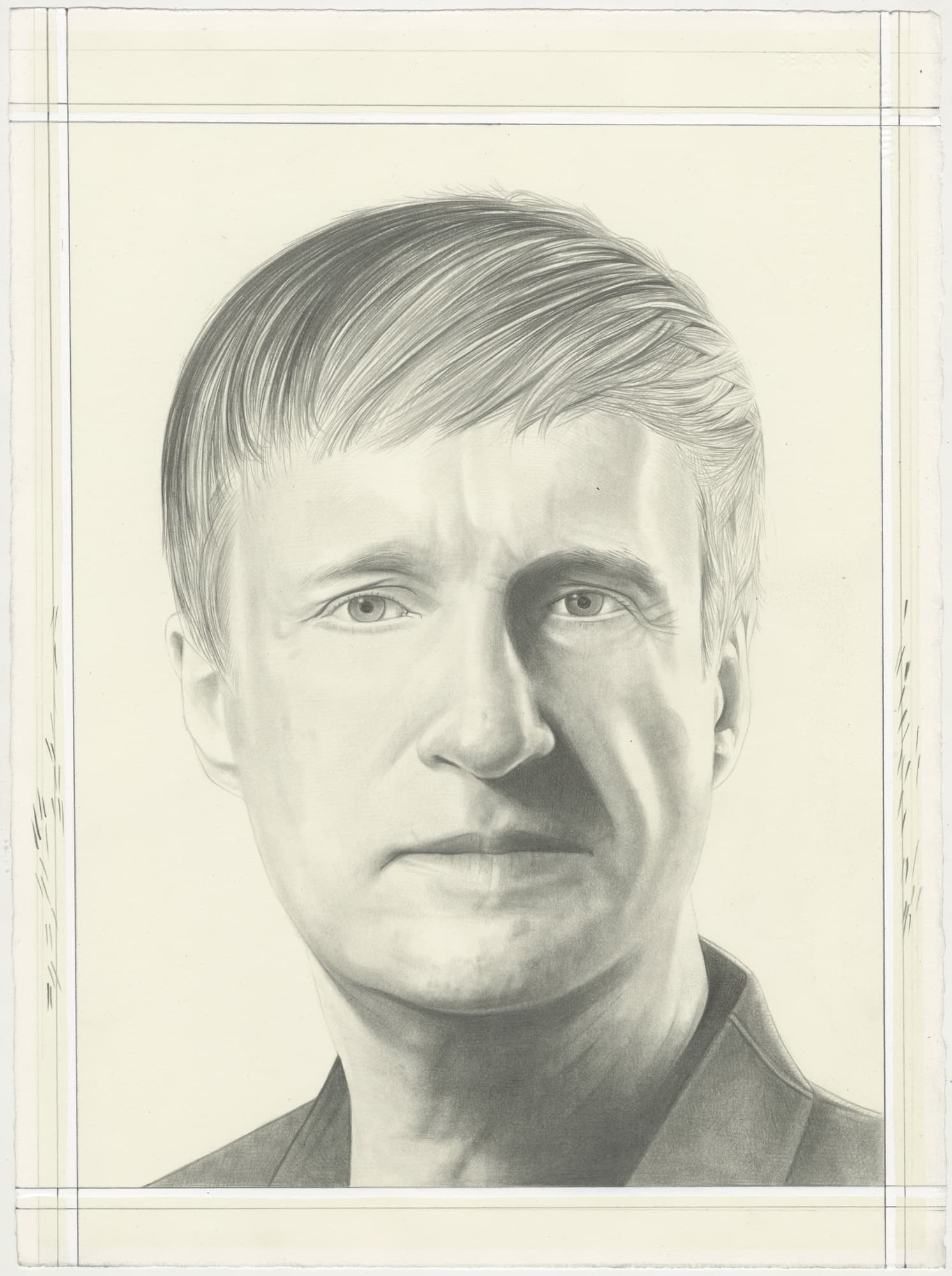
Word count: 14900
Paragraphs: 229
Brian Belott
In ‘93 the sky cracked open and the first Donald Baechler suitcase struck me. I was in a hallway at my college looking through piles of discarded auction catalogues when I spied my first suitcase painting. This suitcase had a message. Its simplicity stupefied me. Red on white, it was painted wet on wet, and executed quickly like a bathroom scrawl. Despite its crude immediacy it's groundwork was a full meal. For me it was a coy metawink for painting itself. Painting as suitcase, a pair of winged shoes, a portable hole.
I first met Donald through my pal Brendan Cass at his Crosby street studio. I was shitting skittlez excited. I needed to make a big splash so I pumped-up my likability with a fake Irish accent. The entire visit I slushed through a bad brogue like a Peter Seller’s disguise mustache falling off on a moving cat. Donald was not amused. Refusing to shake my hand he instead brandished his trademark blank stare and I was ushered away. My Irish imitation must have been crap-crap because Donald was a connoisseur of good-bad imitations. For him, the bootleg of the bootleg was better than the original. He was amped by the disintegration of form and meaning in bootleg's game of telephone. Later that year I met Donald in Amagansett, this time I brought a 1960's white Samsonite suitcase filled to the guillotine with source material. I started collaging for him and never stopped.
Time Ravel is possible through that closet's backdoor. The magician's hat is a garbage can. If anyone can, the garbage can! The world throws stuff in and Artists take stuff out. They take stuff out in an attempt to wire it up and broadcast. The junk store's dumpster is a grail as big as a fountain. Non-art, bad illustration, clip art, children's art, teenage art, way-out outsider art and super-in insider art, cartoons, craft projects and found — all this detritus relegated to the trash heap was a mind mulch smoothie in Donald's hands, meaningful and meaningless, spinning us on the dance floor of our own associations.
My apprenticeship was a rare thing. Donald's staff wasn't humongous and this gave me more time around this wonderfully eccentric Maestro. For those of you who never met him, he was an introvert who kept his shields up. Kinesics could better explain it but DB maintained his forcefield by facial and bodily cues. Donald's default locked stance was the perfect field from which to discharge his deadpan humor. Like Buster Keaton, this stone face only made his sentiments funnier and all the more lethal.

In SVA I fantasized about what it would be like in the gag-room on a Keaton film. How did a team cook up these baroque shenanigans? At DB’s studio I got a taste of that. In his studio, the Joker was a cherished archetype that many of his visitors channelled. This cast of visitors was continuous. At the tippy top of this wildcard list would be the arcane art writer Edit de Ak and, luckily for me, she was part of the staff. Like a skeleton accordioning, Edit drew stories out of her bottomless profound mind. She could have easily been a wiser Ingrid Sischey, but instead adored the subterranean and was a happy shadow member of the DB salt mines. Edit and Donald were a comedic duo. Edit couldn't hear and Donald mumbled, almost immediately, a simple conversation slid into a word association game, sometimes generating painting titles while other times turned into a "waiting for Godot" screaming match.
Donald perpetually invited an angel of chaos that kept everybody on their toes. This was his preferred studio setting. I wasn't around when Alfredo Martinez was an employee —Alfredo forged Donald's paintings while he was working for him— but I was there when Martinez's recommendation for his replacement arrived. What grenade was Alfredo going to hurl at the studio now?! Lance de los Reyes! Aka RAMBO. Why did Donald accept a recommendation from an assistant that left his studio in handcuffs? Donald knew great ideas come from the edge — the edge of town, the edge of sense. The true edge is effortlessly risky.
Lance was perfect, he couldn't be contained; he was born to risk. Meaning is overheated and overrated. The Art Gods anoint few to do their bidding and those they choose encrypt the aliens message with HEART, HANDS and CRAFT. This is a Lanceism. He was one of the many wild ones I met at the studio.
There's tons of stories but this isn't a biography.What I must say is this: I think many don't fully understand Donald's artworks. People, blinded by his symbol hits—the rose, the tree and the ice cream cones—are eaten whole by its posi iconography, but most don't get DB's conceptual game. In one such proposition, Don viewed all symbols as collections of abstract marks, thus he was an abstract painter. It's why he naturally gravitated towards painting silhouettes, the shadows of symbols, to reduce the formal content to make minimal paintings. To the rest of us he was painting nameable icons but what do we know? and more importantly what does that attitude do while painting an image? Like the true GO, he flipped everyone's wigs when he turned these silhouette paintings into flat bronzes, materializing the shadow. Like a true comedian, Donald was always pulling reversals, but a single joke was never the goal. Jokes and games were used as tools for rethinking and unthinking the mundane and the miraculous. Donald's jump-off was drawing and the love of unique drawing solutions. Is there anything more relaxed, raw and improvisatory than drawing? Early on, DB distrusted his indoctrinated hand so he attempted to re-learn how to draw. This led him to collect request drawings from random people he met in bars. Back in his studio these bar drawings became large-scale paintings. The untutored hand was monumentalized. Throughout his career he continued to champion naive drawing styles. He was always collecting amateur art and when his sources dried up he had his assistants produce fake found drawings. That is just one section of his gathering. Such a storm of collection creates a need for crates not crepes, container systems, book shelves, binders. Donald built a library. His artworks wouldn't exist without the library and that library had a library behind it. The first library was source material, found everywhere. These books were ground down to make a second focused library. Donald was a taxonomist building databases. He needed all the versions of candlesticks he could find in the visual culture and he wouldn't stop until had them. He also needed 1000's of other classic symbols. Through a wormhole of ephemera he sampled images turning them into slides. In his studio, shelves of slide binders presented themselves as infinite painting possibilities. This encyclopedic systemization of visual sludge was eye-opening. His processes seemingly digested the world in its entirety.
The worst part of Donald's passing is the world losing more Donalds. No more Art. We found out the globe is flat. I mean no more bubbles. Donald was the fizz. He knew how to activate the dust into cymatic tortoise patterns. Donald Bach could have filled our minds with themes and variations until the Goldbergs came home. Unfortunately they came home too soon. The world isn't going to stop producing junk and now we no longer have Maestro transmuting it into absurd eleganza.

wowe


Patrick Fox
Donald Baechler died a young man. I am still unable to imagine a world without him. With few breaks, we were close friends since 1982. I don’t know anyone who did not like Donald.
I met DB when working at Tony Shafrazi’s new gallery on Mercer St. The line up of artists was blinding to the point of being solarscopic. For me, his was the line that won. It was studied and deliberate. His images were timeless and perfectly represented The American Generation, those who remember America at its worst as it peaked; those who remember a time before the ’70s OPEC Oil Crisis. Donald’s early paintings evoked the best of those years without reworking images from mass media, or resorting to kitsch. Always iconographic, his images were beautifully rendered and perfectly placed within the rectangle. The Sphinx, Lawn Chairs, Boys, Dogs. Hammers. Followed by Toys, Ice Cream On A Stick or an Ice Cream Cone, Potatoes, Luggage and Flowers. His backgrounds evolved from multiple layers of enamel paint, to textures provided by washcloths. Eventually his backgrounds were pastiches, collaged layers of fabrics, the backgrounds became their own stories of weight and light. Whether he chose to paint mundane items found and taken for granted from everyday life, or images from childhood which were more seemingly sentimental or if he
was taking on the spectacular, the consistency of his line varied little. In plaster, white metal or bronze, DB’s brain was present making work that seemed as if its needed presence always existed. His art had beauty and vitality in equal measure.
Donald’s personal style was deadpan serious and so was his quick wry sense of humor. The had a ready smile which he seemed damned near embarrassed to share.
His intelligence was obvious, he did not suffer fools but his heart was so open, they occasionally found their way in.
I cherished every moment with him.
Donald supported young artists more than anyone I’ve ever known. This topic deserves its own volume written by a Vasari. His generosity never came across as anything other than great style.
Nearly every weekend for over a year and a half, we drove upstate searching for the right property until we found the farm he acquired.
One summer evening in 1982 we were out for drinks and fun and maybe some trouble, after walking around the East Village for some hours, drunk enough, we leaned to kiss and
simultaneously, as our faces met, we cracked up, we began laughing so hard that we realized we probably shouldn’t. That kiss never happened but our friendship sure as hell did. The last time I spent time with Donald was walking from Canada Gallery after Lance del los Reyes’s memorial. He knew I had dealt with some heart issues and we discussed it that evening. We spoke once more and texted but that night in Chelsea was our last time together.

Taylor McKimens
Sacred Clown of the Downtown
“Painter of Cartoonish Collages” was the unfortunate summary of Donald Baechler by The New York Times on his passing. It spoke more to a misunderstanding of his work than its intended description of it. The word “cartoonish” is commonly used as a dismissive art world dog-whistle. Though that statement will undoubtedly elicit defiance in many who somehow feel singled out by it, it’s an unmistakable fact to me and many artists. I had a rural working class childhood without access to museums and galleries, so it was primarily cartoon and illustrated printing that informed me when I first learned about visual art. Studying those images was how I first wrapped my head around communicating visually, and an indelible visual accent was formed. Exactly the same as when you learn to speak words for the first time, you ultimately take on the accent of those whose words you’re emulating. As a small child, Philip Guston intently copied Krazy Kat. I copied Garfield, and the language of cartoons became my visual accent just as it did with scores of artists from similar backgrounds. Graphic, illustrative, comic and “cartoonish” image-making can easily be seen as the predominant, most widespread visual accent of lower class artists born in the twentieth century. With the art world in particular being such a raging inferno of class insecurity, it’s not hard to do our own math when it comes to the question of why in post-Guston times, the art world still openly shames and disregards the “cartoonish” in art. Donald didn’t have an illustrative visual accent, and his background was not like mine. I know he wasn’t remotely as interested as I am in understanding why low class images get such a rise out of people. He knew they did though, and he used them without fear like whoopie cushions and cream pies, splat to the face of an uptight art world.
I was under the impression growing up, that art had actually ended with modern times and that comics and commercial art were the hottest and only thing going. That changed while attending an illustration department at an art school in Los Angeles where I had my first introduction to the existence of contemporary art as well as getting to actually see it in person. I was lucky to end up in front of two paintings that dramatically altered my outlook on things. One was Kerry James Marshall’s 1993 “De Style” at LACMA. It’s a large scale, dynamic painting with an unabashed graphic approach that felt very in line with trends in illustration at the time. I was inspired by how it not only held its head high among the prestigious paintings in the museum, but absolutely commanded the space. Its graphic qualities were empowering it rather than condemning it to the art world banishment I’d noticed being levied on work bearing even the faintest trace of the illustrative. It felt in line with work I was familiar with but it was grand, “elevated” and it changed my notion of what was achievable for me in art.
The other painting, I saw maybe a year later at MOCA, and it was Donald Baechler’s six-foot tall, 1986 “Painting with Two Balls.” It gave me an unexpected jolt, and helped me see a new possibility in art that felt considerably more empowering than the idea of aiming to “elevate” my voice. Donald was in the center of the New York art world and was using the power of the imagery to troll insiders and outsiders alike. The painting is every bit as bold as is implied by the deadpan title which is coolly self- descriptive while simultaneously poking at painting machismo. It’s just a huge moronic cartoon with an equally imbecilic composition. It’s a violation to anyone who holds cartoons to be holy as well as a brazen badgering of formal painting purists. But it isn’t simply a goof. It’s soulful imagery and real deal progressive painting.

In my art school library I was able to find the book of Donald’s work from the “Art Random” series. It was edited by Edit DeAk who, along with Donald and the other artists and characters I ultimately met in his studio, would provide my real art education. Shortly after I graduated I took my first trip to New York to see what all the hubbub I’d been hearing was about, and had the single goal of trying to meet Donald. An art school friend of mine, James Benjamin Franklin, had met him previously at Skowhegan so I had one name to drop and “D. Baechler” was listed in the white pages. I’m sure my being a young boy fresh off the turnip truck helped open the door too, but it was our talks about art, and the folder I brought with scraps of drawings I had been making that prompted him to offer me a job there.
The scene at Donald’s studio was made up of his friends and peers, artists, writers and poets, street kids, hangarounds and weirdos, and all manner of studio assistants whether currently employed or not. I could not have landed in a more creatively fertile place on my ultimate move to New York. Donald was far more of an enabler than an employer. He hired anti-functional teams of brilliant stooges and vaudevillian clods to slop together backgrounds and surfaces, bumping into and smashing things to the sound of slide whistles and crashing pans. It infuriated visiting gallerists, shocked collectors and confused office supply sales people who wished they hadn’t rung the doorbell. It was literally impossible to get fired. Screw-ups and unprofessional behavior would often feel rewarded when Donald would yell about it briefly, then smirk with amusement and walk off. He still knew the importance of always maintaining a handful of folks that were more housebroken and able, yet unfazed by mayhem to keep the show somehow on track. I was probably seen as having a foot in that camp due to the work ethic I formed growing up as a pair of hands in the country.
The studio had drop-ins that ran a wide gamut from Elton John popping by for a quick visit, to young artists asking for loans and handsome strays looking to scribble out drawings for 20 bucks to buy drugs around the corner. There’d be Rene Ricard looking to use the “X-Ray” machine to photocopy a manuscript, Ricky Clifton sneaking incredible furniture up the freight elevator and pioneering a kind of non-consensual “guerilla interior decoration” and Alfredo Martinez firing homemade art guns into stacks of phone books in the basement. A hangaround who was not very familiar with Pop Art once slapped a blackmail ultimatum on Donald, threatening to tell the world that his images were from found sources rather than his own hand. Though it was obviously already a well known fact, Donald paid the shocking amount of demanded hush money with suppressed excitement. It was far too good of a bad idea for his contrarian spirit to pass up. Unfamiliarity with Pop Art was definitely an anomaly around the studio, because the artists that flocked to Donald were mainly in it for the art. Conversations felt urgent and the subject never strayed too far from line, surface and paint. Donald rarely participated with much more than an interjection when he heard something he disagreed with, or to intently watch the fireworks unfold whenever things got heated. Edit was always there lighting up the scene. It was the only place she could regularly be found since she withdrew from her own legendary role as glamorous punk trickster icon, poet and champion of art world outsiders. Her sharp mind kept conversation to a high standard and her own mischief held conduct to a low one. I think Donald’s Quaker upbringing may have had something to do with his acceptance of, and loyalty to the people in the storm around him as well as his grace with it all. He never seemed to feel any need to officially lead it or dominate the proceedings. It was a type of “meeting house,” a kind of “chosen family” in the queer sense, a bastardization of Warhol’s factory, or a combo of all three.

I was surrounded by a lot of kindred spirits there and came to learn that many of my other favorite artists also held Donald as one of their biggest influences or favorites. Many of the most acclaimed artists working now owe him a big debt. Joe Bradley, Trenton Doyle Hancock, Katherine Bernhardt, Chris Johanson, David Shrigley, Tomoo Gokita, Eddie Martinez, Yoshitomo Nara and scores of other artists around the world are walking on ground paved by Donald. While taking multiple trips to Japan, I came to understand what a tremendous impact his work had there. Teruhiko Yumura who is a brilliant sort of Japanese Warhol, pioneered a major movement of pop neo-expressionist drawing there, citing Donald’s work as a major influence. The movement was called “Heta-Uma” which translates to “Bad-Good” and represented “bad technique” and “good soul”. It was a far better description of what Donald was doing than any of the usual Western labels clumsily assigned to him such as “faux naive”, “art brut”, “neo-expressionist” or the likes. Yumura, or “King Terry,” was Japan’s uncontested leader of the movement, but in the West it was Donald Baechler and Gary Panter who were the main practitioners. They both held heavy influence in Japan but it was Donald whose work most truly embodied Heta-Uma. The art landscape in Japan was heavily impacted by Heta-Uma yet it is discredited as merely an “illustration” movement due to much the same connotations connected with “cartoonishness” that plague Western art discourse. Like Donald, Heta-Uma artists were bastard children of Pop Art and sidelined or misunderstood because of it.
I was always struck by Donald’s disinterest in clearing up misunderstandings about his work. Instead he tended to fuel them. He perpetually muddled things by leaning into an aloof or confused energy when giving talks or interviews. He’d imply he didn’t know or care about key issues in his work when we knew damn well that he considered every aspect intently. He steered toward intentionally unflattering results while being photographed, or while selecting images of himself to be used in print. He would relish when particular imagery in his work would receive abundant negative feedback, and he would double down on those images. His flower paintings in particular struck a nerve with people who deemed them off puttingly decorative or ingratiating. Their struggle with the imagery only prompted him to lean in harder and give the shows titles like “That Same Damn Flower” and “Enemies of the Rose.” I could tell he loved people’s confusion about his paintings and sculpture. His own take on them was full of conflict and contradiction.
His complex relationship with painting was largely fueled from his arriving on the scene while painting was declared dead. He spent a lot of his formative time with Joseph Kosuth and always took delight in making it known that Kosuth once told him, “You’d be a really good artist if you just stopped painting.” He aligned himself with conceptual artists though he was innaccurately linked to the graffiti art scene due to his showing at Shafrazi Gallery at the same time of the rise of artists like Keith Haring.
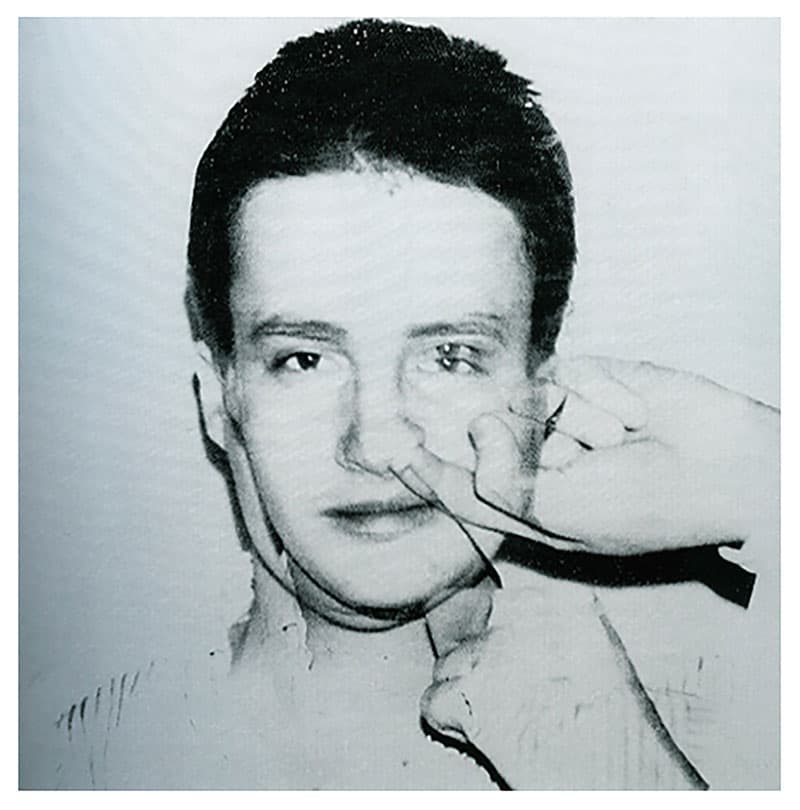
Rauschenberg or Twombly are most often referenced as influences in Donald’s work, and while correct to a superficial extent, it was pretty clear to me that it was Warhol who was his primary leaping off point. The fearless use of print and graphic pop imagery and the use of it to rile people in art, a cool painting approach informed by printing processes, imagery appropriation and a factory style studio approach all were clearly integral to Donald’s way of doing things. In spite of all that, Donald was far from an imitator. Warhol’s approach to making art from the mundane consisted of elevating subjects such as Campbell’s soup cans and Marilyn Monroe. Things already iconic and packed with cultural currency long before Warhol presented them as art. Though controversial at the time, they’re made to feel like tame choices when compared to the absurd castoff imagery Donald foisted on art audiences on grand scale. Toilet wall scribbles, idiotic throw away drawings, ignorant clip art, ham-fisted printing and stupid decorative images that stab self-proclaimed aesthetes in the eye and rattle their classy cages. Donald’s admiration for Warhol is upstaged by his clowning and indirect mockery of Warhol’s Pop Art model. It was particularly clear to me that this is true by the fact that when his hero offered to paint his portrait, Donald chose to pose for the reference photos with his finger stuck up his nose. The act itself shows the defiance and audacity of a court jester speaking truth to his king, and the results felt more like collaboration with Donald’s viewpoint stealing the show.
To all with an unencumbered view, it was clear Donald wasn’t just playing the simple fool or punk, pointlessly riling. He was extremely articulate in painting and was an earnest connoisseur and master of the medium. The paintings have every bit of the quiet sophistication of Twombly, the command of simplicity and economy of means as Matisse, and the raw energy of Dubuffet, while teaching them all a thing or two about taking themselves way too seriously. His patch edits and pentimento displayed genuine self doubt and vulnerability. The expansive size and space in his paintings harness all the power and scope of the Hudson School. Figures and heads from the back looking out at a big expanse, but squashed flat and plumb stupid, yet still radiating with every bit of the grandeur in epic post war paintings of American sublime.

They’re not gags. They’re powerful and they’re enlightening. To some degree about Donald or about painting, but mainly about ourselves and our perceived self importance in the grand scheme of things. He wasn’t “elevating” the moronic. He showed us that stupid IS divine. It’s the role performed by the sacred clowns which exist in many cultures around the world and in many forms. Their role is widely similar. They reflect the absurdity of life. They contradict, provoke, poke fun, challenge and reveal us to ourselves in ways that can feel unnerving but ultimately help us grow and see a bigger picture. Many artists are seen to perform a version of this role but most fall dramatically short in comparison to Donald. Although he grew up Quaker, his family would take him to museums after Sunday meetings. It gave him one foot in both worlds, and uniquely positioned him to be both accepted and still an outsider. It was the perfect footing from which to to turn loose his trickster spirit since it’s always easier to take a joke from one of our own. He was an unparalleled rabble-rouser and a contrarian in every aspect of his life and work. He was the sacred clown of the downtown and he touched the core of tons of artists and outsiders who felt aligned with, or healed in some way by him. He was an insubordinate student in the pop schoolhouse and the misunderstood maestro of a vast new meeting house full of rogue artists and delinquents.
He supported many artists both creatively and with his generosity. He became a father figure to me personally as he did with a handful of others at the studio. He was there for me from my first day in New York until my last. I’m living in Los Angeles again now, back where I started out, making cartoonish paintings in his honor.

Kenny Schachter
I met Donald more than 35 years ago during the nascent days of the contemporary art boom which happened to coincide with my entry into the New York art world. I was nothing short of star struck. His aloof, hermetic personality was at once challenging, perplexing and enticing.
I’m self-taught and was never exposed to museums, art schools, or galleries so encountering a living, breathing artist was beyond novel for me. Not to mention, there was something magical, mystical, mythical meeting someone who not only made a living making things but managed to thrive doing so.
Our friendship developed over the ensuing decades—from living in contiguous lofts on Crosby Street to regular visits in Amagansett—witnessing the enchanting alchemy of Donald’s creativity never abated. As an unschooled art person, watching the real time development of his naive mark making was a learning experience that never ceased to mesmerize and inspire me.
Donald Baechler’s art fortunes continue to ebb and flow (and remain under-appreciated); but, it was my good fortune to have known him.

Lisa Rosen
March 20th 2024
“…Ave Atque Vale.”
–Catullus
Donald….there he is, the eternally youthful Donald Baechler. I see him in my mind. I hope I’ll always be able to “visit” him like this.
Reserved in demeanor and always nattily dressed. A colorful plaid suit or an Austrian tracht jacket. Something out of the ordinary, special, funny.
Donald had an old world way about him. Perhaps from his Connecticut Quaker upbringing.
When introduced to someone he would give a quick nod and a slight bow with his upper torso. You could almost hear his heels gently click together. Everything with Donald seemed gentle. He was quick witted, sharp, a very dry and wry sense of humor. He would lean his head in, delivering the killer quip sottovoce out of the side of his mouth.

I want to mention Donald’s generosity. I remember his house in Amagansett. A summer camp feel with a revolving door of interesting guests: writers, poets, scenesters, assistants and artists, young and old. In the city he’d always carry a wad of roundtrip Jitney tickets. These he would hand out to people he wanted to see again or get to know better, to make sure they had an easy way to come out to visit on Long Island. Through the years Donald offered many charities: the use of his homes and studios for fundraising events. With his loyal clan of assistants and constant stream of visitors and friends he was always surrounded by creative people.
Donald, it’s hard to believe that you’re not reachable for some hot gossip, an hilarious volley of texts or just a damn hug.
I’m going to end with the words of the Latin poet Catullus (84 BCE to 54 BCE) from his heartbreaking eulogy (poem #101) to his beloved brother :
“Atque in perpetuum, frater, ave atque vale.”
(“…And forever brother, hail and farewell.”)
Signed,
Lisa Rosen

Philip Taaffe
Vers Ouarzazate
I was driving the rental car Donald and I were using to get from Marrakech to Ouarzazate on the other side of the High Atlas Mountains in Morocco. I had turned in a dusty little village to get onto the correct road when a Peugeot came speeding out of nowhere to crash into our car on the driver's side. If I had pulled out an instant further, I would have been killed. Luckily, the impact merely blew out my window and dented the front left part of the car. This was in the tiny village of Taznakhte, and the police station was just down the street from the scene of the accident. I was able to drive the car over to the station, where we needed to fill out a report, when suddenly, a crowd of villagers appeared to bear witness to this local event. I'm sure this kind of thing didn't happen too often in those parts. As I was sitting at a desk telling the police officer my version of the story, which he was documenting very slowly on an ancient typewriter, Donald waited in another room where a local teacher was giving English classes. Donald noticed a chalk inscription on the blackboard that read: “Give me your house.” Everyone was extremely friendly, including the Policeman, who gave us a sheet of cardboard that he helped tape across our missing window so we wouldn't freeze for the remainder of our drive across the mountains. The entire village gave us a happy send-off. As we drove away, Donald and I just started laughing hysterically about the writing on the blackboard.

Dear Donald,
I remember on several occasions, either when you came over for a studio visit, or when you were in attendance at an exhibition of mine, you told me, “I hate you,” which was your manner of delivering a compliment. I knew what you really meant was that you saw something recognizably good in the work, and that you found it to be particularly challenging. You wanted me to feel proud of what I had done, and this was a way you chose to express that to me. And you know, it worked; you always managed to make me feel extra pleased about what I had accomplished.
In my opinion, your “Crowd Paintings” were the best series you ever did. I mean, they really resonated historically for me. You may not have liked this terminology, but I would call them highly civilizational. They summon vast and profound cultural territory, a kind of global convergence across time.
I feel an acute sense of deprivation that you are no longer here with us. And yet we must continue, trusting that we have learned sufficiently from one another.
My Love Forever,
Philip

David Ramsay
APRIL 4TH
GOD PLACES US ON THE ARK OF LIFE
WE KNOW NOT WHEN IT BEGINS, AND WHEN IT ENDS
THE SEA SUPPORTS US, THE SKY OUR COMFORT
THE SUN OUR DAY, THE MOON OUR NIGHT
THE JOURNEY IS FULL OF JOY AND SORROW
THE MANIFEST IS VAST WITH ALL FORMS OF LIFE
THERE ARE SOME WE LOVE AND OTHERS THAT CAUSE US TO UNDERSTAND
THE SOUNDS ARE MANY, SOME HARSH, BUT MOST THE VOICE OF GOD.
THE SEA THAT LAPS, THE SOUND OF SEAGULLS IN THE AIR, THE RAIN THAT TOUCHES AND REFRESHES, THE LAUGH OF OTHERS THAT BRINGS US JOY
TIME SEEMS ENDLESS, AND YET QUITE SHORT
THERE ARE SEASONS, AND AS WE MOVE, THEY ALL MAKE SENSE
GOD PROVIDED YOU THE GIFT OF THE BRUSH AND YOU OPENED EYES TO INNOCENCE
THERE ARE MANY SEAS AND PORTS, BUT AT THE END GOD REACHES OUT HIS HAND
AND GUIDES US HOME.
I HEAR HIS GENTLE VOICE
“DONALD, WELL DONE”
GOD THEN REPLAYED A MULTITUDE OF VOICES FROM THE MEETING HOUSE
I HOPE YOUR MEMORIES WERE AS YOUR FONDEST DREAMS
THE ARK IS LOVE, AND IT WILL ALWAYS LAST

Peter Schuyff
In 1980 I was fresh in New York and Donald showed me the world. He introduced me to the Germans, the Italians and to Pat Hearn. Things would be different now if not for my friendship with Donald Baechler. He had sage advice that I think about every day. Donald said I should paint with my left hand and use more brown.
Robert Wilson


Darren Bader
I'm not usually someone at a loss for words, but since his passing I've had a very difficult time speaking of what Donald meant to me. And he meant—still means— plenty to me. I always, always, wish we'd gotten to know one another better. I think our communication styles were worlds apart. Our art interests occasionally dovetailed, at least when conversations presented themselves—I suppose that's the weird employer-employee dance. Dear Donald, with his adorable, indelible, inscrutable, inimitable smirk-smile. He helped a ridiculous kid out—as the story goes (I can corroborate it): dear David Greenberg introduced us (1997) and I effusively (certainly drunkenly) shared my love for Giotto and Donald took an interest. Man, did I botch almost every task Donald gave me back then. And I surely wasn't a sterling registrar when re-employed from 2004-2007. But hey, he kept me around, and that was Donald, generous, always. Perhaps the Quaker in him; perhaps just the taciturn, heartfelt Donald. As is widely known, he surrounded himself with a lot of dysfunction—probably thrived on it. I was likely one of the least dysfunctional of the lot, which isn't bragging rights, more like boring rights. He was always generous with the peerless Edit DeAk, with Rene Ricard too, and many others of less mythical standing. Donald was excellent; I don't know what else to say. His kindness, and playful ruses, oozed from the pursed kinks of that smirk-grin. The endearing gravel of his monotone must have been near-holy (since we who once worked for him still imitate it religiously). If only Donald and I had opportunities to speak adult to adult... the timing never seemed to work in our favor and this never fails to sadden me. I remember our last run-in. Sweet Mr. Monotone. I miss him and I hope I always will.
Elizabeth Lennard

Nessia Pope
For Donald
It seems like a long time ago, before the Hamptons had art openings and galas. We loved organizing yard sales, and looked forward to sipping drinks in the garden with friends and strangers who would come by to browse.
Donald never missed one of these. He would linger, looking at my daughter Olympia’s old toys and beat up stuffed animals. I would always say “just take it.” But he would drop the money in the jar and smile, that beautiful smile of his. I asked him once and he told me he would “use the stuff in a work, or something…”
I like to think that Olympia’s childhood treasures will live on forever through my dear friend’s works of art. Although we would talk for hours and there were many laughs, this is the memory I cherish the most.

Linda Yablonsky
I must have met Donald at a club or party, or more likely in Cookie Mueller’s kitchen, but our friendship really began the first time I went to his studio on Crosby Street. No idea when that was. Eighties? He was so droll and so sweet, and I loved his paintings/collages/drawings, the roses and the beach balls and the potted plants. That he layered them with newspaper, telephone book pages, fabric remnants, paper. That he walked on them. That he made books. He told hilarious stories about his dealers, particularly Lucio Amelio in Naples. I detected a sense of melancholy beneath his humor, and I connected to that, because we were losing so many friends to AIDS and drugs. Donald was devoted to the people in his life. How can you not love a guy like this?
Getting Donald’s Christmas cards every year also made me happy. They were artworks, really. I kept them all. His holiday parties in his Chelsea studio had a dependably amazing mix of people. I also remember visiting his summer place in Amagansett, whenever that was. Nineties? I think it was a kind of farm, well over a century old. I may not be remembering correctly, but I think there were smaller buildings on the property that once had been slave cabins. Could that be right? He had a studio in the barn but the social pressures of the Hamptons got in the way of his work. He sold that place and moved to a bigger farm upstate in or near Spencertown. That was in the 2000s, I think, when he also bought a townhouse in Chelsea. It was just around the corner from the loft where I was living, so we saw each other often, by virtue of our being neighbors.
It was partly because of our proximity that I finally got the chance to work with him. This was in 2011, when I’d taken a job as the art consultant for a movie called Arbitrage, starring Richard Gere and Susan Sarandon. A friend of mine was the producer. The Gere character was an art collector, and my assignment was to round up art to hang on the walls of a loft he kept for his movie mistress. The location happened to be 77 White Street, an address etched into our brains as the site of the Mudd Club, where everyone we knew went in the late seventies, early eighties. The place had been so cleaned up and redone that it felt like a new building. No ghosts in the room.
When I ran into Donald in front of his house, I told him all about it. Most artworks in movies are reproductions, because of the insurance cost and the very real possibility of damage. This was a low-budget, independent production—no insurance. No art handlers, even. Yet, a few of the artists I approached trusted me with original works. Before I even asked if we could reproduce one of his paintings for the film, Donald offered to make a new rose painting free of compensation. He was so delightful! Grateful for the exposure, certainly, but also generous to the core.
Came the night before the shoot and he hadn’t done the painting yet. I offered to print a reproduction of an older piece, but he insisted on making the painting. He stayed up all night to finish it, and when he brought it to White Street in the morning the paint was still wet. He installed it himself, marveling over how completely the Mudd Club had been erased. “I can’t believe this is the same place,” he said. It wasn’t, of course, but his painting looks fantastic in the movie. I don’t know what happened to it after it went back to Donald, but I wish to God it was hanging on my wall right now.

Albert Oehlen
As I remember it Donald was hanging out in Cologne with some of the painters scene of the ’80s. Walter Dahn, Jutta Koether, Jiri Dokupil and also Wilfried Dickhoff. Kippenberger was there too and I came from Hamburg to visit sometimes. We liked each other’s work and became friends. He said to me that I was a good painter but that he wasn’t sure if I am a good artist. I am still thinking about that. Nevertheless I visited him when I came to NY and we had interesting talks.
Kevin Baker
Donald Baechler was my best friend and partner for 17 years. He was brilliant in his craft, and was so dedicated to educating himself and me of artists and art. We shared studio spaces and loved critiquing each others progress with excitement. Art and artists always came first with Donald. He was truly a gift.
David Aaron Greenberg

Julie Ryan
Donald Baechler and I met at The Skowhegan School of Painting and Sculpture in 1994. Subsequently, when in New York I spent time living at his houses on and off for nearly thirty years. Donald and I traveled together frequently, and visited a dozen different cities for art events of every kind, most recently London in 2019 for a survey of Franz West at the Tate Modern. It was only natural to us that in the midst of a global pandemic we would have landed together, that he would protect me, and I him, so far as we were able.
Friday March 13th, 2020
It is a little after six in the morning. The phone is ringing. Donald’s studio assistant, Lance des Los Reyes, calls. He sounds determined. Lance is quite vigilant about looking after the Maestro.
“Jules, you need to grab the Maestro and go up to the farm. You need to leave now. Call Donald. The city is going to shut down. There’s going to be violence and chaos in the streets.”
Lance goes on in this vein, with an escalating sense of dramatic urgency, about the looming quarantine. Neither Donald or I embraced that reality quite yet. He also had his own private drama going on, which, well. . . .
The previous night, we sat in his studio on West 27 Street talking about things, including the possibility of going to his farm in Spencertown, what that would look like, and who would go. But mostly, we talked about art.
Art was always at the center of our conversations, even that night during what would become one of the oddest times in human history. Donald was engaged with the topic of art at every level. He could talk about anything, and was curious by nature, but he loved “art talk” most of all and cared deeply about his vocation.
Donald produced an astonishing body of work. In his absence, it requires serious consideration. He was mislabeled in his lifetime as a mere cartoonist, and this erroneously chastens the complex affective matrix which begat the substantive complexity of the paintings. Within his practice, series and sequence allowed Donald freedom of movement as a Bildmacher, or image-maker, invested in the expressive quality of an iconography of things and themes, of faces and feelings. Each painting of ice cream cone, beach ball, tulip, and rose, or of boy, girl, woman, and man, exists as a definitive statement— that is, until the next painting was made, and the next one, and the next one.
Sitting in the studio that evening, Donald spoke about a project in Vienna, about how the sculptural properties of various things might be folded over into graphic shapes, about the relative quality of readymade canvases bought in bulk at craft stores. Despite the lively chat, these were already dark days for Donald, and the menacing heft of the pandemic was just a small part of them.
Sunday March 15th, 2020
The day was grim when we arrived at the farm: Trees bare, grass brown, and the sky a fallen grey. Donald quipped, “Now I remember why I hate to come up here in the winter.”
Monday March 23rd, 2020
We spend a lot of time trying to anticipate— worrying about— possible scenarios completely beyond our control. So when we see a problem and can imagine a solution, it is a good day. Donald orders an extra refrigerator-freezer for storing food, and I procure a chicken from YundWell in nearby Canaan. It’s the last appliance in stock, and all the groceries, including our local Price Chopper are out of chicken and many things.
A safe porch pick-up is assigned for the bird. Donald is concerned it will not be delivered clean. A friend of his feeds her cat chicken livers, so he also has the idea that we can make food for his cat we drove up from the city.
My brothers in Milwaukee sent us six Scotch 3M N95 masks, and we instantly sent Donald’s sister Margaret two of them. More were on the way.
Donald made hand sanitizer from alcohol, peroxide, and what-not ordered online. It stings.
Sunday April 2nd, 2020
Donald goes to his studio in the barn each day. I turn an extra bedroom on my side of the house into a place to paint. We settle into a routine of meeting in the kitchen around dinner time, and watch the news in limited doses.
He is great company.
Donald was always a social person which could feel disarming. He made himself available to others who sought his counsel, his time, and his largesse. He was also off-handedly generous to a fault. Ironically, Donald gets even more phone calls now that the lockdown is extended, and the universal uncertainty of our precariously slim lives has exploded. Many friends and family are safe, tucked away in their own country homes. Other people beseech him for money, and he is blowing up PayPal sending bits of cash to those who ask. However, most people keep in touch while ferreting around for an invite to the farm, looking for an escape, a reasonably peopled safe haven. Donald will have none of it, yet with a sardonic smile does find the queries amusing.
“I can’t believe he called.”
“They aren’t even friends of mine.”
“He is a terrible artist.”
“They visited once— and want to bring their kids and dog!?!”
In light of this, shortly after we arrived upstate, Donald entertained the idea of having an assistant here to help him in the studio, if indeed these circumstances were to continue as such. Now that we each see no clear end to it, and that this will go on for a long time, Donald offers no additional invites to the farm.
Admittedly, both of us are a bit stir-crazy. It feels bizarre to be away from NYC while spring is kicking in. On Saturday mornings I pick up brown paper bags of mac & cheese, sandwiches, and treats from Ben Gables, the lovely coffee shop on the small traffic circle in Chatham which is doing its best to keep their neighbors well fed.
Donald being Donald, he eats the cookies first.
Wednesday April 22nd, 2020
I placed a large order for us a week ago with Soho Art Materials, and today the truck arrived. The two delivery guys seem dumbfounded by contrasting worlds— stricken city corona virus epicenter versus bucolic rural art oasis, that which is Donald’s wonderful property a million miles away from usual haunts in Chelsea, the West Village, the Flower District, and the Navy Yard.
Once the guys left, I felt a bit guilty. Donald did too, yet we were glad to receive our stuff given how fucked up things were becoming, and so quickly. Supply chains were strained to breaking for many items. Most notedly, this delivery also felt like the first time anyone real had visited since our arrival the second week in March. For Donald, and for me, this distance from others was very unusual. And yet . . . Things were about to change, again.

Robert Burke
Donald Baechler Makes A Sculpture

“Good morning Donald”
It’s winter, 2:00 pm, the mid-80’s, at his studio in Kenkeleba House in the East Village. Outside the neighborhood was a landscape of burnt out tenements, narcotics dealers, desperate immigrants, desperate artists, and a few struggling businesses. Gentrification was a long way off.
“We need to make a sculpture”
Courtesies and pleasantries be damned, it was time to work.
“Out of what?”
We had never done this before.
“Anything we have here – use that box.”
Cardboard, about 16” x 16” x 24”.
“Use fabric and Rhoplex.”
Donald’s early working method was usually collaborative. He would hatch an idea and, because he was really only comfortable with brushes and paint, enlist friends and assistants to help.
An hour or so later we had an off white, wrinkled, soft-edged cuboid.
“Hmmm. Very artistic.”
That was the first time that I had heard the word artistic used as a gratuitous insult.
“Let’s try that ball over there.”
“And do what with it? Wrap it?”
“Yes, wrap it. It needs a more interesting surface.”
With the passage of another hour the ball was wrapped. We now had a loose, saggy, textured blob to go with our box.
Donald stared intently at his two new creations.
“I’m going to go get a sandwich. Do you want anything?”
No answer. His mind had gone somewhere else. Anyway he always kept a supply of tuna fish and garbanzo beans on hand in the studio so he could eat later.
When I came back the ball was sitting on top of the box. A head was sitting on its shoulders.
“It needs a face. What can we use?”
“We have Plastilina, maybe some papier mache.”
“Use the papier mache.”
By the end of the day Donald’s peculiar man had a furrowed brow and a little pyramidal nose and either a goatee or a chin. I always thought it bore a vague resemblance to his father. In one day of work he had given himself a whole new world of creative expression. He would create new sculptures steadily – with the help of Aga Ousseinov – for the next 35 years. He kept his first sculpture in the studio for a long time and was eventually able to have it cast in bronze which gave it a whole new presence.
I never knew if he arrived in the studio that day knowing what he basically wanted to make or if the beginning of his sculptural work was more nebulous. Those interior things he always kept to himself.
Donald and I were born in the same place within a year of each other. We were friends for a long time. It’s bewildering and sad to lose a friend and I always feel that it’s even worse when you lose someone as uniquely eccentric as Donald. Because you know you’ll never have anyone at all like that in your life again. It’s an impoverishment. But every now and then I’ll see that sculpture that I helped him make long ago, or something else that we worked on together and the sadness lifts a little, because part of him is still here. It’s not enough, but it’s something, and I cherish it.

Angela Gentilcore
I don’t remember how we connected but I remember the moment. It was during the Spring of 1985 or 1986 (I remember the warmth and the flowers) and we had a meeting to discuss myself being hired by him as his bookkeeper even though I had little experience in financial matters at the time. But we were young and beautiful, and the world was ours. I went to his apartment on the Lower East Side and without much discussion or even deliberation we agreed to begin. It was a natural and easy relationship. We both had immediate and unequivocal trust and respect in each other which I understand in retrospect as being a rare and precious thing. I felt we connected in our seriousness to the work, about our intentions to be serious at least. There was a maturity about our agreed approach which made me want to stick around. On my first day, I opened his checkbook and recorded only two items. I was there for less than an hour. These were nascent days that felt risky and exciting at the same time. But with head down, he got to work, and I supported him every step of the way. I remember that he had about $400 in his bank account, and I felt uneasy that he needed to pay me from his last few funds. I asked him why he was hiring me when he barely had any money, and wouldn’t he want to wait until his career was further along? He said “No! don’t worry, I will have the money and I want you around to manage it because I only want to focus on my work.” He said clearly, “I don’t want to be hassled by bills and taxes, but I do want those things taken care of by you, so those problems don’t distract me.” And I believed him. So, I stayed for forty years, until his death. My relationship with Donald which was always strictly business (he put away his “bad boy” side around me) endured through the arch of our adult lives. I learned much from him about business and art but what I witnessed over and over was his ability to be open to others, all sorts of people and open to opportunities even if it was just a flicker of an idea. He grabbed ahold of these connections and projects and one by one carved out his enduring career in the NY and International art worlds.
Donald was taught by Quakers whose values formed his character, for he embodied those lessons fully… community, stewardship, equality, and integrity. Through the years of his bustling career, the gnarly art business nitty gritty, and all the ups and downs in each of our lives it was those qualities in him that sustained our long road working together. After forty years, I think back with huge gratitude for our fated meeting on that Spring day. This photo was taken shortly after his passing from the street outside his studio and what was for so long my office. Gone too soon… miss you, DB.
Ingrid Dinter
I met Donald Baechler in May 1978 in New York City.
He was a student at Cooper Union, as was Georg Jiri Dokoupil who was an exchange student from Cologne, and Gerhard Naschberger, an exchange student from our art school, Staedelschule in Frankfurt, Germany.
I was in my final semester of ten at Staedelschule, and we were on the annual school excursion, this time to New York City. We students arrived in here knowing what we wanted to see, making a beeline to 420 West Broadway for starters, and making Fanelli’s a convenient place to meet up. Gerhard Naschberger brought Donald to meet us, and the rest is history …
I went with Thomas Bayrle, one of the teachers with us, on a visit to Donald’s studio on East 10th Street in the East Village. He showed us drawings he had made, spread out on the floor, and I remember wondering what all this would turn into down the road. Later Donald took me along to dinner with his mother and her best friend. Soon thereafter, in late August, Donald came to Frankfurt to study at Staedelschule for a year.
Donald was a man with a plan and wasted no time going about making it happen. While in Frankfurt, despite his shyness he didn’t hesitate to travel to Italy to meet Cy Twombly. He had an uncanny ability to know who he wanted to meet and just did it, in a very quiet way. We saw each other a lot during his stay in Frankfurt, I’m sure partly due to the fact that we both spoke English and shared a North American background. But maybe we also just liked each other, and became friends.
In late spring 1979 at the end of his year in Frankfurt Donald had a solo show at Galerie Patio, which though a tiny space was no small deal. I remember blocks of wood painted with stripes. His parents came to the opening, on their way to explore family roots in Switzerland. It was the first of many many times I would see Donald’s parents at his openings—their support was unwavering. In fact, Donald always attended his openings, no matter where in the world they were. But I get ahead of myself.
After this year in Germany, in the fall of 1979, Donald went back to New York, and set about making his vision a reality. He was part of the downtown art scene and went with single minded determination about his business, making alliances and advancing the cause. He was enthusiastic and eager to get going. He became affiliated with Tony Shafrazi and from the beginning of the 80’s was part of the gallery. At the same time, he continued to cultivate his European contacts, showing with Ascan Crone in Hamburg—and later associations with Bernd Klüser, and Anders Tornberg—and others.

At first, he had a studio in a loft on lower Broadway near Fulton Street, which he shared with George Stoll. The upstairs neighbors were artist Peter Grass and dress designer Sally Beers. During the day the streets were extremely busy and at night it was dead quiet. Donald lived in the studio, there was a mattress somewhere, but is was primarily a workspace. In rare instances of domesticity he would open a can of tuna and a bag of potato chips for lunch. Sometimes he would heat up a can of Campbells tomato soup on the hotplate.

I believe he got some old stretchers from Andy Warhol’s studio (I can’t remember how), a particular size (80 × 60 inches?), and made a series of paintings – with striped backgrounds and an object painted on top (for example, a chaise longue). He painted pyramids for awhile, and famous hotels, and other post-pop images which he found in the public domain such as the telephone book yellow pages.
When Donald had a show coming up he would get to work and create a body of work, a series. As the years passed there would be distinct groups of work, one leading to the next. Donald didn’t just make work for his shows, he was a steady and constant worker—it’s what he did every morning when he got up, every day. He had a remarkable work ethic, which never slowed down during all the time that I knew him. He had particular subject matter that interested him and was always exploring new things, as well as revisiting previous work from time to time—often of more interest to fellow artists than to collectors. His studio practice was primarily paintings and drawings—though, for drawings he preferred to do them in a separate space, usually where he woke up in the morning. He was smart enough to build up interest in his work to sustain a studio practice, as well as maintain assistants and staff. He was able to find the necessary support to follow through on projects such as the many sculptures produced in his lifetime. As well, starting in the early 80’s, he regularly produced print editions, particularly with Baron Boisante Editions and Pace Prints, and others.

I moved to New York City in early 1981 and Donald was really the only person I knew. He took me under his wing and immediately introduced me to everyone we came across. He included me in his activities and made sure I was invited to his opening dinners. When I was really broke at some point early on he had me work in his office on 3rd Street near Avenue A – an apartment he purchased with the proceeds from the payout for leaving the downtown loft. In between the downtown loft and 3rd Street, in the mid 80’s, he lived/worked for a time in a brownstone on Second Avenue near 13th Street. His next studio was in Kenkeleba House, around the corner from the 3rd Street apartment, on 2nd Street near Avenue B.
The 80’s were an interesting time, both in the New York art world—Soho and East Village galleries were setting the tone—and also in Donald’s career—he was having shows in Europe and here, his work was lively, his career was in a steady rise. In the early 90’s he moved his studio to Soho for the next 10 years or so, before taking it to 27th Street in the early 2000’s.

My image of Donald is always in paint splattered work clothes in the studio. Then at the end of the day he would change into a clean pair of jeans and put on a crisply laundered white cotton shirt (at one point he had a small red DB monogrammed on them), ready to go out to an opening or meet someone for dinner. I saw these shirts in the 80’s, coming back from the cleaners, folded and stacked in boxes, which would then disappear somewhere into a file cabinet (his idea of a chest of drawers.)
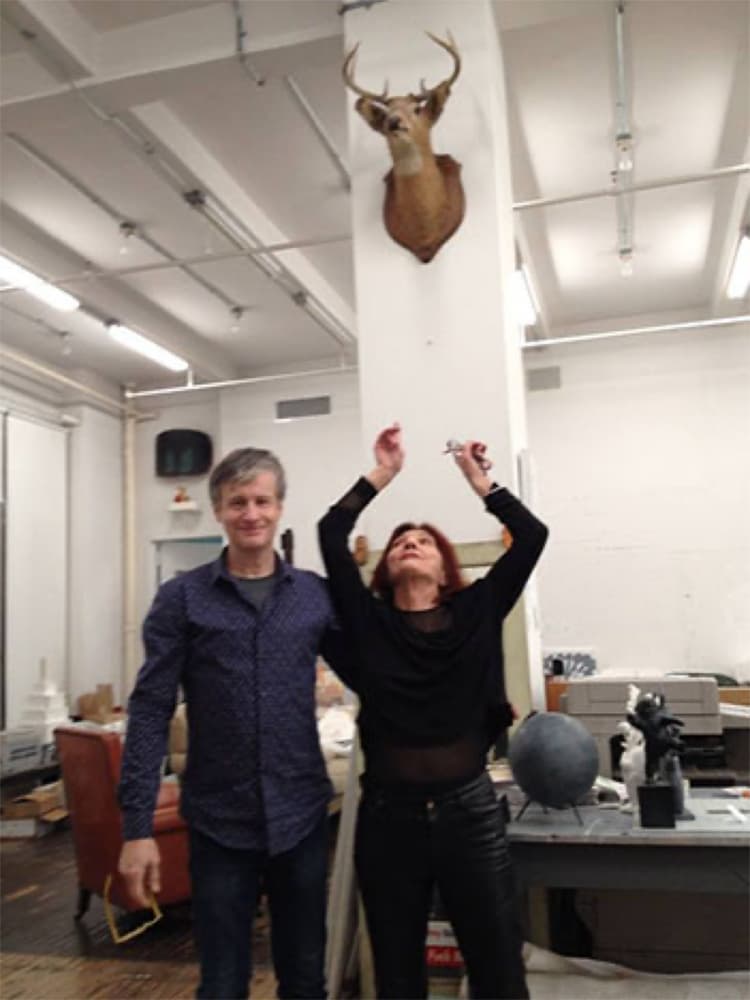
As always, Donald was very quiet about things, but who knew what refined taste he actually had – besides art, he knew his way around good food, good hotels—as I mentioned, he went to all his openings worldwide, and always stayed in the best hotels. He read books—for awhile he would tear out the best seller list from the New York Times and read everything. Should you get him on a topic he would not be shy to expound on his views and share his opinions. He was extensively knowledgeable on a wide range of subjects. He was a pack rat, combing flea markets and antique shops, later Ebay, for finds for source material for his work, particularly the collage materials in the backgrounds of paintings. He was collector himself, of many things, including toys and various odds and ends. People would bring him things too. He had a very particular taste in furniture, reflecting his interest in retro found objects, an extension of his source material. It was a part of his aesthetic, which in turn was part of his work.
Donald was also an enormously generous and compassionate person—though he preferred to keep that wrapped under a crusty surface. He loved art and artists and had a deep understanding and respect for authenticity in art, and life—both in his own and others—and how fame and riches and financial security were not in everyone’s grasp. When a needy artist approached him for financial assistance he was as likely to buy some of their work or hire them, to help them out. His studio assistants were artists, who were there to learn as much as to assist. He bought work from people on the street, and treated them like they were just as much part of the art world and art market as any of the rest (in other words, he’d haggle the price.) He understood and had an affinity for “Outsider” art, and collected it early on.
Anyway, I think he and his work is much deeper and more serious than he has properly been given credit for. He was recognized and deeply admired by artists, as well as discerning collectors. I hope as time goes by that recognition of his talent and body of work gets the full attention and appreciation that it deserves.
Freddy Leiva

Judith Fleishman
The thing of it is … what an influence … what a force … professionally - personally - creatively - What an example of unparalleled effort to keep … on painting
-PLUS in the last weeks did anyone notice how the new paintings reached a new levels of inventiveness exploration risk & what about the translation of drawings into sculpture … what about the black patina / does anyone recall twombly’s sculpture w a white patina - Jesus what a tip of the hat ….
Of all the artists from the 80’s -what a reach…. professionally - artistically - privately - personally - Not that he was without foibles - which of us can w a str8 face can claim to b 100% an angel
But how he dealt w his life his family - domiciles - his studio archive - friendships -colleagues & yes assistants too
Ok jus take this outpouring of drivel frm a humanoid on the fringe of the fringe of the edge of the edge
A nobody who worked for DB for 30+ years
Fetched coffee /juice /newpaoers mopped floor - painted the floor (w artist Rob Burke) - post office - fed ex runs - sending pkg to R****s - driving that gorgeous 1960 gold sedan Mercedes from nyc to Amagansett thru Friday traffic - doing errands w artist David Aaron Greenberg (through Montauk & Amagansett wrapped drawings & paintings - packed …. stuff …fetched coffee & oj - The Post - Daily News Herald Tribune & NYT & dry salami from the Gourmet Garage - enjoyed endless sushi for lunch he ordered for all of us workers - yup - inventoried his storage unit up on 103rd st & First ave (w the artist Taylor McKinmens) of …. whatta an extensive eclectic collection - think yantras - Duchamp - Miro - Bidlo - George Horner me & more so much more
this one was witness to … changes …. Growth
In this ever fleeting now - every day he casts a deeper longer larger shadow ... of light
His absence a palpable presence ….
“You don’t know what you got til it’s gone” - Joni Mitchell said it right
RIP DB
George Horner
I started working at the Tony Shafrazi Gallery in August of 1984 and remained at the job for the next 32 years. Got to know Donald pretty well during that time. Found out he and my dad shared birthdays, November 22. Kennedy assassination date. Not the best day to have a birthday celebration but what can you do? In October 1985, Donald was preparing to have his third one-person exhibition at the gallery and happened to come by on my birthday. When I saw him I mentioned that and he said he would draw my portrait. I was drinking a cup of coffee at the time and he drew the cup on top of my head. Afterwards he promised to do my portrait every ten years. Not sure why he said that, either he thought it was humorous, which it was, or perhaps figured I wouldn’t be around that long, but for the next three decades he did my ten year portrait: 1985, 1995, 2005, 2015. If Donald were still around, next year would be time for my fifth portrait. I am so sad that he isn’t. I miss him terribly. Donald was my favorite artist at the gallery. Loved every one of our artists but Donald’s bizarre imagery, false start approach to art making, his dry wit, odd body language and fierce intellect attracted me like no other. Plus, he was always very kind to me, even offering to buy one of my Silly Putty artworks when I complained that nothing had sold at an exhibition. I was humbled by his offer and wound up giving him the work. He wrote an embarrassingly enthusiastic catalog essay for a show of my drawings and I gave him one of the drawings. It was titled “Unmarried Men,” which are bachelors and a homophone to his name. It was a meager attempt to pay respect to Donald, which he so deserves. When my son, Noah, was born back in 1986, Donald gave him a sweet little clown painting and a few years later in 1991 he gave him an ice cream painting. I jokingly said to Donald that Noah was probably the only five year old that owned two Donald Baechler paintings. They are cherished possessions along with the paintings Donald gave to me over the years. His generosity matched his talent and kindness. I live with Donald’s work and look at it every single day. Donald remains an important and essential part of my life. Wish he was still around so I could tell him that again and again.


Brooks Adams
Donald Baechler (1956–2022) was Zelig-like, omnipresent but oddly absent, always watching with a wry smile on his face. Circa 1980, after a studio visit to a still very young Donald who was just beginning to show at Artists Space, and in the company of my old Sarah Lawrence friend Bill Tropp who was besotted with George Stoll, Donald’s painter roommate on Lower Broadway, Donald took us to the photographer David Armstrong’s apartment near Cooper Square. I’d never seen someone that drunk or stoned, literally falling down in his own funky East Village man cave. That night it was I who was the tag-along, the leech, the voyeur.
Circa 1991 Lisa Liebmann and I visited the artist when he was renting Roone Arledge’s modest modernist beach house (since torn down) at Two Mile Hollow in Southampton. I remember an impossibly glamorous lunch there with Clarissa Dalrymple, Ricky Clifton and Billy Sullivan among others. I’ve got pictures from that lunch on my phone, and I gaze at them often. Also present that day was a younger friend of Donald’s, an ex-con who later died by falling off a fire escape in the city.
In August 1994 Donald arranged for Lisa and me to be invited to Santa Fe, New Mexico where he was having a show at Laura Carpenter Fine Art in high season. Because of Donald we got to see the designer Bill Katz’s amazing adobe temple of a house in Carson, as well as Francesco and Alba Clemente’s cool contemporary ranch abode which seemed to have all its windows at knee height—the better to meditate by. In our rented convertible we drove past what was purported to be Lauren Hutton’s functioning teepee pitched on a stretch of sage brush between the two properties. Bill Katz was (and is) a huge supporter of Donald’s work, someone who truly loved him, and I hope that with the help of Philip Taaffe, another dear friend of Donald’s from the Cooper Union days, Katz will be able to unscramble the artist’s estate, and get the Baechler Foundation up and running.
Ever since around 2004 and the blue-chip exhibition “Donald Baechler: Sculptures” at Thaddaeus Ropac in Paris, I’ve thought that the artist’s three-dimensional work was some of his best. Whether a flattened vase of flowers in patinated bronze or a fragile white plaster, in-the-round effigy of a Christmas tree, the distinctions between laconic wafer-thinness and klutzy volumes often play out to droll effect in Baechler’s oeuvre. At this point in his career, he was already a globally successful figure, a pop star of sorts, and the impish humor and sheer weightiness of the sculptures seemed perfect for gardens as well as urban plazas. At a very chic dinner for Donald upstairs at Maxim’s in Paris, the artist seemed perfectly at home in this haut-mondain, bohemian-corporate ambience.
Donald stayed with Lisa and me on the island of Hydra in Greece for a few days in the summer of 2005. He brought a book along, The Enemies of the Rose and Other Works, the substantial catalogue of a show he’d recently had at the bank Cassa di Risparmio in Merano, Italy. That hardback remains on my bookshelf in Greece. It contains a selection of good color reproductions of collages, many depicting an outsize rose from the eponymous series of 316 works he made in 2004. It’s the talisman of a short visit—Ricky Clifton was in residence at our house that summer; Donald thought of buying a fisherman’s cottage in a ruinous state down the road, but didn’t—as well as the marker for a four-decades long friendship.
I thought of that visit again yesterday as I bobbled along in an early-morning swim at Hydroneta in Hydra, looked up and saw a Belgian woman named Louise, sleek and svelte in her pareo, looking out to sea, paper cup of coffee in hand. Suddenly I flashed on Louise’s dead husband Elmar, one of the most handsome men I’ve ever met, who’d been so impressed that Donald was staying with us that he’d invited us over, with Donald in tow of course, to see his beautiful house in the port, which I’d long gazed at but never entered. Wow! The haute-Euro minimalist décor did not disappoint, as Donald duly enacted the role of grand artiste for this super-elegant Austrian collector.
In the Hydra context, George Condo’s show at the Deste Foundation this summer reminded me that it was of course Donald who introduced me to Condo in the mid-eighties, one night after dinner, when Donald brought Bill and me back to his decrepitly gorgeous brownstone studio on Second Avenue, where a young madman, it seemed, was churning out little neo-Surrealist fantasias in a ruinous nineteenth-century floor-through studio.
One of the last weekends Lisa and I ever spent with Donald was in July 2015 when we visited him at his very upscale farm in Spencertown, New York. There I saw a vast barn studio intended only for the making of big paintings, i.e. museum pieces, as well as other farm buildings repurposed as drawing and collage studios. It just so happened that Donald had a show, Donald Baechler: Walking Figure, nearby at Art Omi in Ghent, a site that specializes in monumental outdoor sculpture installations. The artist’s gigantic bronze figure looked spectacular against the sky and large expanses of green field. A show indoors, curated by Julie Ryan, juxtaposed his work with that of other artists. My photos depict Lisa conversing with Donald—for eternity it seems (she died in 2016)—in front of a long expanse of Crowd wallpaper he had produced for the show. Between them hangs a checkerboard abstraction by Mary Heilmann. The spectacular grey panorama of wonky heads challenges her soft but relentless geometries. Another photo captures the droll juxtaposition of Heilmann’s colorful seat furniture with an abstract grisaille wallpaper of plus-and-minus patterns by Gunther Forg, another great artist gone too soon. Donald was so smart and so canny—working his German as well as his American affinities. He always played a long game, unfortunately cut short at the age of 65.
Michael Hord
A Portrait of Donald, in Real Estate
Donald Baechler and I, along with my partner Hiroshi, had a thirty year history designing and building homes and studios. Renovations are a very intimate business. It often marks a new era in life, when the client is looking to improve or upgrade. He has to express the issues, so we can figure out function and style in a cohesive way that satisfies what he was dissatisfied with. The creative process is all about the before and after photos. In the end, each project looked like a portrait of Donald in the form of a studio, a house, a barn or a landscape…“That’s so Donald.”
Donald and I came from the eighties art world and knew a lot of the same people. Phillip Smith recommended me to him because I had renovated his townhouse and I was designing and building a loft for Cindy Sherman. I worked for Gian Enzo Sperone throughout the eighties. That kind of name dropping bragging rights was something Donald was very attracted to, and it gave me some kind of legitimacy that got me a job which lasted thirty years over five projects. Each time Donald acquired a new piece of property he called to see what we could do with it.
The projects:
1993 Crosby Street Loft: Donald started the renovation with “friends,” but without a permit. A neighbor reported him to the building department and he got a stop work order. We cleaned up issues and designed a space with a big door closing off the studio and a second floor bedroom. He was very excited to have separate living and work space, larger than what he had before.
2001–2003 West 27th Street Studio: Donald asked if I had time to look at a sweatshop in Chelsea that he was considering for his studio. When we got there, it was indeed a Korean sweatshop with at least twenty women on twenty machines making hats. It was total chaos. We were able to see through that and create the studio he always wanted. It's 7000 square feet with huge windows, the perfect lighting system for his late night painting binges, and space to do everything he wanted to do.
2005-2007 Spencertown Farm: We designed and restored the 1795 house and converted a large barn into painting, drawing and sculpture studios. The project allowed us to do things that we'd never done before, move earth, dig a pond, build a swimming pool, etc. The house is grand and humble at the same time and the studio is huge and bright with natural light. We had so much fun doing it.
March 2022 West 24th Street Townhouse: I had been living in Mexico for six years. Donald texted me asking if there was someone that can do for his townhouse what I had always done for him. He wanted a serious gut renovation with an extension on the kitchen. I said: “Yes, I do know someone. Me. I’m back living in New York.” It's a wonderful house with gardens in front and back, and I was thrilled to be doing this renovation with him.
April 2022. Donald died exactly one month after we signed the contract. The loss was devastating. I wondered if I ever told him how much I enjoyed working with him and how much I appreciated all the projects. I think I did express that to him but whatever I said to him would never equal the depth of my appreciation that I felt after he was gone. Intentionally or not, each of these locations became a portrait of Donald Baechler. When you look at the houses and studios, you remember him, and his love of antique hardware, industrial lighting, and all the small but important details that created the collage that was Donald’s life and work and properties. I wish that I believed in heaven, and that Donald was looking down seeing how his team is still caring for his beloved homes and studios. He would have loved it all.
Susan Manno

I met Donald Baechler some time in 1980. He worked at Woods Restaurant on Madison Avenue in the sixties, across the street from the Dianne B boutique that I ran. When he took breaks he would come over to the shop and hang out with me and we’d trade the news of the day. From the first time we met we were fast friends, and remained so for the rest of his life.
I loved his art, I loved talking to him, and he was always generous to me and my husband Alexander Wood. He would invite us to his studios, wherever they were, and show us what he was doing. In the 90’s we would visit his potato barn studio in Amagansett, on the East End of Long Island, where we also spent time.

A few times Alexander would come home from these studio visits bearing treasures. After the Art Basel art fair in 1990, where Alexander worked in Lucio Amelio’s booth at the time that Donald had a show with him, Alexander went to Donald’s studio and returned with a beautiful colorful work on paper, a collage with card suits painted on it.

Another time he came home with a large black and white painting of a suitcase.
But my favorite artwork is a gift from Donald—Flowers for Susan—which I received around the time of my birthday in 1998. It is a beautiful painting of black flowers in a vase on a scumbled and collaged canvas surface.
We often invited Donald to our parties in New York City, as well as on the East End. One summer evening at our place in Water Mill, during the golden hour at the start of a party, we took a walk into the wilderness section of the garden. I was showing Donald the red Chinese silk lantern we had strung up above a circle of old tree stumps, which we named the Fairy Circle. He turned to me and said, “You know, Susan, if I
weren’t gay, I would want you as my wife!” I was really moved by that.
Years later, after we had sold the house in Water Mill and taken our one eighth share to buy a house in upstate New York, we learned that Donald had also moved upstate, near Spencertown. We never saw it, despite several attempts over the phone to coordinate a visit. We invited him to our place, which for one reason or another also never worked out… But we were always in touch, right up to the end. We miss him
greatly.
NOAH BECKER
Donald Baechler had a reputation for supporting artists. He would employ artists and purchase their works if he liked them. “You should call Donald," was the phrase repeated to me. "Why should I call Donald?" "Donald supports artists and he would be a person you should know." A few weeks went by and Alfredo Martinez asked me again, "Did you call Donald?" "No, but I plan to." Time passed and I thought of calling Donald but ended up running into him at the Creative Time dinner for Julian Schnabel.
The first time I saw Donald Baechler's paintings was in the 1990s in New York City at Deitch Projects on Wooster Street. I was amazed by the simplicity, the monochromatic and seemingly effortless idea of a beach ball or vase of flowers. Donald specifically stated that he wasn't trying to make child-like art and that really struck me. I hadn't made that assumption but was glad he made a point of stating that. That statement was later quoted in Artforum's obituary for Donald and I felt proud to get it out there, even under such tragic circumstances.
My thoughts about Donald's paintings are that something more direct is happening in them than most art. Looking at his work you would almost mentally race ahead of it, drawing conclusions, only to pull back emotionally as if overestimating the function of his intentions was your instinct - but dead wrong. Allowing your mind to race or attaching ideas to his work was almost the function of the work - it inhabits this kind of understatement. The way this could be described is the also way Donald would talk. The dryness of his speech would make the dryness of Warhol's mode of conversation seem bright in comparison. But at the same time he was thoughtful and warm below the surface.
Baechler's paintings have that same monotone quality, like his tone of voice, as if they're confronting you with only one subtext or basic question, "what are you looking at?" This kind of reduction makes Baechler's work resonate much deeper than art that tries to engage with a forced narrative - or "engage" with you at all.
I never had the chance to connect with Donald again socially after our first few interactions, because he passed away within a few years of my meeting him. But his work and way of addressing the world continues to inform my paintings and general outlook on what being an artist means.
Jane Rankin-Reid
The challenge of acting cool made me anxious when I first arrived in New York in the late 1970s. All I could do was smile, hoping people would like me regardless of my unworldliness. I was often quite daunted by those who could keep a straight face. People like Donald Baechler.
Sometimes, we’d acknowledge someone as cool because of friends in common. It was like that with Donald and me. So, when we did end up face to face at a party, pressed into a cluster of niceties, we always had someone to talk about, usually Edit DeAk. She was a fixture in his studio at times as resident poetess defending her version of bohemian anarchy. One of the restless entourage of gifted humans Donald surrounded himself with.
Donald Baechler’s straight face is legendary. He’s the only person I’ve ever known to hijack his own Andy Warhol portrait by picking his nose. It’s a brilliant take down but Andy went on to make silver silkscreens of Donald Baechler so he must have been happy with it. It is unsurprising that at least some of the remembrances of this richly understated artist’s life include the curl of his lips in quiet mirth or supressed amusement. The glimmer of a secretive, carefully administered smile seemed to always lurk upon his ageless face. I have a mental picture of that enigmatic smirk on several memorable occasions.
Perhaps the first time Donald and I addressed one another directly was in 1983 when he crashed a dinner party we were hosting for the Italian artist Luigi Ontani at our loft on Delancey Street. Luigi’s astonishing appearance in bal’Occhi at The Kitchen earlier that year had turned my head inside out. The memory of his solemn intricately humorous performance has never left me.
That night, Luigi was draped upon our sofa, receiving his New York friends with an air of genteel majesty. Among them was Donald Baechler who had come to pay his respects and entertain Luigi’s fey theatricality. His old-world demeanour was well suited to such an homage.
The crowd of mutual friends and acquaintances parted for Donald as he made his way over to greet Luigi. Dressed in rich satins and brocades, he was elegantly reclined upon the sagging fake leopard fur covered divan. When Donald drew close enough, Luigi languidly stretched out an arm and dangled his hand towards him. Without missing a beat, Donald picked up the pallid bejewelled paw and kissed it.
It was an exquisite sight. Formal and yet beautifully contrived. All I could do was admire Donald’s utterly controlled coolness. The droll hiss he exhaled as he backed away could be heard only by the most attentive in the crowded party atmosphere.

To me, in spite of his devotion to Joseph Kosuth’s conceptualism, Donald Baechler’s intellect had an acute hard-bitten wit about it, like a character from a forties crime novel. He was a nattily dressed punk lashed to a conceptualist masthead. Though he seemed quite emotionally economical as a human, his life and his work was crowded with fervent accretions, as though unstated passions might suddenly burst forth. On one such surface, the 1999 painting Farmstead Lane, ostensibly of a gigantic ice cream cone, a faint litter of mug shots of teenagers, footballs and motorcycles surface as if from just beyond sight. The artist tells us that although there’s no conscious subtext, “sometimes these things creep through and something logically forces itself out …” Doesn’t it just!
For me, Donald Baechler’s sculptures capture something of the essential metaphysical finality of existence. The feeling of the drooled flatness of a decomposing corpse is very present, yet this treatment of these objects is not morbid so much as obvious. Even his flowers or the creatures in the madly titled 2021 exhibition Recent Birds have a cadaverous caricature about them.
It’s hard not to admire Donald Baechler’s patience and controlled temperament. He refused to be drawn in interviews and there’s less critical writing about him than expected. For much of his artistic life, he was miscategorised as a New Imagist, a latter day popster, a toy loving cynic. Nothing is further from the truth, but it’s taken a while for people to understand. “I’m an abstract artist before anything else…” he told Bomb Magazine’s David Kapp in 2000. “For me, it’s always been more about line, form, balance and the edge of the canvas—all these silly formalist concerns—than it has been about subject matter or narrative or politics…”
His affinities with Giotto’s naturalism, Cy Twombly’s layered pallor and Robert Rauschenberg’s unmediated histories are clues enough as to what drew him to create the fields of white noise his figures or objects tend to land upon. Clues too of a series of para-narratives, conversations abandoned or only partially articulated, as if in passing, as an elegant way of hearing the artist Donald Baechler’s beautiful mind at work. I will miss discovering how he’d undertake the art of aging gracefully, though his artworks leave much to reward the refined act of noticing and his spirit will linger long beyond the light.
RIP Donald.