ArtSeptember 2023In Conversation
Henry Threadgill with David Hershkovits

Word count: 4736
Paragraphs: 69
Easily Slip into Another World: A Life in Music
(Knopf, 2023)
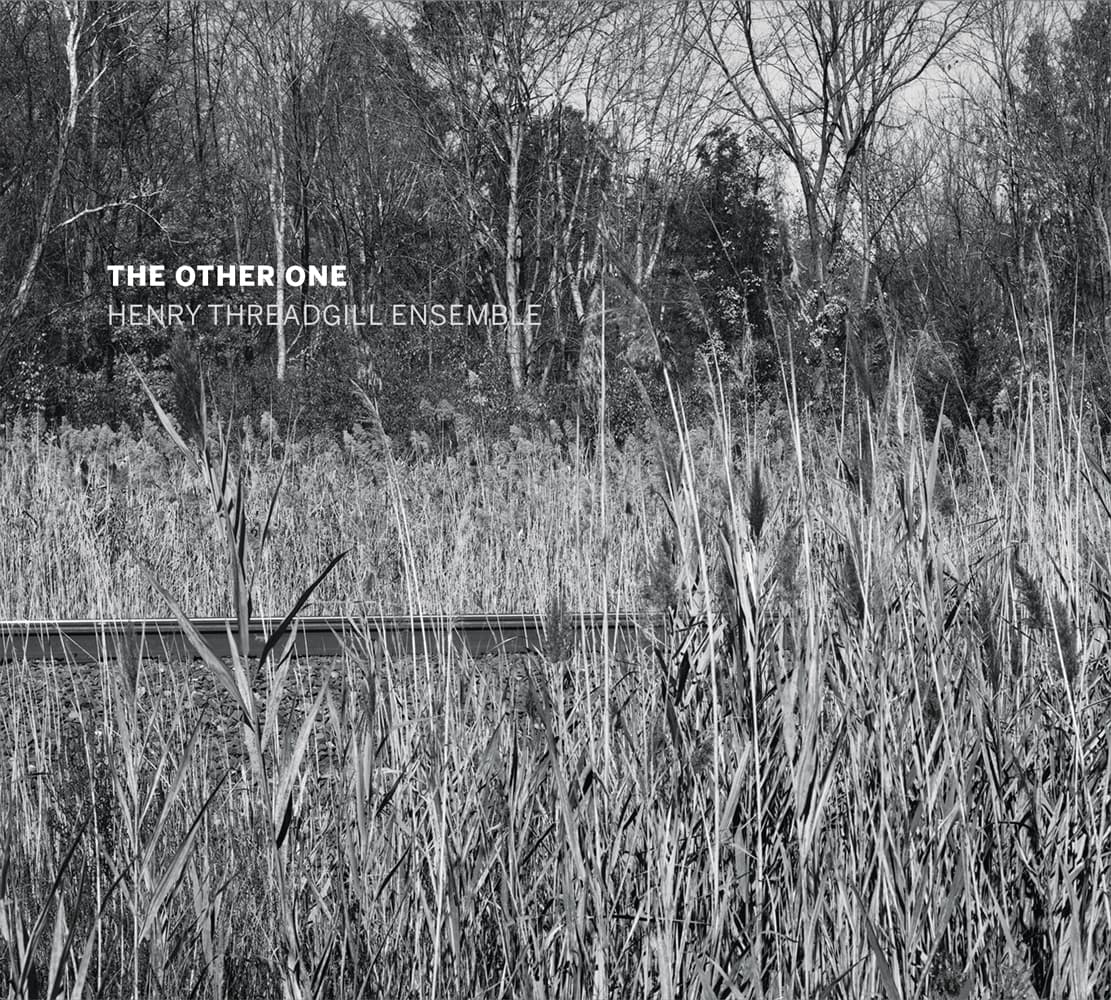
The Other One
(Pi Recordings, 2023)
Henry Threadgill’s Easily Slip Into Another World: A Life in Music (co-written with Brent Hayes Edwards) is the biography we didn’t know we needed. Threadgill’s musical achievements as a saxophonist, flutist, and Pulitzer-Prize winning composer are well-documented. Oh, but the stories he can tell. Threadgill has listened and learned from a wide spectrum of life experiences and personal explorations. From a boy on the South Side of Chicago mesmerized by the playing of Howlin’ Wolf to a soldier in Vietnam to living in New York’s East Village, Henry’s journey has brought him to the pinnacle of creative achievement. Having broken the wall between notated music and improvisation, between jazz, classical, and avant-garde, you’d think Threadgill’s work was done. But if we learn anything from him, it’s that there’s always more. Entering his eighth decade, his youthful enthusiasm remains intact, adding the filmmaker hyphenate to his already impressive oeuvre. Currently making the rounds of film festivals, The Other One is an assemblage of music, talismans, social commentary, photography, art, and poetry, a harmonious blend that’s uniquely Henry Threadgill.
David Hershkovits (Rail): Easily Slip into Another World: A Life in Music is a wonderful book for anyone interested in American history, culture, music—the evolution of a creative individual. So Henry, I know you’re not one to believe in the importance of titles as far as bringing meaning to your work. You’re famous for titles like, “Keep Right On Playing Thru The Mirror Over The Water,” and “Salute to the Enema Bandit.” Do you feel that Easily Slip Into Another World has the same kind of value as the titles of your compositions, or do you put more meaning into this one?
Henry Threadgill: No, I think it has the same kind of values.
Rail: So you don’t really feel like it means anything?
Threadgill: Not in particular.
Rail: All right. [Laughter] In general, your view about music is that one shouldn’t bring meaning to it, that you should get the meaning from the music. But today, in the art world particularly, there’s this constant question of storytelling. Everyone wants the story behind the artwork that brings it meaning. How do you respond to that? Do you relate to that?
Threadgill: Well, that does seem to be the prevailing way to present art these days, to tell the story and the story behind the story, and the meaning. I don’t think these things have much value. Because the viewer or the audience, when they come to a work of art they really have to view it on their own terms. You can’t subscribe to what someone has told you about it. All the background material, it really doesn’t help you. You’re in a world of your own when you face a work of art, you’re by yourself. And nothing that somebody else tells you can really help. Matter of fact, I think it does more to distract from the experience that you might have, because it creates expectations.
If there’s one thing I learned in school, it’s that there’s a lot of ways to explain things. There’s not just one way to explain anything, you can explain things three, four, or five different ways. So my advice is to never touch explanations regarding art. Just go in for the experience.
Rail: What about a work like Picasso’s Guernica (1937)? It has so much to do with war and history. Do you feel that contradicts what you’re saying?
Threadgill: Yeah, it might have something to do with the war, but these things are subjective. Just because you see something historical, it doesn’t mean that’s the only way you can look at it—historically. That might be important, it might not be important. A work of art is an elusive thing in itself. The more you try to tie it down, the more it gets mercurial. We’ve just fallen into this habit in the art world of explaining everything, and saying what things mean, and what my intentions are. Well, whatever your intentions are, they might not work for me, or anybody else! [Laughter]
Rail: I’d like to explore some of the context of your life, beginning in Chicago. Reading your book, one of the images that struck me was you standing in front of Howlin’ Wolf at Maxwell Street Market when you were like four or five years old, mesmerized, and basically lost in his music for the day, right? Your family was looking for you. They didn’t know where you were, and that’s where they found you.
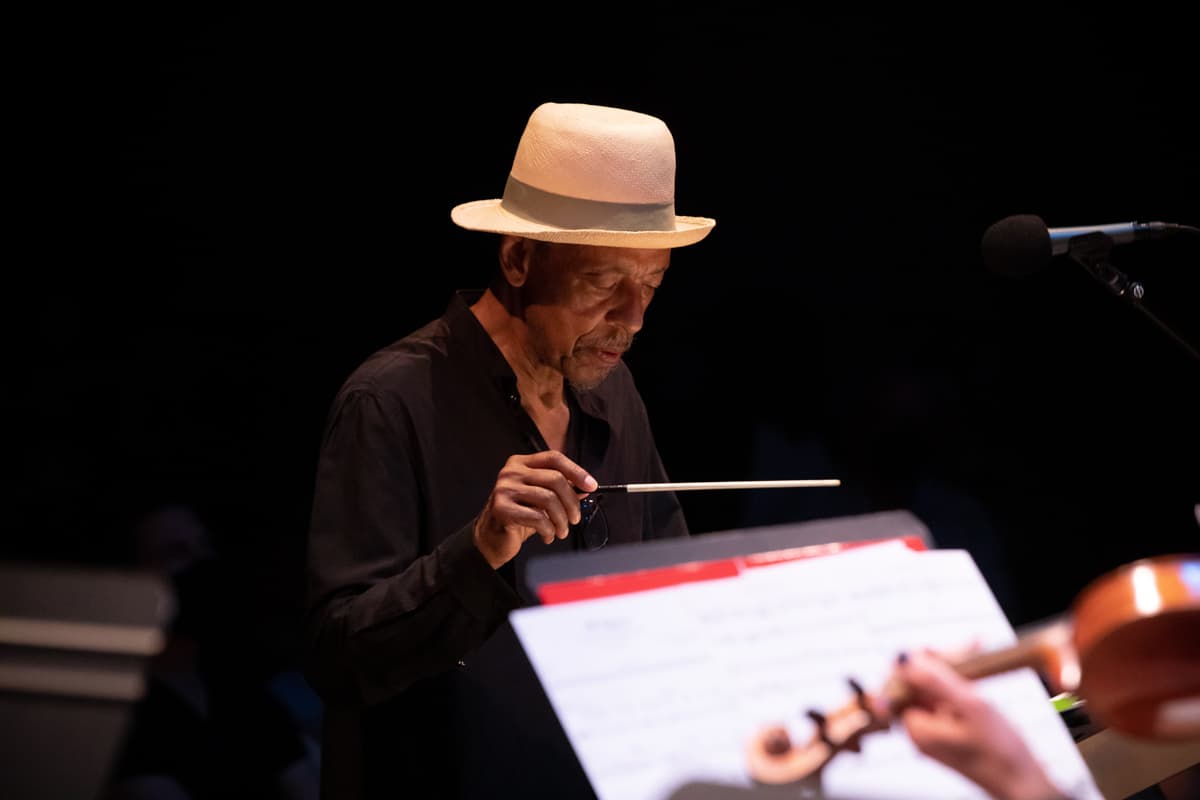
Threadgill: That’s true, but I’m gonna deviate and come back to that. I’m reading another book on the history of Chicago about the life of Jelly Roll Morton, and it’s so informative. Chicago’s got this incredible history. The Great Migration is what brought southerners—Black and white people—to Chicago. Chicago was like 42nd Street. What I mean by that is you go to 42nd Street to change trains, to go anywhere in New York—they all stop on 42nd Street somewhere. To go anywhere in the United States, you had to go to Chicago. People from New Orleans came to Chicago at the turn of the century, like Jelly Roll Morton. And later on Louis Armstrong—they came right at the beginning of the twenties, and the great migration was taking place at the same time. That’s how the blues came to Chicago. So this is like 1920, ’25—so now it’s 1949, 1950 and I’m standing in front of Muddy Waters and Howlin’ Wolf on Maxwell Street, you know. And for me, as a kid, it was overpowering. I had heard very powerful music live, but Howlin’ Wolf just took me away. It was like the pied piper. If he went into the lake, I would’ve gone right after him. [Laughter]
Rail: Muddy Waters is one of the first musicians I’m aware of who became famous for going electric. My understanding is that when the rural blues sound went north to Chicago and encountered all of the energy and everything that was going on in a big city—it made the music change into this other form that we are more familiar with today.
Threadgill: Yeah, it became electric later. I’m not exactly sure, but I think about in the late fifties, because that’s when the electric instruments really started to take off. It stayed basically acoustic in the beginning. Musicians played in small venues, so you didn’t need electric instruments. The bigger the venues became, the more the necessity to have electric instruments came up. I mean there’s that record by Muddy Waters called Electric Mud. That was in 1968.
Rail: That was the record that kind of brought the blues into the psychedelic rock and roll era. And that was recorded at Chess Records, which was another big Chicago institution. Did you have any run-ins with people from Chess Records in those days?
Threadgill: No, not really. I met one of the Chess brothers and I did some recording, I think it was at Chess. I was in a studio band, and came in to play on some rhythm and blues tracks. And that was my only real contact. I never had a recording contract with the Chess brothers. I just recorded in that studio once or twice.
Rail: How did you feel when you heard Chuck Berry? When the sound was moving from blues to what we know as rock and roll today.
Threadgill: Well, it was Chuck Berry and Little Richard. We have to credit Little Richard with that too. I don’t know who got to home plate first. It could have been a tie, but I know Little Richard was right there. All of a sudden, it was like there was this other energy and this other branch of music that was emerging from the blues. Chuck Berry, Little Richard—they moved the goalposts someplace else.
I knew Little Richard’s mother. She lived down the street from me when I was a kid. You know, she had a pool room. I used to go there as a kid. She was always telling us when Little Richard might show up. But he would never be there when we came to visit.

Rail: In terms of your family background, your father ran a gambling house?
Threadgill: Yeah, he ran gambling casinos for the mob. [Laughter]
Rail: Which one?
Threadgill: Well, I hope I’m not offending anybody, but the Italian mob! [Laughter] You gotta remember, when Capone came, he had to fight the Irish, and he did. So then the Italians—the Sicilians—had Chicago. My grandfather worked for them. He transported liquor from all over the country for Al Capone, and he made enough money to bring my grandmother and my father to Chicago. That’s how they got there, because my grandfather, Henry, made enough money working for Al Capone, that he could move the family to Chicago. And that’s why my father had this connection with Al Capone, and that whole group. That’s how my father ended up working for the corporation.
Rail: You never wanted to go into the family business?
Threadgill: No, no. [Laughter]
Rail: But your mom had a more genteel background, right?
Threadgill: Yeah. My father was into music, highly into music, and he knew everybody. And he had an incredible record collection. That was just his lifestyle, which was the lifestyle in America anyway at that time.
What we were exposed to in America, not just Chicago, was radio. And radio did not have the guidelines that it has now. You heard all kinds of music, and plays, and everything on the radio. Everybody would run to the radio at certain times of the day to hear certain programs, to hear different music. And this music crossed all borders, especially in Chicago. Growing up, I listened to as much Serbian music as I listened to Polish music as I listened to country and western hillbilly music as I did Black music. Because that’s what played on the radio all day long.
Rail: And you had a piano growing up that you started just fooling around on, on your own?
Threadgill: Yes, I did. But I didn’t even know there was a piano in the house until I heard boogie-woogie on the radio. There was a long, dark hallway in the house that would go to this room and that room and this room. There was only a single light in that hallway, so you couldn’t see everything, and that’s where the piano was. But when I heard this music on the radio, this was Albert Ammons and Meade Lux Lewis. They would play boogie-woogie every day when I was about three. And when I heard that, all of a sudden I found the piano, because I said “I’ve got to be able to do this. I gotta be able to play this.”
I would go and sit at the piano all day until that music would come on. It didn’t matter, I’d get up in the morning and after I had something to eat and washed up, I’d go sit at the piano with the radio, just waiting! And when it would come on, I would try to do it. I mean, day after day after day, and you gotta remember a kid that’s three years old, you can imagine what size my hands were! And think about what is going on with boogie-woogie piano playing. And so I had to reduce it to a minimal way of playing boogie-woogie, and that’s what got me started in music—physically. But my mother had already taken me to hear all these concerts. She took me to hear all of the greats: Louis Armstrong, Duke Ellington, Erskine Hawkins, Count Basie, Sugar Chile Robinson, everybody. And she took me to see all of them almost on a weekly basis.
Rail: So talking about time and place, Chicago was really an important place to be in those days, right?
Threadgill: It was everything! I mean, I didn’t even know that Benny Goodman was born in Chicago! Benny Goodman learned to play under Jelly Roll Morton by sitting in front of him all the time, studying him and studying his band. See Chicago had the Union Stockyards. Why did all the trains come into Chicago? Because all the train lines went all over the country to feed America. Because all of the meat products came from Chicago—that’s where the stockyards were. I remember when I first got to kindergarten, Monday morning, they would have to close the windows because of the smell of blood. The whole city smelled of blood once they started butchering the animals, and then the Catholic Church prevailed upon them not to slaughter animals on Fridays. Consequently, in the public school system they served no meat on Fridays, you could only get fish at school.
So Chicago is an extremely interesting place in terms of these cultures. All the greatest architects’ work is in Chicago. There’s no other city in America that has what Chicago has in terms of representing the world of architecture. And why is that? It’s because Chicago’s policy started under Richard Daley. They tear Chicago down and rebuild it constantly. New York looks the same. They didn’t start building anything in New York until Giuliani came along. But basically, it looks the same. The building that I live in here on 10th Street in Manhattan—you can go back and see pictures of it in 1932, 1925—it looks the same. Every place I lived in Chicago has disappeared. Mayor Daley made money with concrete. The Democratic Party made all that money through Daley with concrete, the tearing down and building up of large architectural, sculptural pieces and housing, and buildings of all sorts.
And I’ll tell you another thing about the importance of Chicago: after Richard Daley, every president of the United States had to come to Chicago. If you wanted to be president of the United States, you had to come to Chicago and see the mayor. It didn’t matter if you were Republican or Democrat. Because he could deliver the vote. There was a big scandal with John F. Kennedy.
Rail: That’s right.
Threadgill: Kennedy was upset about coming, because you had to get up on the platform and sit behind Mayor Daley. Because Mayor Daley was considered the king maker. If you wanted to be president, you had to sit behind him.

Rail: In your book you talk about the first time you heard Charlie Parker. You were what, fifteen, sixteen years old at that point?
Threadgill: I was much younger than that. I saw Charlie Parker when I was about seven or eight. And I was really confused. I loved it. But I was confused. I didn’t know what I was listening to—it just didn’t fit into anything that I understood. I hadn’t begun studying music. At that time, I was teaching myself how to play. But when I heard Charlie Parker and that whole crowd of people that became the so-called modernists, Dizzy Gillespie and Kenny Clarke and Thelonious Monk, these people who would change everything in terms of abstract expressionism in music. I just didn’t know what to make of it! By the time I got to high school I started to understand it a little bit better, but I knew I couldn’t do it. That was beyond reach. [Laughter]
Rail: And nor did you want to particularly, did you?
Threadgill: Well, I did, because, you know, you come into music and you’re listening to something. You have to emulate something to get in. You just don’t get in without emulating something. And so that’s what I did. I came in first listening to Charlie Parker and that whole group of the modernists. As years passed, I started going backwards—I went back to Scott Joplin and Jelly Roll and people like that. Stravinsky got me on that trail, because Stravinsky kept going back looking at different composers and trying to reevaluate and reuse ideas and concepts from earlier periods. I did the same thing but with bebop.
One thing I understood was that you play music in a real world of values, and cultural and social ideas—I was just a kid, that music wasn’t relevant to me. These were people who appointed World War II influences. I was a baby of World War II. You know, so I say, this doesn’t represent me, this is not for me, but I have to learn it. I knew that early on. And I just had to wait to find out what was going to be the language or the cultural expression that would really capture me and be representative of people like me and others that grew up during my time.
Rail: And that didn’t happen till much later.
Threadgill: When I heard Ornette Coleman, that was it.
Rail: Ornette Coleman was the guy? Do you remember when you first heard him?
Threadgill: I was about thirteen years old. In the neighborhood I was living in there was one kid who was a little bit older and he had a part time job; he used to buy all these records. And we used to go to his house to listen to records. One day he came in and put on this Ornette Coleman record and as soon as it came on a couple of us looked at each other and said, “That’s it.” There were like three musicians in this crowd of listeners. And the three of us, as soon as it came on we kind of looked at each other like, “Uh-Oh, that sounds like it.” You know? [Laughter]
Rail: But you had Sonny Rollins on your sax case, right?
Threadgill: Oh, yeah. Sonny was my main influence. Back to my earlier statement, you have to have a beacon in life, you can’t just jump out here and do something—you got to have some kind of beacon to help guide you, something that you can measure up to, something that will reveal information to you.
Some people make the mistake of trying to be just like the beacon. You can’t be as good as the beacon, nobody can. I found out you can never do something as good as other people did it. And nobody can do anything better than you. That’s just the way it is. You can work all you want, you’ll never play as good as Charlie Parker, it’s not possible. And nobody will be a player as good as you. Because we are specific in time, we do things given the time we live in. So Sonny Rollins was my hero, and stayed my hero in terms of the tenor saxophone I had. But gospel music was a whole other area like the blues. I had my different heroes there too. But Sonny remained my main person. He was someone I could use as a benchmark to go forward and to test myself, and the good thing is I would always fail. [Laughter] That just meant there was more work to do. That’s what that meant.

Rail: You’ve experimented so much with various types of bands. You’ve put together these groups that have instruments that you typically won’t see in any other band. I think that’s a hallmark of your work. You are open to experimentation, you haven’t continued one band throughout your career, you’ve had many combinations. And I bet you’re still thinking about them today. Right?
Threadgill: I’m one of those people who is constantly going forward, I can’t go backwards. Going backwards is a mistake for me, under all circumstances. There’s people who have become great stylists, they stay with a subject or repertory or regular way of presenting themselves. Somebody who paints the same picture over and over, it’ll keep changing, but it’s up to you to see the minute changes taking place. That’s a stylist. Not me, I keep moving. I understood that about myself early on.
Rail: But in putting this book together, you had to look back. Maybe even force yourself to think about experiences that weren’t so pleasant. For example, your time in the Vietnam War. Would you tell the story, which is in your book, about how you wound up at the front? Because at first you were just expecting to be a musician.
Threadgill: Well, I was always a musician. The thing was, when I got drafted I was only going to school part time. You’re supposed to go to school full time to get a deferment. I was working part time trying to save up enough money so I could go to the American Conservatory of Music. And I got caught. So I go down to the draft board and the guy says, “The bad news is you’ve been drafted. The good news is, you’re a professional musician. So you can sign a contract with the government to play music.” And that was true. As soon as I finished basic training, I went to Fort Riley, Kansas, and I went to the top band on that post.
Everything was going along fine, and then I got promoted to Arranger. There had only been one other person who had this position before me, Robert Ward, from Cleveland, Ohio. That was during World War II. He was sent to the Aleutian Islands and distinguished himself by getting a Bronze Star. He went on to join the symphony and became a great percussionist, and then he switched over to becoming a composer. He won a Pulitzer Prize in 1962 for his opera The Crucible. He is the only veteran of World War II to win the Pulitzer Prize in music, and I am the only one from the Vietnam War to win it. Anyway, I was writing music for the army, and when the music premiered in Kansas City the archbishop was in the audience. He didn’t like it. He jumped up and quickly said, “Who’s responsible for this blasphemy?” [Laughter]
Rail: What, you were taking liberties with some American—
Threadgill: I wasn’t taking liberties—well, he might have thought I was taking liberties, but what does he know? He didn’t know anything about music. I wanna tell you, the band loved it. And so consequently, he got them to punish me for this by sending me to Vietnam, in one day. They did this in one day, less than twenty-four hours! This was the archbishop of the state of Kansas and that whole area, and those army generals almost had a heart attack when he jumped up and said who’s responsible for this blasphemy. They knew they had to do something to me. So they sent me to Vietnam. But back to my contract, right? I had an agreement with the government just like the doctors, the surgeons, the professional cooks, the tailors—the thing was, we found out the contract didn’t say that I couldn’t have a second occupation! Yes, yes, you’re a musician, but now you’re infantry too! [Laughter]
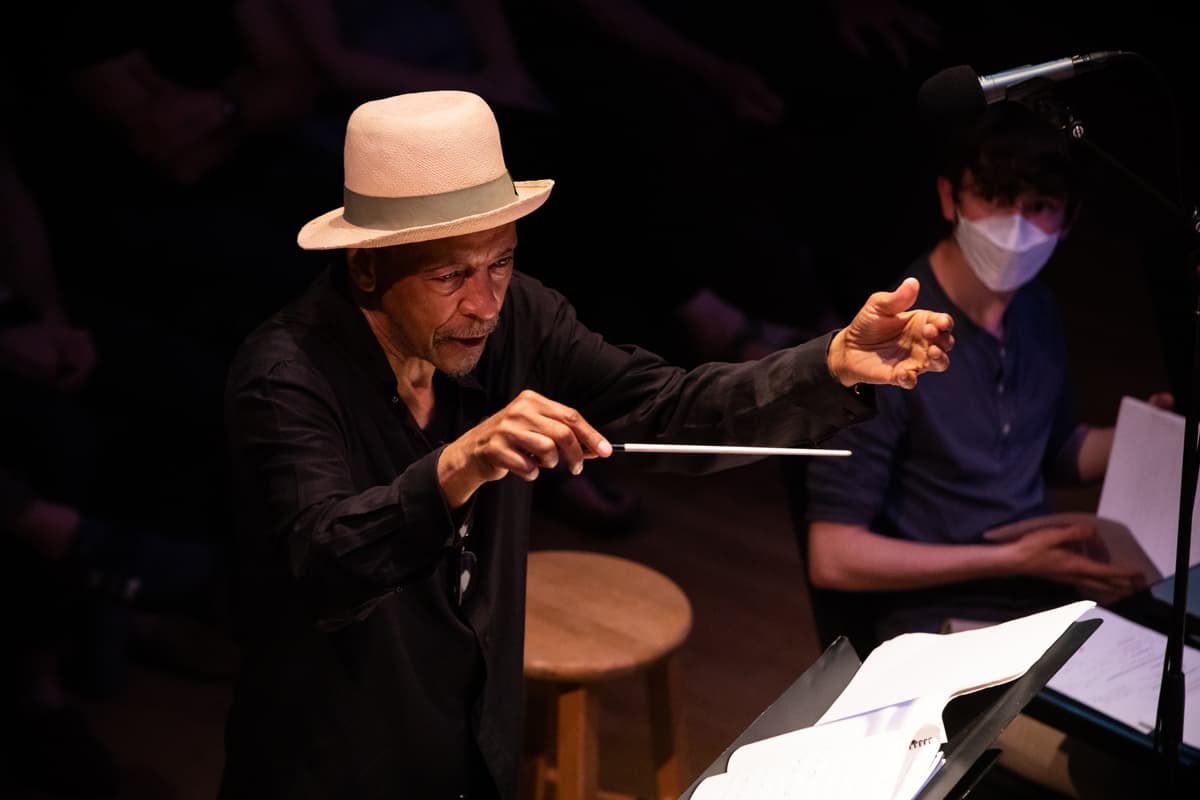
Rail: I want to jump forward and talk about The Other One (2023), which combines a lot of your interest in art, music, and film. You put together a live multimedia event at Roulette Intermedium in May of 2022 that you recorded. I was lucky enough to be there. And you released the recording this year. Can you talk about how this project developed?
Threadgill: Well, we were all basically confined to our homes during COVID, and we didn’t have any masks. We didn’t have anything at the time. Even so I would come out and walk to get some air every day and exercise a little bit. I live in the East Village, which is Fifth Avenue to Avenue D from Houston to 14th Street—that’s the East Village. I started noticing all of these things that were being left in the streets that didn’t make sense. I mean really beautiful items and expensive things that were being abandoned. So I just started photographing them, and I didn’t really know why for a while, and then I understood why these things were not being picked up. Because there were no homeless people in the street. Most people didn’t notice that. They put all of those homeless people in hotels, because they couldn’t go to the shelters, because the shelters were a petri dish.
I’ve never seen so many moving trucks in my life. I have photographs of more than two hundred moving vans, moving vans alone, only taken from the East Village. So that was the photographic part and then I would come home, and after these walks I would start kind of automatic writing, in a way. That’s something I’ve been doing all my life also, and I just started collecting the writings, collecting the photographs. And then I sent the writings to my daughter to paint, so then I had forty-two paintings.
I made a film at the Tilton Gallery, and one at the Luhring Augustine Gallery a few years back, and I had been trying to figure out how I could use that film. I had it in its original form, which is about half an hour long. And so I started going back into it, exploring how I could use it in a multimedia piece.
Rail: Did you already have this idea of putting all these things together?
Threadgill: No, as the material was building up, it started coming to me. And then I started writing music.
Rail: That’s interesting, so the music came after. Would you consider it a COVID piece?
Threadgill: Well COVID is a part of it. Maybe not if you’re talking about COVID as a disease, but COVID as it affects our behavior and what we do socially, and how our cultural ideas have been enhanced and altered. How it has impacted our lives…

Rail: You’ve quoted, I think it was James Blood Ulmer telling you what Ornette Coleman had said to him. “Jazz is the teacher, blues is the preacher.” And you added “time is the reaper.” Time is the reaper for all of us. [Laughter] So what is coming up for you?
Threadgill: Well, I’m finishing up The Other One, because we’re showing it in documentary film festivals in the United States and other English speaking countries. I’m writing new music for a fifty-piece ensemble, and working on the next installation piece. This is an eight-and-a-half minute installation piece involving photography, film, and music.
Rail: That’s so great. Your music takes in ideas from all over the place and somehow puts it together so it feels unified. I feel like this assemblage, collage, multimedia work very much represents who you are as an artist. It’s inspiring.
David Hershkovits is a writer, editor and publisher who taught English at LSUNO and began as a journalist at the Courier, a New Orleans weekly. Moving back to New York in the late 70s, he joined the staff of the Soho Weekly News. Hershkovits co-founded Paper magazine in 1984 and co-edited the books From Abfab to Zen: Paper’s Guide to Pop Culture (1994) and 20 Years of Style: The World According to Paper (2004). He has written for GQ, Vanity Fair, Max (Germany), High Times, the New York Post, Daily News, Newsday and others. He also hosted the Light Culture podcast, focusing on culture and cannabis.